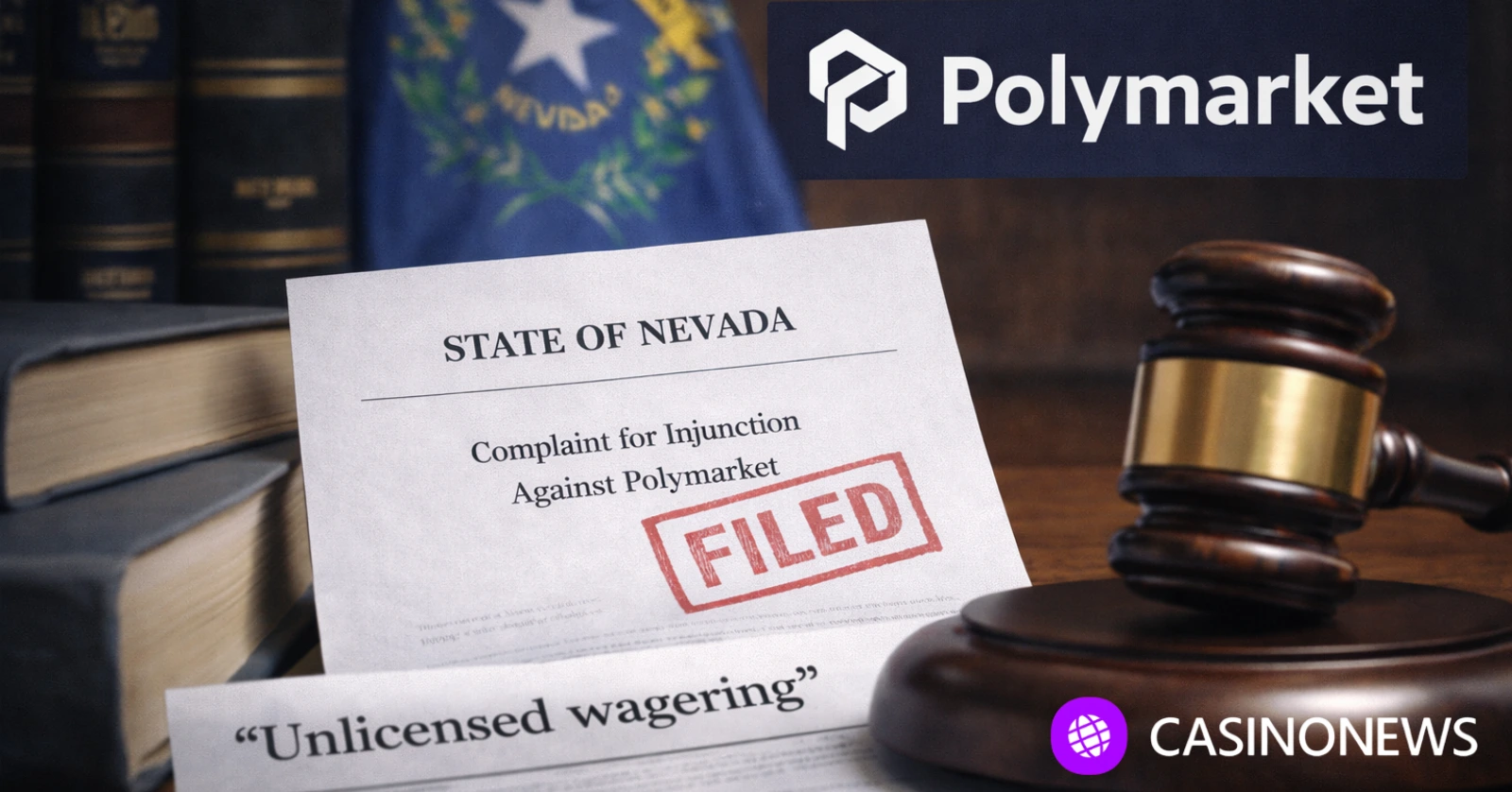
Nevada regulators opened a new front against sports-linked event contracts this month, filing a civil enforcement case aimed at cutting off Polymarket’s access in the state.
The move comes as Nevada also points federal judges to a Massachusetts court order against Kalshi, using that ruling to argue that states can require sports wagering licenses even when contracts are offered through federally regulated market structures.
Nevada files a civil enforcement case targeting Polymarket
On January 16, the Nevada Gaming Control Board filed a civil action in the District Court for Carson City against three entities it identifies as operating Polymarket: Blockratize, Inc., QCX LLC, and Adventure One QSS, Inc.
Nevada is asking the court for a declaration and an injunction that would stop the platform from offering what the board describes as unlicensed wagering to people located in the state. The regulator says the products are available through Polymarket’s mobile app and can be accessed by Nevada residents.
In public messaging, Nevada framed the case as a licensing issue, not a policy debate about whether event contracts should exist. The board’s position is that offering sports event contracts, and certain other event contracts, constitutes wagering activity under Nevada law and therefore requires a Nevada gaming license.
Massachusetts ruling becomes a tool in Nevada’s Kalshi appeal
Nevada’s Polymarket lawsuit is running in parallel with an older fight involving Kalshi. That case is now before the U.S. Court of Appeals for the Ninth Circuit after a federal judge in Nevada lifted an earlier injunction that had blocked state enforcement.
This week, Nevada notified the Ninth Circuit of the Massachusetts decision that ordered Kalshi to stop offering sports-related event contracts in Massachusetts without a sports wagering license. Massachusetts secured that order after a judge found the state was likely to succeed on its claim that the product amounts to unlicensed sports wagering under state law.
The practical value for Nevada is straightforward. Massachusetts produced an order that stops sports contracts while litigation continues. Nevada is using it to argue that courts can treat licensing and oversight as immediate public-interest issues, rather than letting the product stay live while jurisdictional arguments play out.
Nevada’s core claim against Polymarket is licensing, not structure
Nevada’s filings position Polymarket as operating a derivatives exchange and prediction market that offers event contracts for sale and makes those products available in Nevada. The board says that, in Nevada, the activity fits within the statutory definition of wagering and must be licensed.
The board also listed multiple Nevada statutes it says Polymarket violates, including provisions in Nevada’s gaming control framework and sports pool regulation. The state is building its case around the idea that the label on the product does not control the analysis. What matters is whether residents can take positions tied to sports outcomes without the licensing, controls, and enforcement hooks Nevada requires for sports wagering.
That approach tracks how Nevada has argued the Kalshi dispute. In that case, the state has pushed courts to treat sports event contracts as sports wagering for purposes of state law, even if the contracts are presented as exchange-traded instruments.
Why Nevada chose court action now
Nevada has used warning letters and administrative demands in earlier rounds of these disputes. A civil enforcement case is a different step. It asks a court to draw enforceable boundaries around access and operations, and it creates a direct route to court remedies if an injunction is granted and later violated.
The timing also matters. Massachusetts has now shown one way states can win early relief against sports event contracts, at least at the preliminary stage. Nevada’s posture suggests it wants that momentum in its corner while the Ninth Circuit considers Kalshi’s appeal.
In Nevada, the federal judge who dissolved Kalshi’s earlier injunction rejected the argument that federal commodities law automatically strips states of authority when the product resembles sports betting. That ruling is now part of the background that shapes how other courts may view similar preemption claims.
What comes next for Polymarket and the wider market
Nevada’s Polymarket case will test how quickly a state court is willing to act when a gaming regulator alleges unlicensed wagering. If the court grants injunctive relief, other states may treat the Nevada approach as a blueprint for moving faster than the cease-and-desist cycle that often ends in federal litigation.
The Kalshi appeal will continue to matter because it sits in a federal circuit with a major gaming jurisdiction and because it will address how far state gaming law can reach when a product is framed as a federally regulated market instrument.
For Nevada, the two tracks point to the same objective. The state is trying to establish that sports-linked event contracts offered to people in Nevada are wagering activity under Nevada law, and that operators must either obtain licenses or stop offering those contracts in the state.