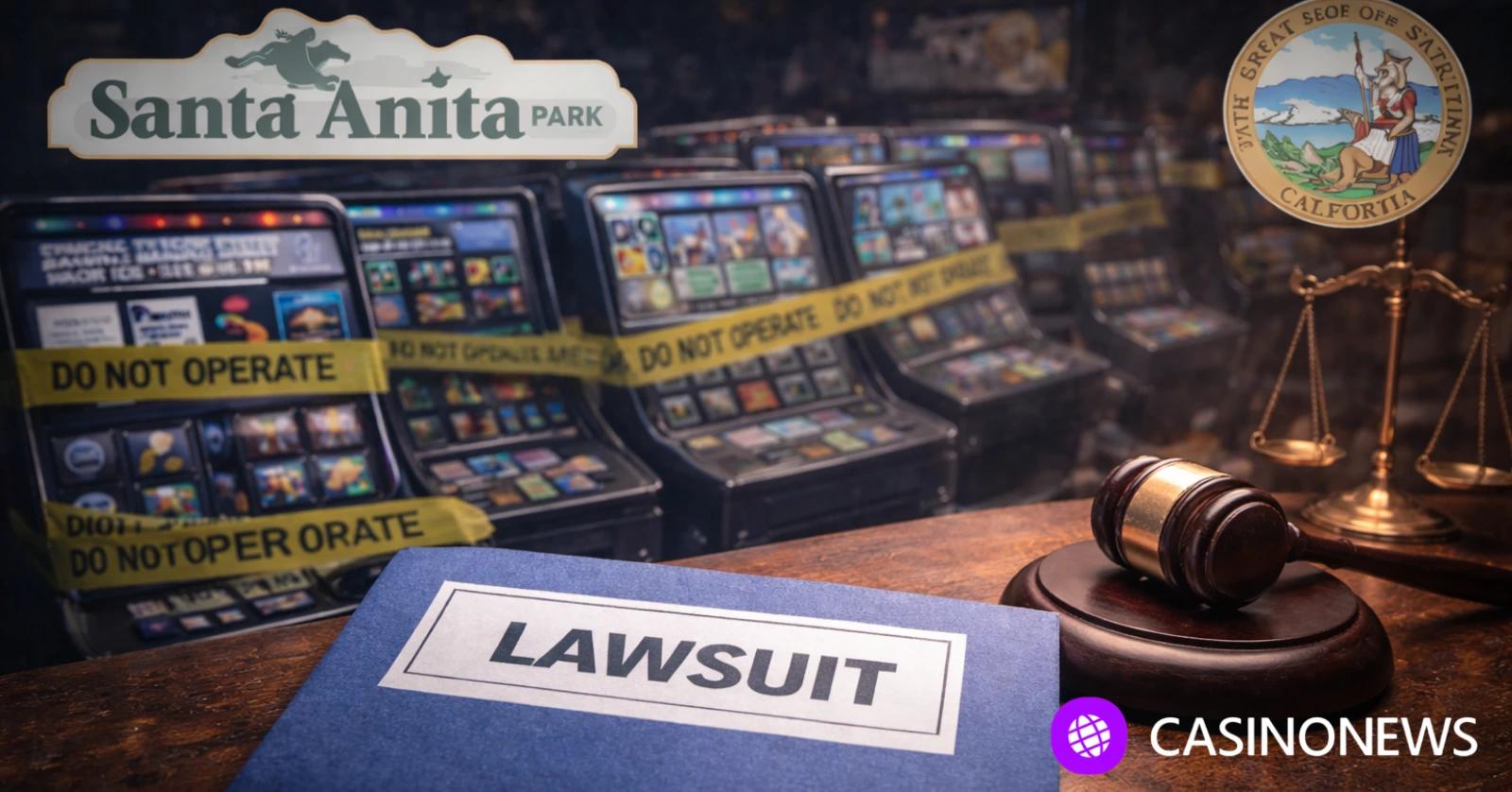
Santa Anita Park has gone to court to try to get back a set of slot-style wagering terminals that state agents seized days after their debut, escalating a fast-moving fight over whether racetracks can introduce new betting products without crossing into casino-style gambling.
The track’s operator is asking a Los Angeles Superior Court judge to block the machines from being destroyed and to order their return, arguing the state acted without lawful grounds and without giving the industry a clear regulatory answer before enforcement.
Court challenge seeks return of seized terminals
The entity that operates Santa Anita filed a court petition this week seeking the return of 26 “Racing on Demand” terminals and the cash removed from them during the seizure. The filing challenges the state’s authority to take the machines and argues the product fits within California’s pari-mutuel wagering framework.
The legal move is also designed to stop the clock. State officials provided notice that the machines could be destroyed within 30 days unless a court orders otherwise, creating a narrow window for Santa Anita to secure relief.
How Racing on Demand was structured
The terminals let customers wager on previously run horse races through a simplified, slot-like interface. The format is tied into a “3×3” style wager in which bettors select the first three finishers in three separate races, with outcomes determined through pari-mutuel pools rather than a house setting fixed odds.
Santa Anita has argued that the key legal distinction is the wagering structure. The track says bettors are wagering into pooled markets governed by racing rules, not playing a house-banked game, and that the product is an extension of wagers already offered through regulated tote systems.
State treats terminals as illegal gambling devices
The seizure occurred after the machines were installed quietly and operated for a short period on the grandstand floor. State agents removed the terminals and took the cash inside them after racing, with the action framed as an enforcement step under state gambling laws.
In subsequent notices and public explanations, the state has indicated it views the terminals as prohibited gambling devices subject to seizure and destruction procedures. Santa Anita disputes that characterization and argues the state should have addressed legality questions through regulatory channels rather than a sudden enforcement operation.
Track says regulators failed to give warning
A central element of Santa Anita’s court case is its claim that regulators had time to raise objections before the rollout. The track has pointed to prior discussions and legal analysis it says were shared with relevant state offices, arguing it did not receive a clear warning that the product would be treated as illegal.
Santa Anita is also leaning on the existence of a previously approved wager format. The track’s position is that approval of the underlying wager, and the long-standing rules that govern pari-mutuel betting, support the legality of offering the same wager through self-service terminals even when the races being wagered on have already been run.
Tribal exclusivity shapes the legal fight
The case is unfolding against a long-running political and legal reality in California: tribal governments hold exclusive rights over most casino-style gambling under state compacts, and they have consistently opposed products that resemble slot machines outside that system.
Tribal leaders and allies have argued that terminals built to look and feel like slots are an attempt to replicate casino gaming under a racing label. Santa Anita and other racing stakeholders counter that California racing is at a structural disadvantage because it lacks the supplemental gaming revenue streams that support purses in other states.
That tension has sharpened as racing groups look for new income while tribes continue to press for strict boundaries on what non-tribal operators can offer.
Court ruling will set the boundary for racing expansion
The court fight now turns on whether a judge treats Racing on Demand as a lawful pari-mutuel wagering product or as an unlawful gambling device. If Santa Anita wins early relief, the machines could be returned while the case proceeds, opening the door to broader efforts to modernize racing wagering in the state.
If the state prevails, the outcome would reinforce the current line in California gambling policy and signal that any slot-style expansion at racetracks will face swift enforcement. Either way, the dispute is poised to become a defining test of how far California racing can go in borrowing formats that have reshaped purses in other jurisdictions.