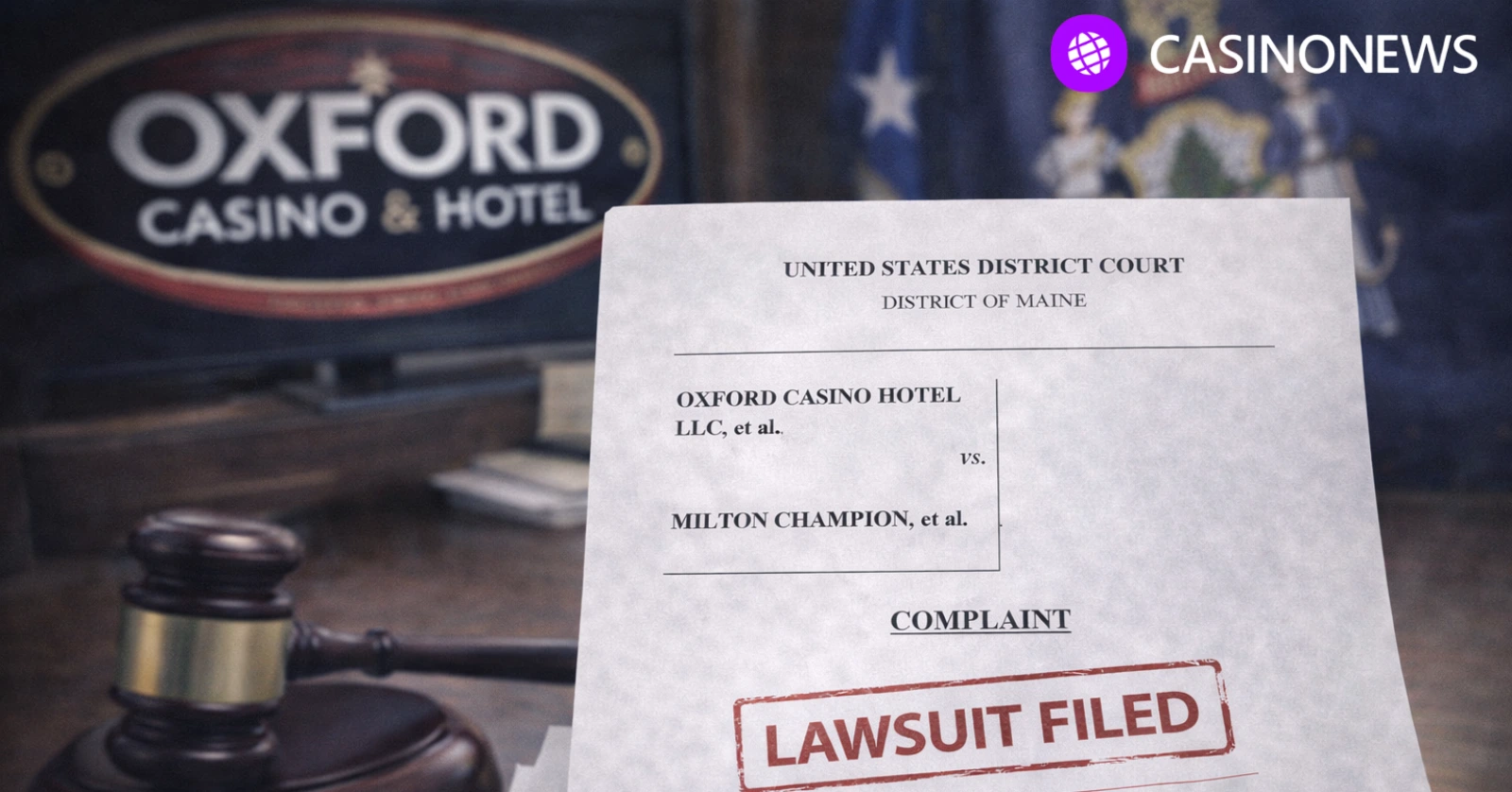
Oxford Casino Hotel has filed a federal lawsuit seeking to stop Maine from implementing a new online casino law that grants iGaming rights to the state’s federally recognized Wabanaki Nations. The casino, owned by Churchill Downs, is one of Maine’s two commercial casino operators.
The challenge lands just weeks after Gov. Janet Mills said she would allow LD 1164 to become law without her signature, framing the measure as a tribal economic development step that will be regulated by Maine’s Gambling Control Unit.
The law gives tribes exclusive online casino access
LD 1164 authorizes Maine’s tribal governments to operate online gambling in the state. The policy builds on Maine’s earlier tribal online sports wagering structure, which the governor’s office has cited as precedent for a regulated tribal-led model.
Published coverage has described the law as creating a tribal-only lane for internet casino games, shifting future growth in the state’s gambling market toward online play controlled by the tribes rather than the two commercial casinos.
Oxford argues the structure is unconstitutional
In its complaint, Oxford and related plaintiffs argue the law creates a “race-based monopoly” that violates equal protection protections under the U.S. and Maine constitutions. They say the framework bars them from even applying for an online gaming license because they are not a federally recognized tribe in Maine.
The lawsuit also raises Commerce Clause and “special legislation” arguments, claiming the state cannot grant exclusive economic privileges to a narrow class in a way that harms competitors and restricts participation. The suit names Maine Gambling Control Unit executive director Milton Champion and seeks declaratory relief and an injunction.
What happens next for Maine’s iGaming timeline
The near-term question is whether the court moves quickly on any request to pause implementation while the case is litigated. A fast injunction ruling would shape whether rulemaking proceeds on schedule or slows under legal uncertainty.
The dispute also tees up a broader policy fight. Some articles frame tribal exclusivity as corrective economic policy, while Oxford frames it as unconstitutional favoritism. How the judge treats those competing theories will influence whether Maine’s model becomes a template or a cautionary case for other states weighing tribal-only iGaming.