
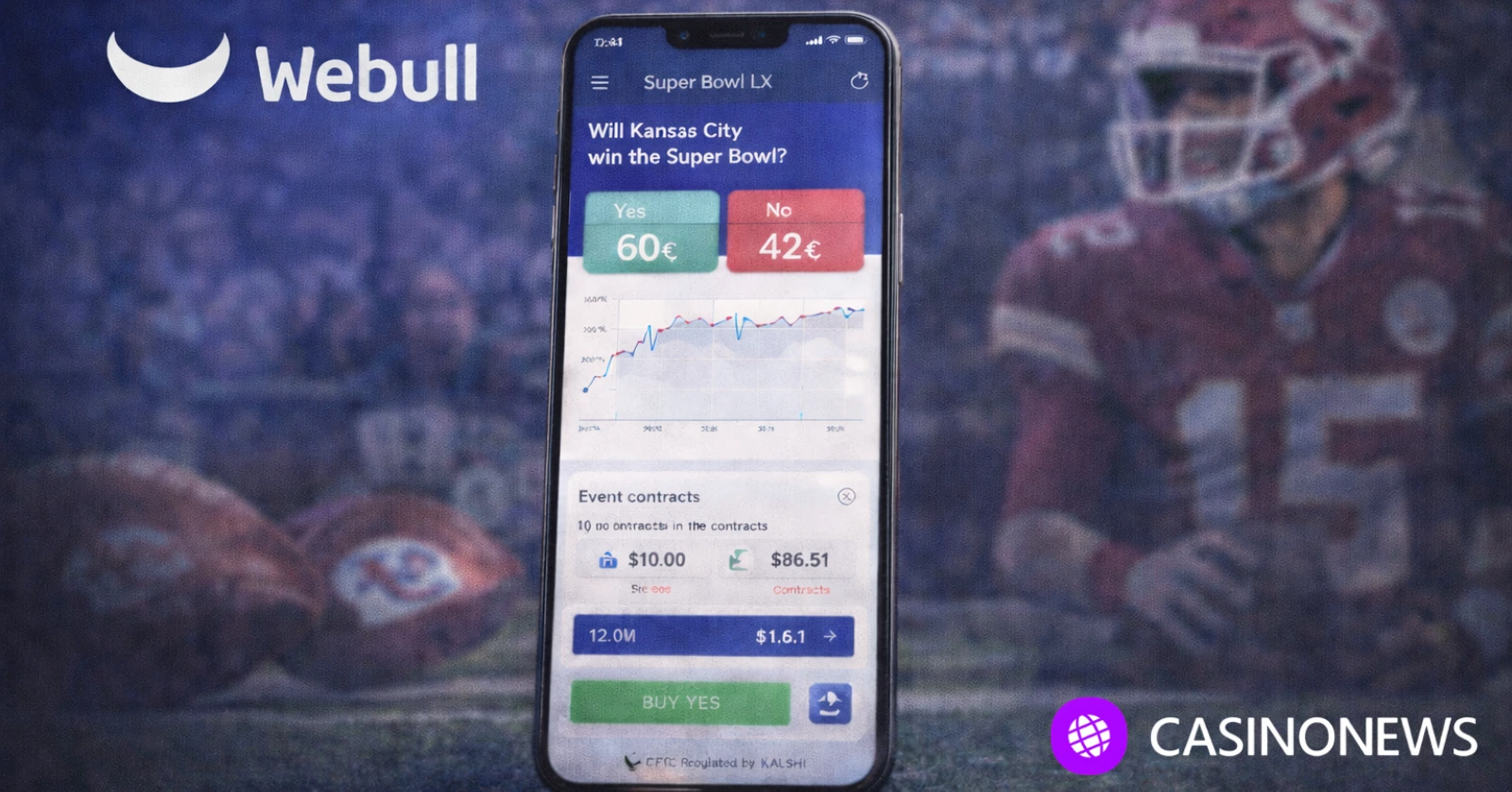
Webull is waiving its brokerage commission on Super Bowl event contracts, using the biggest U.S. betting weekend to push more users into its prediction-market offering. The $0 commission applies to Super Bowl LX markets available through Webull’s partnership with Kalshi.
The move is another sign that trading-style platforms see major sports events as a revenue stream. Webull is positioning these contracts as a regulated alternative that lets users trade market-implied probabilities inside a brokerage app.
What Webull removed, and what still costs money
Webull’s standard Super Bowl pricing includes a flat brokerage fee of $0.02 per contract. The company said it is waiving that fee for Super Bowl markets, while other exchange-style charges can still apply.
The product itself is built around binary event contracts. Webull’s own disclosures describe event contract trading as highly speculative and direct customers to risk documents before trading.
Why prediction markets picked the Super Bowl window
The Super Bowl is a rare moment when casual users actively compare cost and convenience across products. Webull’s goal is to remove friction at the exact time new customers are most likely to try a prediction market, then keep them engaged after the event cycle ends.
Prediction markets also have a structural advantage in parts of the U.S. where sports betting access is limited. Because Webull’s sports markets are offered via Kalshi, a CFTC-regulated exchange, the pitch is that users can trade a sports outcome like an event contract rather than place a traditional sportsbook bet.
Regulatory sensitivity remains part of the backdrop. In February 2025, Robinhood rolled back Super Bowl event contracts after receiving a request from the CFTC, showing how quickly the rule conversation can shift around high-profile sports markets.