Missouri’s first full month of legal sports betting delivered the kind of handle number supporters promised. It also delivered the kind of tax number critics warned about.
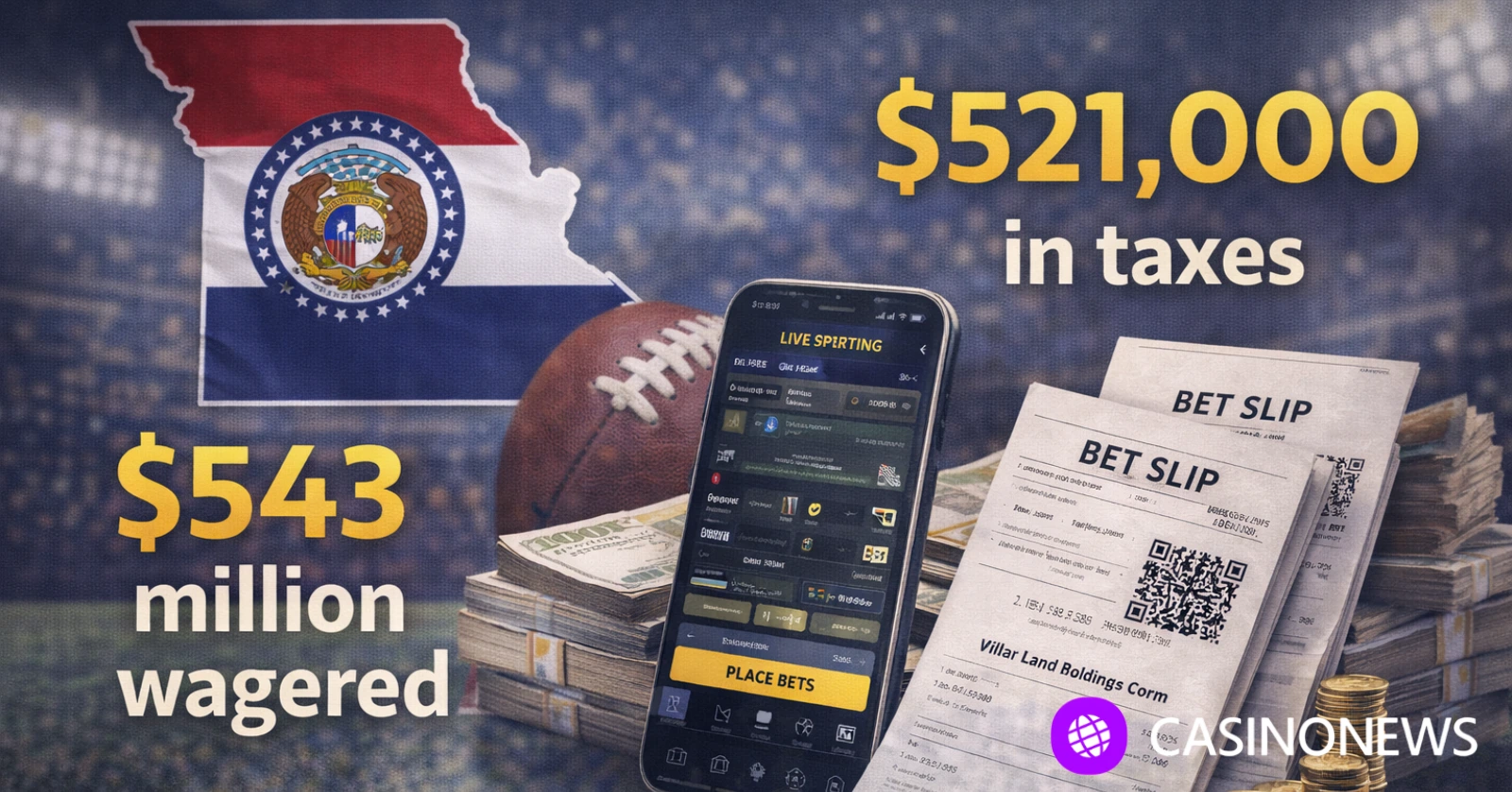
For December 2025, the Missouri Gaming Commission reported about $543.0 million in wagers. The state collected roughly $521,000 in taxes after deductions, a result that immediately reset expectations for early education and responsible gambling funding tied to the new market.
Mobile drove the volume, and the leaders were clear
Online betting accounted for essentially all activity in month one, with retail contributing a sliver of the total. That is typical for new markets, but Missouri’s split was extreme, leaving mobile operators to define the launch narrative.
FanDuel and DraftKings dominated early handle, with bet365 in the next tier. The first report also showed how operators leaned into parlay-heavy menus and launch offers to capture share fast, even if it meant sacrificing near-term profitability.
Promotions crushed taxable revenue in month one
The core story is not that sportsbooks took $543 million in bets. It is that operators posted negative adjusted gross revenue in December after accounting for payouts and promotional “free play,” which meant there was little taxable base to apply Missouri’s 10% rate to. One local report pegged free play at just over $125 million and said operators collectively lost $20.7 million for the month.
That dynamic is why “handle” and “taxes” rarely move together at launch. Early markets are subsidy fights. Operators spend heavily to acquire customers, and the tax picture often looks thin until promotional intensity cools.
What the next few reports will actually tell lawmakers
Missouri’s tax structure is baked into a voter-approved constitutional amendment, which makes quick fixes harder than in states that can adjust rules through ordinary legislation.
The more useful benchmark will be the next three to six monthly reports. That is when promos typically normalize, hold rates settle, and taxable revenue starts reflecting repeat play instead of launch incentives. If taxes remain weak after that, the debate shifts from “launch noise” to “market design.”