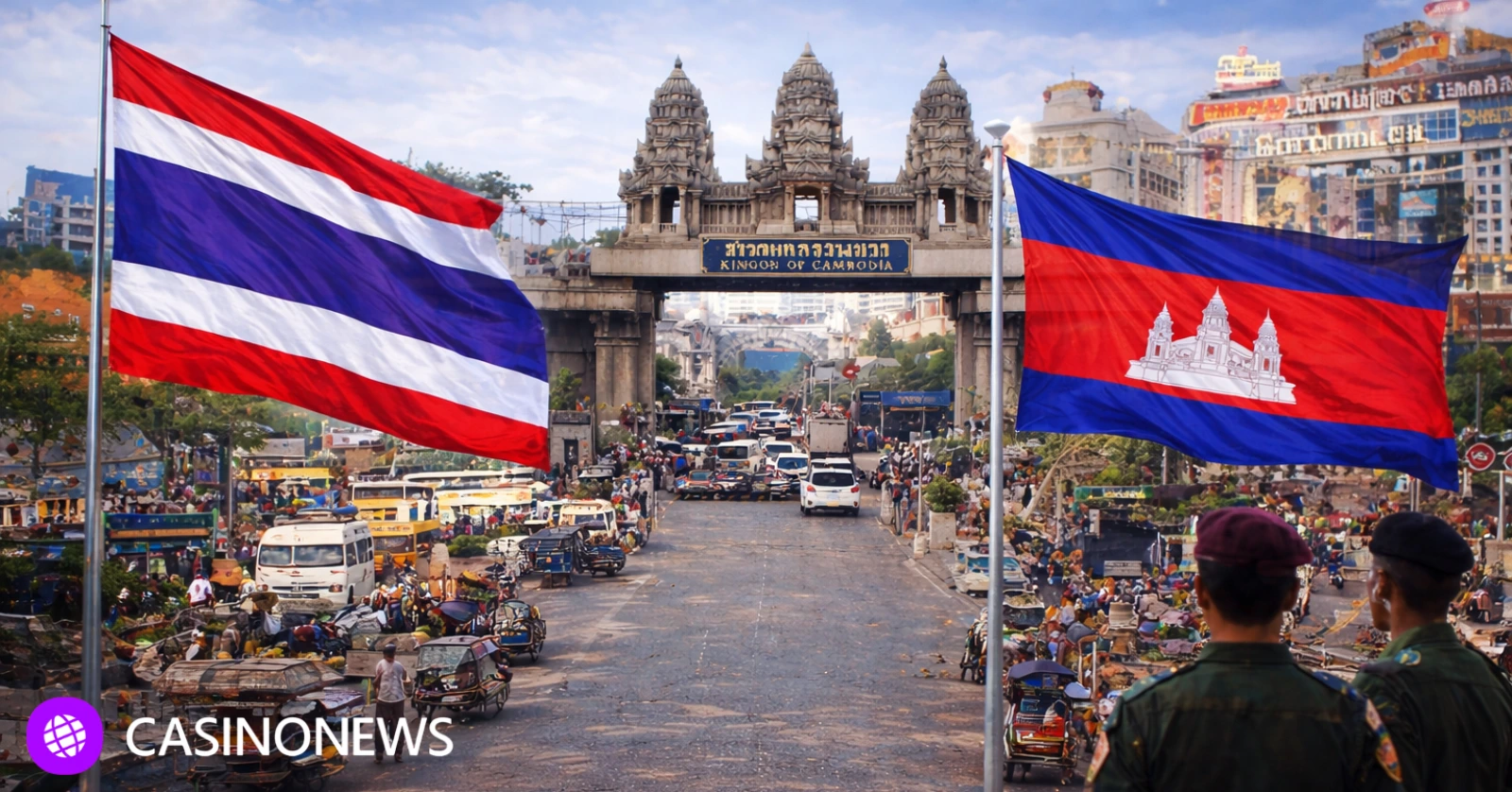
Thailand and Cambodia are in a new round of diplomatic and security friction that is starting to affect border movement and the casino-linked economies built around cross-border traffic.
The immediate dispute is political. The near-term commercial risk is operational. When border rules tighten, casino corridors and the labor and transport flows that feed them become pressure points, even if neither side changes gambling policy on paper.
Border dispute adds a fresh flashpoint
The latest flare-up sits on top of a long-running border disagreement around the O’Smach area, where localized incidents have repeatedly triggered sharp public messaging from both governments.
Border disputes in this region tend to escalate quickly because they land in domestic politics. Once security narratives take hold, both sides have less room to appear flexible, even if private channels keep working to reduce temperature.
Scam allegations pull casino zones into the story
This round of tension is also being fueled by claims tied to scam activity linked to border towns that host casinos and related service economies, including the Poipet corridor.
Thai authorities have framed the issue as an enforcement problem connected to cross-border criminal networks. Cambodian officials have pushed back on the allegations, but the accusations raise the political cost of appearing passive when the topic is presented as public safety.
Thailand uses border movement as leverage
The most immediate tool available is the border itself. Thailand has moved to restrict crossings in ways that can reduce workforce and visitor flows into Cambodian border areas.
These measures do not need to be permanent to have impact. Even short disruptions can create uncertainty for operators, vendors, and local businesses that rely on predictable daily movement, including transport, hospitality, cash-handling services, and informal trade that surrounds casino districts.
Border access rules will set the next impact
Border-zone casinos operate inside a wider ecosystem. When diplomatic pressure intersects with scam narratives, legitimate businesses can still absorb operational friction and reputational spillover.
For operators, the practical question is duration and scope. If restrictions remain targeted and temporary, the effect is mostly scheduling, staffing, and softer footfall. If controls expand or become a repeated tactic, volatility increases and planning becomes harder for any business dependent on cross-border demand.
The next marker is whether movement controls tighten further or ease back. That decision will determine whether this is a short disruption or a longer constraint on the casino-border economy.