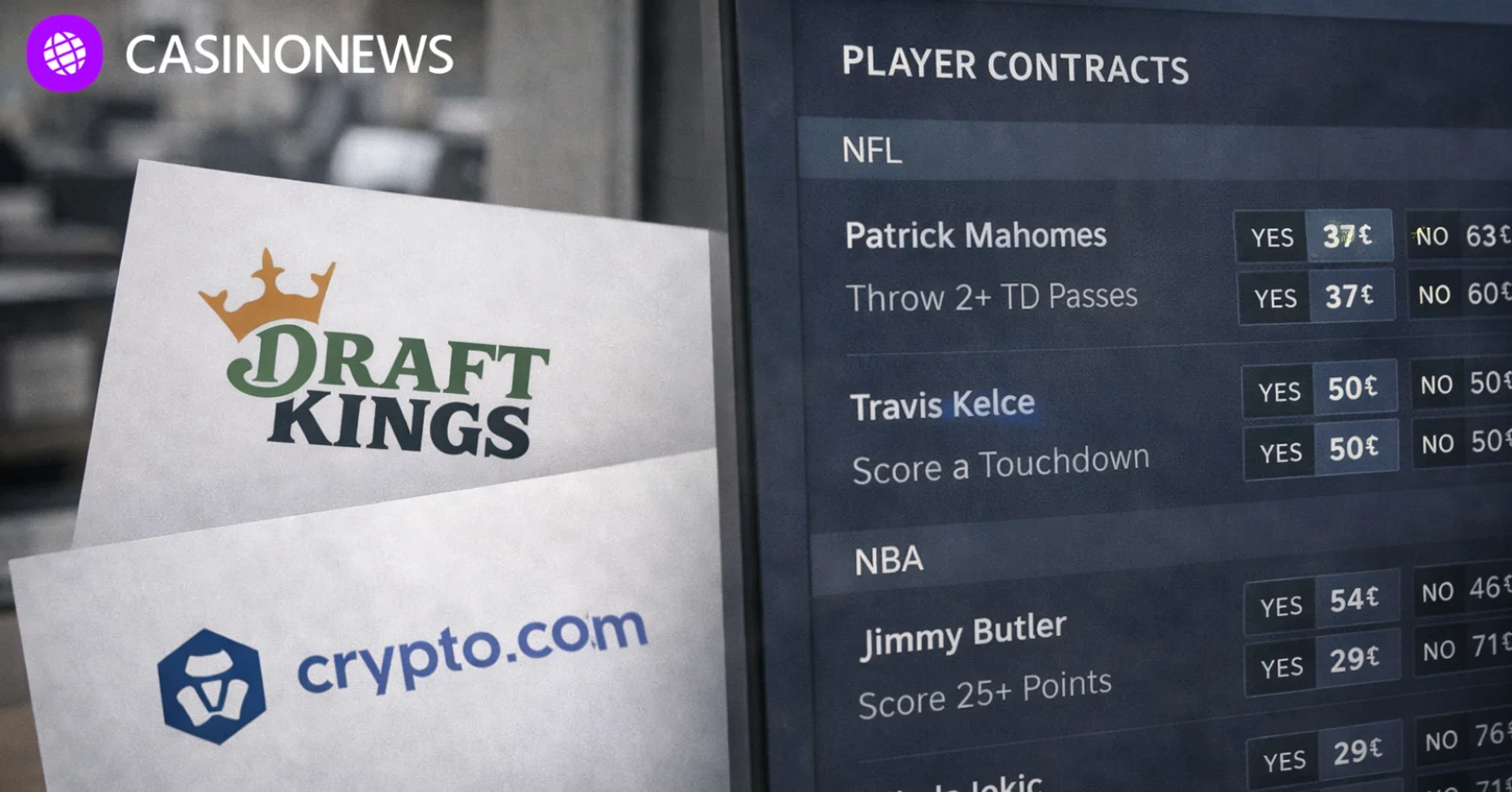
DraftKings is expanding its federally regulated event contract app, DraftKings Predictions, through a new exchange connection with Crypto.com that adds the first player-specific NFL and NBA contracts to the product.
The move shows how quickly these trading-style sports markets are shifting from simple game outcomes toward prop-like menus, even as states and courts still debate how they should be regulated.
Crypto.com connection brings first NFL and NBA player contracts
DraftKings said the Crypto.com link broadens what users can trade on DraftKings Predictions by introducing player-specific contracts for both the NFL and NBA. The company framed it as a catalog expansion rather than a separate launch.
Crypto.com is a CFTC regulated derivatives exchange, which is why DraftKings can connect to it for new event contracts. DraftKings also pointed to its Responsible Trading tools, including limits and self-exclusion options, as part of the product design.
More sports and more ways to use the app
DraftKings launched DraftKings Predictions in December 2025 and said it would connect to multiple exchanges, starting with CME Group. The Crypto.com deal is the first additional exchange connection the company has announced since launch.
DraftKings said sports event contracts are available in certain states where the app is live, including California, Florida, Georgia, and Texas. It also said the sports menu now spans soccer, MMA, golf, boxing, tennis, and the Olympic Games alongside its existing markets.
Regulators are still testing the boundary lines
Expansion is happening while state officials keep arguing that sports-linked event contracts function like sports betting. In Massachusetts, a judge recently ordered Kalshi to stop offering sports event contracts in the state unless it gets a sports wagering license, a signal that the legal fight is far from settled.
DraftKings also said it plans to integrate Railbird Exchange in the coming months, following its 2025 Railbird acquisition. The next marker is whether the bigger menu drives repeat use without triggering tougher state enforcement.