
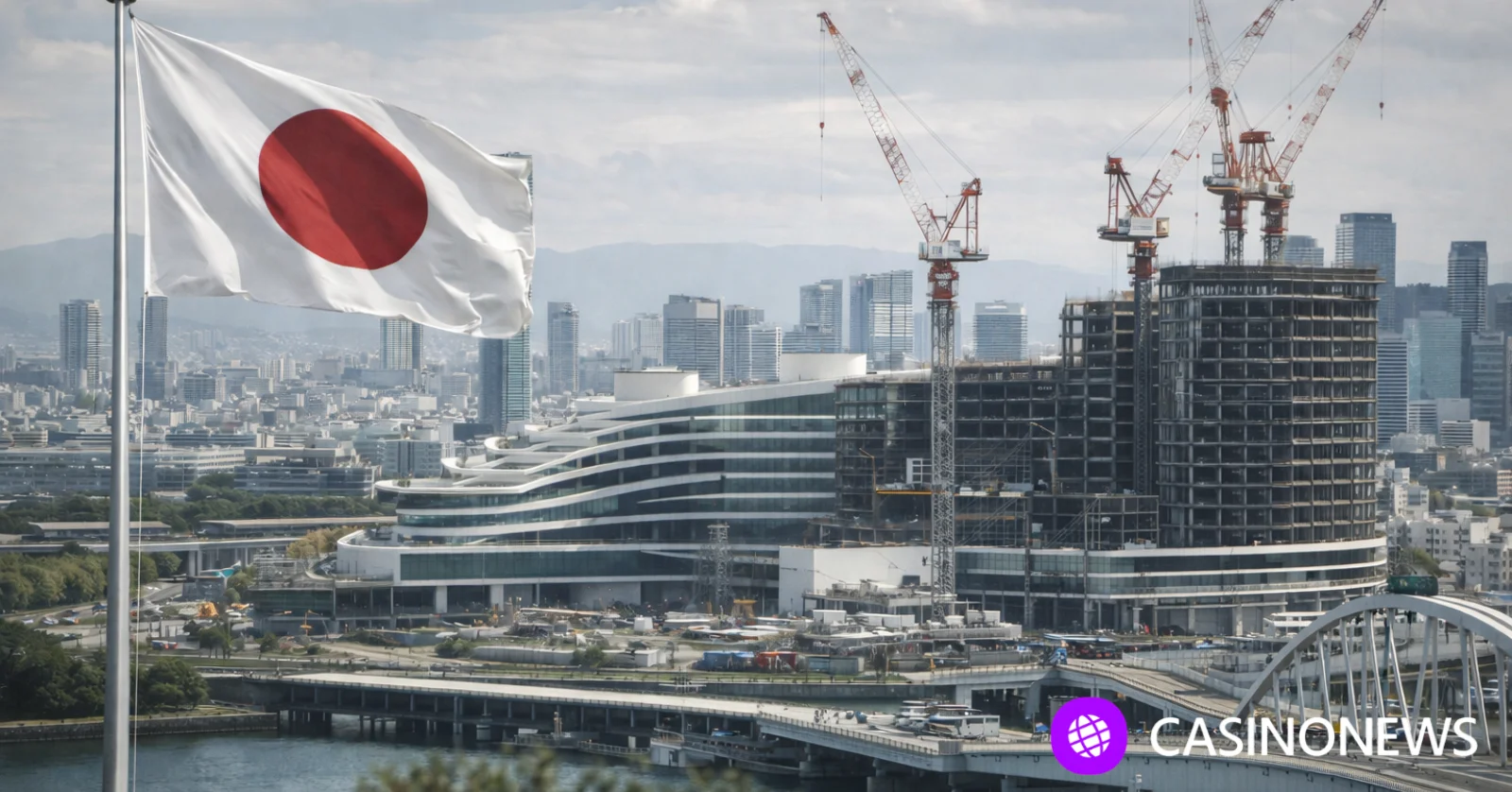
Japan’s integrated resort agenda has regained political oxygen after Prime Minister Sanae Takaichi’s snap election victory, with her Liberal Democratic Party securing more than a two-thirds majority in the lower house.
The mandate strengthens her ability to pursue economic policies that include advancing land-based gaming through the integrated resort framework, where Japan can authorize up to three developments.
A supermajority reduces the legislative drag
A two-thirds lower house position gives the government more freedom to move policy without relying on fragile parliamentary bargaining. In the IR context, that matters because Japan’s casino rollout has been defined by delay, local resistance, and a slow-moving approval process that has produced only one live project.
Takaichi, elected in October as Japan’s first female Prime Minister, has already pushed tourism leadership to resume implementation efforts tied to the IR mandate. The snap election result makes that push more credible, not just rhetorical.
Osaka remains the live template for the model
Japan’s only approved IR plan is the Osaka development led by MGM Resorts International and Orix, where work has begun. The Osaka build is now the proof point that future bidders will be measured against: capital structure, local political durability, compliance posture, and the ability to operate under Japan’s tightly controlled vision for casino gaming.
The presence of a live project also changes the internal policymaker conversation. It turns “can Japan do this” into “how should Japan do the next one,” which is a more operational, less ideological debate.
The second wave now has a calendar
Japan’s Tourism Agency has set out a new application window running from May 6 to Nov. 5, 2027. That date range is the practical timeline for any prefecture or consortium still considering a bid.
A defined window forces pre-work. Prospective bidders need partner alignment, community engagement, and a credible plan for governance, harm controls, and tourism integration. Japan’s model is designed to be selective, and the next application cycle will likely reward groups that can demonstrate political stability as much as commercial ambition.
The 2027 application window is the real checkpoint
The story is not that Japan has suddenly become “open.” The story is that the political mandate reduces uncertainty and makes the next phase more actionable. If Osaka stays on track and the 2027 window attracts credible proposals, Japan’s IR program shifts from a single-project exception into a repeatable, regulated pipeline.