
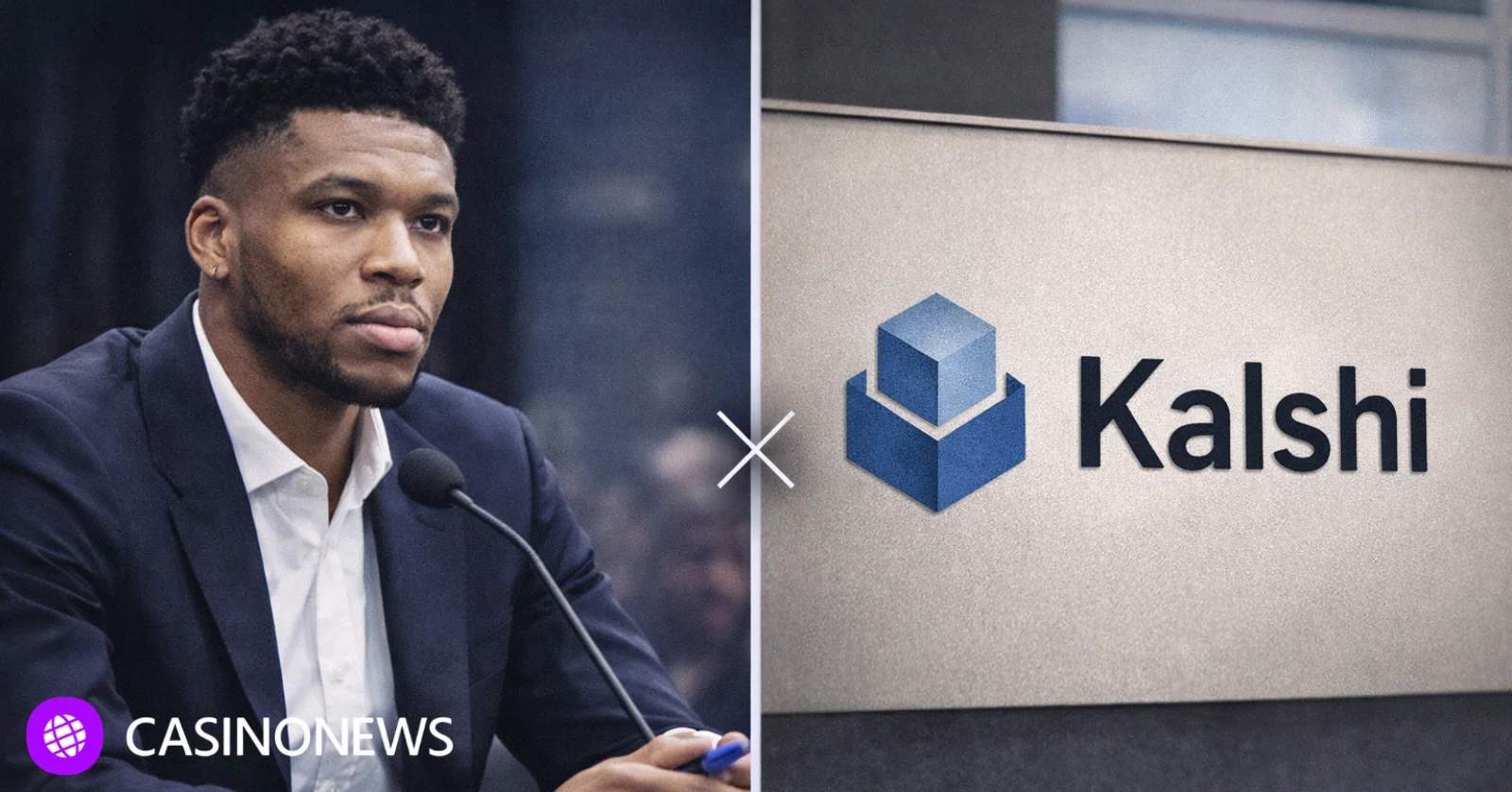
Giannis Antetokounmpo has disclosed that he owns an equity stake in prediction market operator Kalshi. The timing raised eyebrows because Kalshi had just run a contract tied directly to his own future.
Kalshi listed a market on whether Antetokounmpo would change teams before the NBA trade deadline on Feb. 5. The contract reportedly drew about $23.3 million in volume. Antetokounmpo confirmed his shareholder status the next day, after he stayed in Milwaukee.
A trade-rumor market made the optics hard to ignore
There is nothing unusual about sports markets tracking player movement. Trade rumors are constant, and anything tied to a superstar tends to pull attention.
The issue here is how close the two events were. When a platform can list a contract about a single player’s career and that same player then reveals an ownership stake, it immediately creates an “is this a conflict?” conversation, even if no one did anything wrong.
It also shows how quickly these rumor-driven contracts can scale. The Antetokounmpo trade market pulled liquidity fast, in a way that can rival or even outpace longer-term markets like season futures.
NBA rules allow small, passive holdings
The NBA’s 2023 collective bargaining agreement allows players to hold passive stakes under 1% in sports betting or fantasy companies, even if those companies offer NBA wagering. That gives the league room to treat a small, non-controlling investment as permissible.
But prediction markets have arrived faster than most league rulebooks have adapted. Even if the investment fits within the existing passive-holdings framework, the situation still highlights a gap between old categories and new products.
It is also unclear when Antetokounmpo invested. Kalshi has been raising capital as it has pushed toward mainstream visibility, including a reported $185 million round in June 2025 and larger raises later in the year. Without a timeline, people will naturally fill in the blanks.
Integrity questions are moving from abstract to practical
Prediction markets face the same basic integrity problem sportsbooks do: if a market can be moved by information the public doesn’t have, someone will try to use that edge. That is especially true with player-focused markets, where a single detail can swing prices quickly.
Kalshi says it bans trading on confidential information, and it has worked to position itself as a regulated venue. Even so, once active athletes become investors, the discussion changes. It stops being only about what markets exist and starts being about governance, disclosure, and whether leagues need clearer rules for markets that can be written about a player’s own career.
A simple reality: this won’t be the last headline like this
As long as prediction platforms can list contracts tied to star players, leagues and operators are going to keep running into these moments. The product moves quickly, and public perception moves even faster.
This episode didn’t create the conflict debate, but it put it in plain sight.