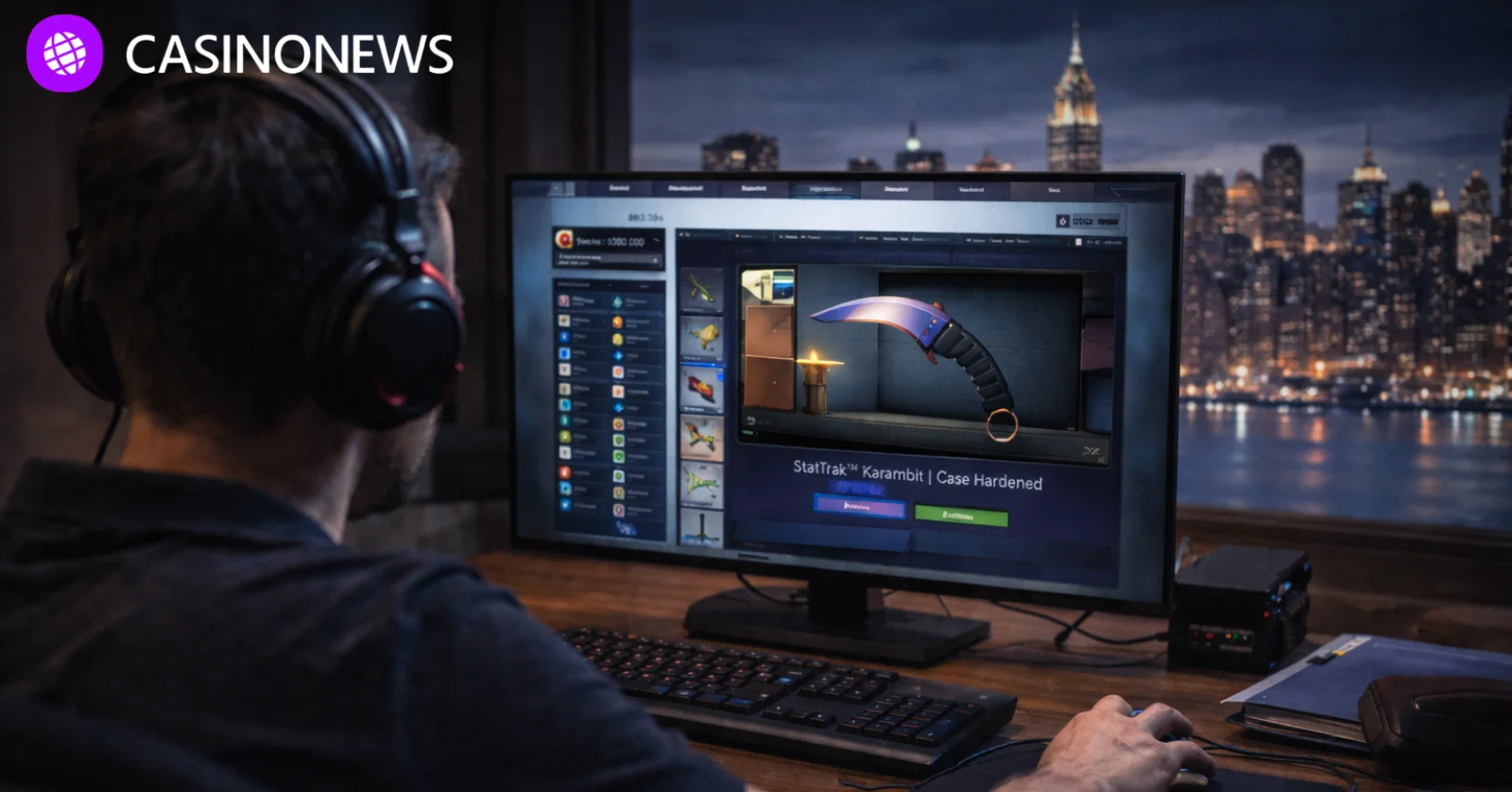
New York Attorney General Letitia James has sued Valve, arguing that the company’s loot box system crosses the line from video game monetization into illegal gambling. The complaint focuses on loot boxes in Counter-Strike, Team Fortress, and Dota. It says Valve built a business around charging players real money for a random shot at virtual items whose value is determined by rarity and create inflated value by resale markets.
The case is important because New York is not treating this as a simple consumer protection issue. The state is alleging violations of Article I, Section 9 of the New York Constitution and Penal Law provisions tied to promoting gambling. It is also seeking restitution, disgorgement, and a penalty equal to three times Valve’s gains from the conduct it has described.
New York is going after the system itself
At the center of the lawsuit is a simple argument. Players spend money, open a loot box, and get a prize determined entirely by chance. New York argues that this constitutes gambling or a game of chance under New York law. In the complaint, the state argues that users are risking something of value for the chance to receive something else of value, and that Valve’s system falls outside New York’s narrow exceptions for lawful gambling.
That gives the case a harder edge than the usual loot box fight. Many disputes in this space have focused on odds disclosures, child protection, or manipulative design. New York is taking a more direct route. It is saying Valve is not just running a disputed game feature, but an unlawful gambling system built into some of the biggest PC gaming titles on the market. Valve has not publicly commented since the lawsuit was announced.
Valve’s item economy sits at the center of the case
The lawsuit leans heavily on Valve’s own marketplace. It says the company earns money in two main ways, by charging $2.49 plus tax for most keys used to open loot boxes, and by taking a 15% cut on sales through the Steam Community Market. The complaint says Valve has sold billions of dollars’ worth of Counter-Strike keys alone, including tens of millions of dollars to New York residents.
The state is also working to show that these items are not just decorative skins with no real value. It points to the growth of the Counter-Strike skins economy, which passed $4.3 billion in March 2025, and to high-end marketplace sales that have reached $1 million. The complaint says Valve’s platform lets users convert skins into Steam Wallet funds that can be spent on games, hardware, and more loot boxes, while third-party sites offer a route to direct cash sales. The third-party secondary market is a major part of New York’s argument.
Minors and weak age checks are a major part of the complaint
The complaint also implies that the greater threat becomes a youth protection issue. The attorney general’s office says Valve’s games are especially popular with teenagers and younger players, and argues that the company exposed them to casino-style mechanics inside products that feel familiar and low-risk. In the press release announcing the lawsuit, it is stated that the loot box features are addictive, harmful, and illegal, and the accusation implies that Valve is knowingly making billions of dollars by letting children and adults gamble for valuable virtual prizes.
The complaint tries to support that claim with details about how the platform works. It says Steam users can pass the age gate by checking a box saying they are at least 13 years old, and alleges that Valve did not meaningfully enforce even that minimum when underage use became visible. That gives New York a second line of attack. The office is not only arguing that the product is unlawful, but that access controls were weak in a way the state sees as plainly insufficient.
A direct test of how U.S. regulators view loot boxes
The wider importance of the case is clear. In the United States, pressure on loot boxes has usually come through consumer protection, privacy, or platform rules rather than a direct illegal gambling accusation. A recent example came in January 2025, when the FTC announced a $20 million settlement with Cognosphere, the publisher of Genshin Impact, over youth protections, odds disclosures, and the sale of loot boxes to players under 16 without parental consent. That was a serious step, but it still stopped short of calling the model illegal gambling under state law.
New York is pushing further. If the court accepts the state’s argument that Valve’s trading and resale ecosystem gives these virtual items clear monetary value, the ruling could reach far beyond one publisher. It would give other state regulators a blueprint for targeting the full chain that links random rewards, marketplace pricing, and cash-out routes.
Valve may be first, but it will not be the last
Valve is an obvious first target because its item economy is large, established, and easy to trace. The company has its own marketplace, a long history of tradable skins, and a massive secondary market that the complaint says it helped sustain even while publicly distancing itself from off-platform cash trading. New York argues that this makes Valve easier to separate from publishers whose randomized items cannot be sold at anything close to the same scale.
That does not mean the pressure will stop with Valve. A serious court fight in New York will dive into questions the gaming industry has spent years trying to avoid answering. When does a cosmetic item become something of value. When does randomness become wagering. And how much revenue is generated once a game company builds a system where players can track prices, chase rare drops, and turn digital prizes back into spendable money.
For now, the immediate fight is over how the court chooses to describe Valve’s model. The company’s system has long been defended as part of the modern games economy. New York wants the court to describe it in far harsher terms. If that argument lands, this case will not be remembered as another dispute over in-game purchases. It will stand as the moment a state tried to treat loot boxes as gambling first and game design second.