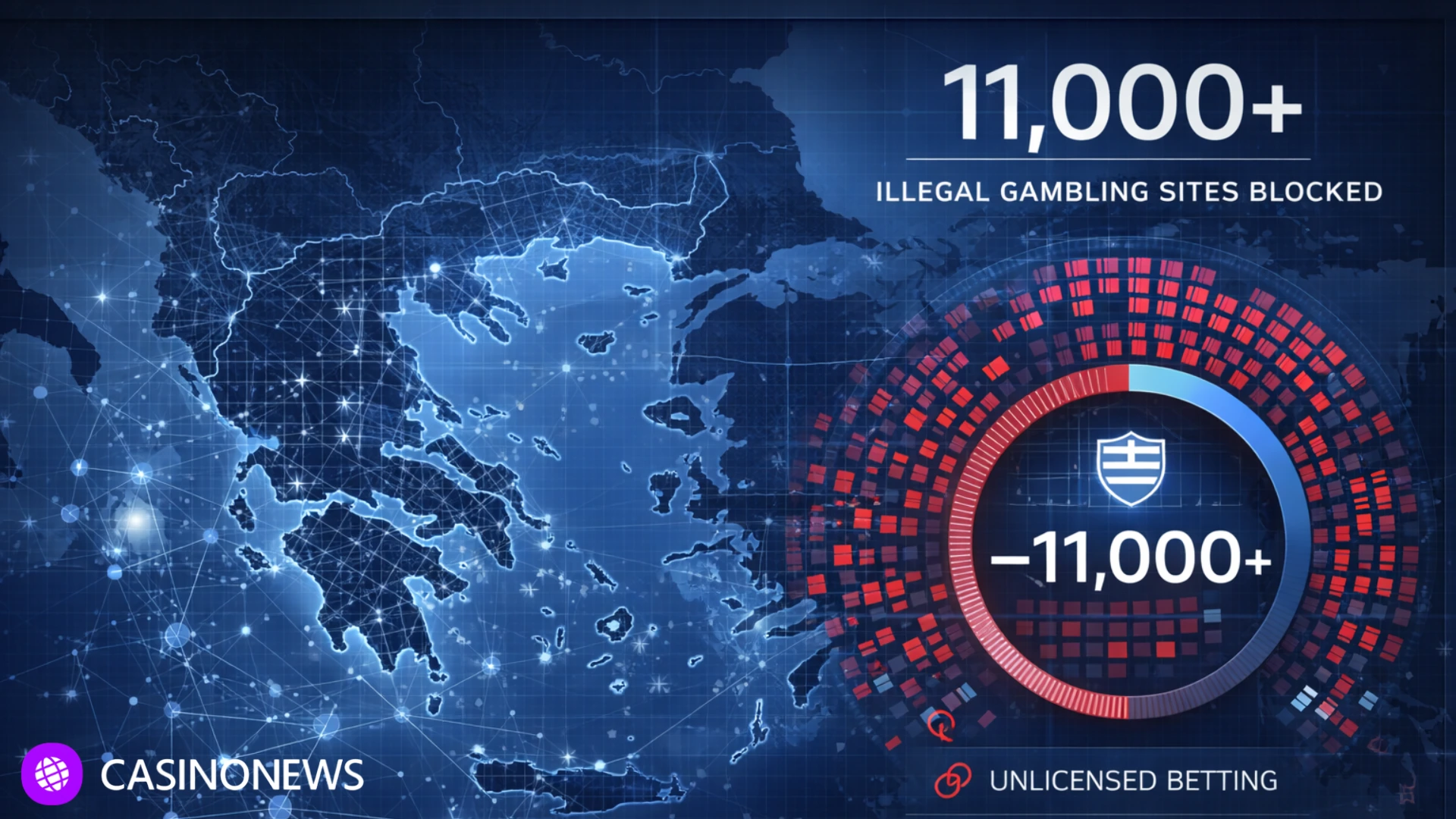
Greece’s gambling regulator has blocked approximately 11,000 illegal gambling websites as it prepares a new legislative push aimed at strengthening enforcement against unlicensed operators and tightening player protection across the market.
The Hellenic Gaming Commission (EEEP) confirmed the figures during a briefing led by its new leadership, describing a sustained surge in illegal online gambling activity despite ongoing blocking efforts. The regulator said the sites targeted include unlicensed betting platforms and affiliated domains designed to direct traffic to illegal operators.
According to the EEEP, illegal betting and unlicensed gambling in Greece is now estimated to generate between €1.6bn and €1.7bn annually, with the majority of activity taking place online. While authorities have seen a marginal decline in recent years, the regulator acknowledged that the size of the black market remains largely resilient.
Illegal operators outpace enforcement efforts
The EEEP warned that enforcement remains difficult due to the speed at which new gambling-related domains appear. Regulators estimate that around 10,000 new domains linked to gambling are registered globally each month, allowing illegal operators to re-emerge quickly after blocking actions.
To accelerate detection, the regulator is seeking closer cooperation with Greece’s telecommunications and postal authority. Access to domain registry data would allow the EEEP to identify and blacklist illegal gambling sites more rapidly, reducing the lag between site activation and enforcement.
Regulatory officials stressed that traditional blocking measures alone are no longer sufficient to disrupt organized illegal gambling networks operating across borders and using constantly rotating digital infrastructure.
Player protection becomes central to crackdown
Combating illegal gambling has been placed at the core of the EEEP’s 2026–2030 strategic plan, alongside expanded safeguards for vulnerable players and minors. The regulator said protecting underage users has become increasingly urgent as illegal platforms continue to bypass age-verification controls.
Citing European research, the EEEP noted that illegal gambling participation among minors is widespread, with studies suggesting that one in three 16-year-olds has engaged in unlicensed online gambling. Regulators argue that such platforms expose younger users to higher risks due to the absence of responsible gaming tools, spending limits, and intervention mechanisms.
The authority has framed illegal gambling not only as a regulatory failure but as a broader public-interest issue tied to consumer harm, data security risks, and money laundering exposure.
New gambling bill targets faster intervention
To address these challenges, the EEEP is preparing to submit a new gambling bill to the Ministry of National Economy and Finance. The proposed legislation would grant the regulator more direct and interventionist enforcement powers.
Among the measures under consideration is the authority to immediately suspend or remove advertising linked to illegal gambling operations, without the delays associated with current administrative procedures. The regulator believes this step would significantly reduce the visibility of black-market operators, particularly on digital platforms.
The EEEP has also signaled that licensed operators will be expected to play a more active role in combating illegal gambling. The regulator has warned that enforcement cannot rely solely on supervisory action and that cooperation across the licensed sector is essential to limit player migration to unregulated sites.
Casino licensing reforms also under review
Beyond online enforcement, the proposed reforms extend to Greece’s land-based casino sector. The regulator is seeking to clarify licensing and location planning frameworks, particularly as major integrated resort projects approach completion.
Two large casino-led tourist developments, in Ellinikon and Marousi, are currently expected to become operational in 2028. The EEEP said these projects are generally progressing at a high level of regulatory maturity and compliance.
For smaller regional casinos, however, the regulator plans to move away from open-ended licenses granted under older legal frameworks. Instead, it intends to introduce a concession-based model with clearer operational conditions and defined time horizons.
Recent regulatory actions have already affected several regional operators, including the revocation of the Patras casino license and debt-restructuring processes involving casinos in Corfu and Thrace.
Balancing regulation and market channelization
While outlining its tougher stance, the EEEP acknowledged that excessive regulation can have unintended consequences. Regulators warned that overly restrictive rules may drive players toward illegal platforms that operate without consumer protections or tax obligations.
The authority said illegal gambling operators often remain technologically ahead of regulators, leveraging faster deployment tools and more aggressive marketing strategies. As a result, the EEEP argues that enforcement must be paired with a competitive, well-regulated legal market that offers players safer alternatives.
To support this approach, the regulator is investing in data analytics, real-time monitoring systems, automated licensing processes, and advanced information infrastructure. Organizational restructuring and workforce expansion are also underway as part of a broader digital transformation program.
The EEEP said its long-term objective is to strike a balance between robust enforcement, effective player protection, and sustainable market regulation, as Greece intensifies its efforts to contain illegal gambling activity.