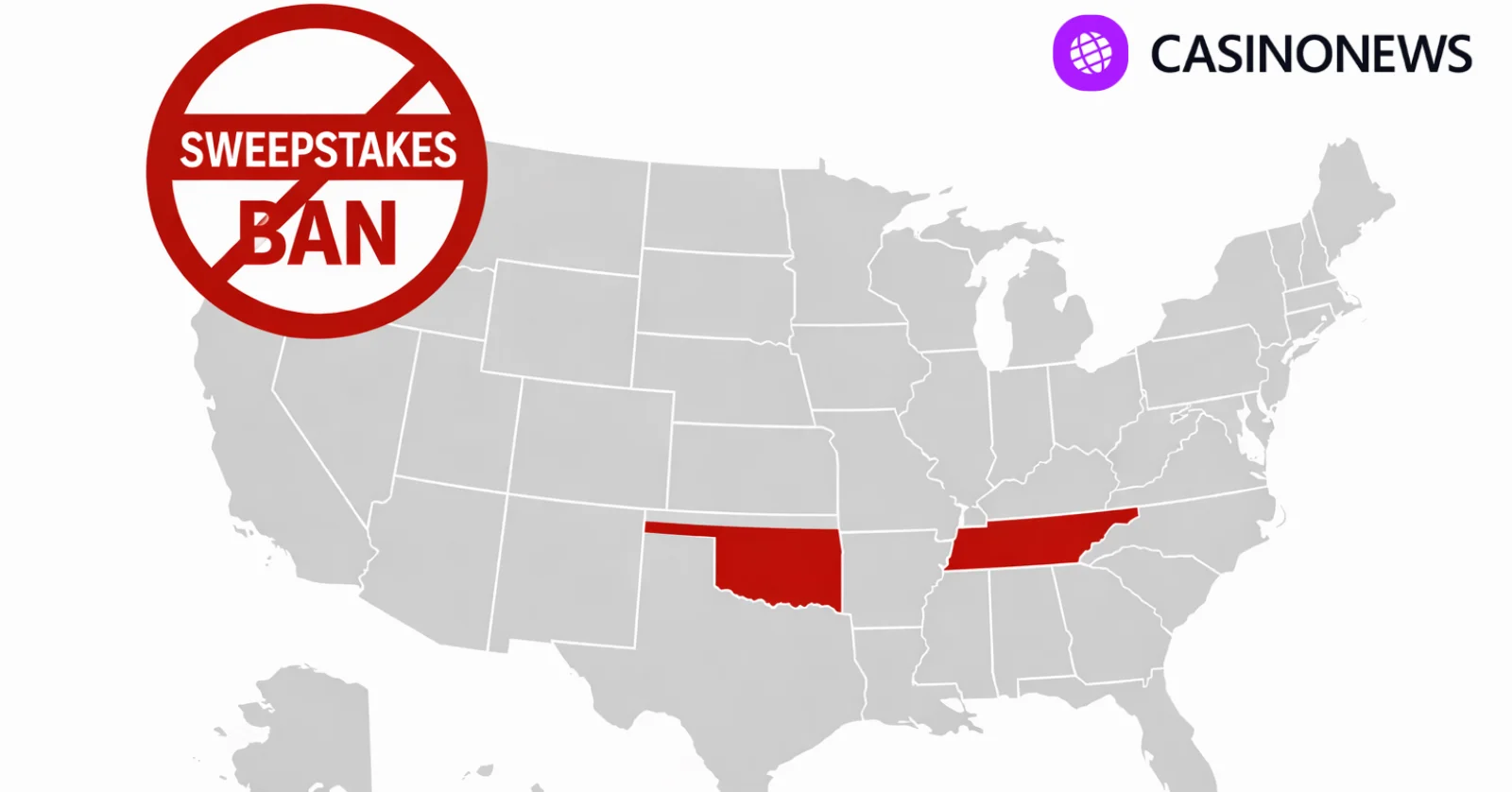
Tennessee and Oklahoma have moved closer to statewide bans on dual-currency sweepstakes casino models, with both state Senates passing bills that spell out how these platforms fit under existing gambling laws.
The measures target sites that use “Gold Coins” and “Sweeps Coins” systems to offer casino-style games while claiming they operate as promotional sweepstakes rather than gambling businesses.
Tennessee bill expands civil enforcement tools
In Tennessee, lawmakers focused on strengthening civil enforcement alongside existing gambling bans. The bill gives state officials clearer authority to seek injunctions and financial penalties without relying solely on criminal charges.
That follows action from the Tennessee Attorney General’s Office, which sent cease-and-desist letters to nearly 40 online sweepstakes casinos. The office said recipients either removed the disputed features or agreed to shut down their operations in the state.
The new legislation aims to make it harder for operators to argue that dual-currency models fall outside gambling laws by tightening the statutory definitions.
Oklahoma frames sweepstakes as illegal gambling and targets the ecosystem
Oklahoma’s approach centers on defining dual-currency sweepstakes casinos as illegal gambling under state law. Once that definition is in place, enforcement can extend beyond operators to companies that provide payments, software, marketing, or other support.
Lawmakers in Oklahoma are hoping that the law goes a step further to target any company that facilitates the service too. The shift moves enforcement beyond individual brands and toward the wider network that enables them to operate.
State-by-state bans are replacing informal warning cycles
Both states are now stepping past simple warning letters. For operators, that leaves less room to argue. The question is no longer whether their model sits in a grey area. It is whether it is allowed in a particular state at all. If more states follow this path, dual-currency platforms will fall into the same grey market as prediction markets.