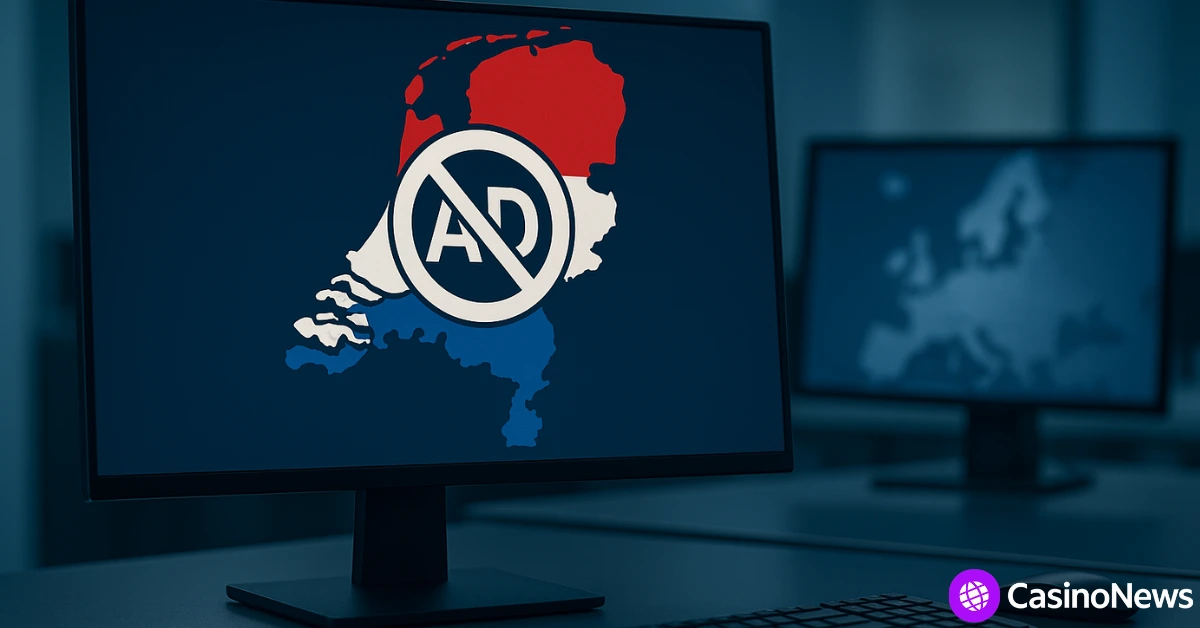
When the Netherlands implemented its sweeping gambling sponsorship ban in mid-2023, the impact spread far beyond football clubs and sportsbook operators. Because the Netherlands is one of Europe’s most closely watched regulated markets, its decisions often shape policy trends across the EU. The restrictions didn’t just end shirt logos and stadium branding; they signaled a deeper shift in how governments view gambling visibility.
Lawmakers called the ban a necessary safeguard. Operators labeled it political overreach. Regulators across Europe treated the Netherlands as a test case. That raises the central question:
If the Netherlands can enforce one of Europe’s toughest visibility crackdowns, will other markets follow?
What changed under the Dutch ban
The ban, formalized through the Ministry of Legal Protection’s Besluit Ongerichte Reclame Kansspelen and enforced by Kansspelautoriteit (KSA), prohibits most forms of “untargeted” advertising. As of July 2023, the following became illegal:
- Sponsorship of sports teams, including shirt and sleeve logos
- Stadium and training-facility branding
- Visible signage during matches, press events, or livestreams
- Outdoor ads on billboards, buses, and digital screens
- TV, radio, and online video ads unless strict age-targeting is proven
The most controversial rule requires digital marketers to demonstrate 95% certainty that ads reach adults only, a requirement confirmed in KSA’s 2023 guidance (Onderzoek Reclame Kansspelen Op Afstand).
The Ministry’s position was clear:“Gambling should not be normalized or embedded in everyday life.”
Dutch Ministry of Legal Protection, 2023
Why the Netherlands acted when it did
The ban followed years of accumulated pressure.
Youth exposure climbed rapidly
KSA’s Onderzoek Reclame Kansspelen Op Afstand 2022 found that around 20% of Dutch adults aged 18–24 encountered online gambling ads weekly which is unusually high for a newly regulated market.
Advertising volume spiked after legalization
Following the October 2021 launch of licensed online gambling, ad spend increased by more than 150% year-over-year (Stichting Reclame Code, Jaarverslag Reclame Monitoring 2022).
Political sentiment turned sharply
Consumer-protection parties compared gambling ads to tobacco marketing. By early 2023, even pro-industry lawmakers acknowledged the market had become “overheated.”
Immediate fallout for clubs, operators and broadcasters
Football clubs lost major revenue
A June 2023 NOS Sport segment (Bookmakers azen op voetbalclubs) reported that multiple Eredivisie clubs faced losses of €1–3 million per year from sponsorship deals. One club executive summarized the shift:
“We went from one of our biggest revenue categories to zero in a single regulatory decision.”
Operators lost their most efficient branding channel
Without shirt sponsorships, operators saw:
- lower brand visibility
- rising customer acquisition costs
- increased reliance on affiliates and SEO
Broadcasters scrambled to fill gaps
Sport-focused networks, previously supported by sportsbook pre-roll ads, had to reprice inventory and seek alternative advertisers almost immediately.
This wasn’t just a financial shock; it was a turning point.
Once the initial disruption settled, industry stakeholders began reassessing how gambling brands build visibility in Europe. The issue was no longer simply “ads vs. no ads”; it was whether the old visibility model could survive at all.The next phase wasn’t about what the ban removed.
It was about what it revealed.
Industry reaction with fear, strategy shifts and quiet support
Publicly, operators warned of shrinking visibility, rising CAC, and the risk of a Europe-wide domino effect. These concerns had precedent: Italy and Spain saw acquisition costs spike after their own sponsorship restrictions.
Privately, several Dutch executives admitted the reckoning was overdue. In a May 2023 NRC Handelsblad interview, the CEO of Nederlandse Loterij stated:
“The biggest threat to our license was the industry’s marketing behavior, not the regulator.”
The ban didn’t just cut exposure; it forced the industry to confront the consequences of its own advertising boom.
Europe’s regulatory trendline and why the Netherlands isn’t alone
Far from being an anomaly, the Dutch shift is part of a larger European pattern.
- Spain enforced Royal Decree 958/2020, banning most sponsorships.
- Italy implemented a near-total advertising ban under the 2019 “Dignity Decree.”
- Belgium banned most gambling ads in 2023 and sponsorships starting in 2025.
- The UK will remove gambling front-of-shirt sponsors in 2026.
- Germany is actively debating sponsorship restrictions in upcoming Glücksspielstaatsvertrag reforms.
The Netherlands tightened its rules again in July 2025
In July 2025, the Netherlands updated its gambling laws again to further reduce gambling visibility in sports. The reform added restrictions on:
- gambling branding around sports broadcasts
- ad frequency during peak youth viewing hours
- integrations with sports influencers and sports-adjacent content
Regulators said the update aimed to reduce “high incidental exposure” among young viewers, reinforcing that the Dutch framework is not static but tightening over time.
Germany’s parallel debate
Germany’s trajectory mirrors the Dutch experience: rising youth exposure, increased political pressure, and regulators calling current visibility “unsustainably high.” If Germany adopts similar limits, the domino effect across Central Europe could accelerate dramatically.
Instead of a one-off ban, the Dutch model now looks like a blueprint in motion.
What comes next with Europe’s three most likely scenarios
Europe’s visibility rules are tightening, the question is how quickly.
Scenario A: a European domino effect (high likelihood)
If Germany moves to restrict sponsorships, neighboring countries may align within 12–24 months. Belgium and the UK are already halfway there.
Scenario B: partial restrictions spread (moderate likelihood)
Some countries may adopt a “visibility dial-down” approach:
- no shirt logos
- limited stadium branding
- watershed windows
- login-only digital ads
Scenario C: Dutch model stays unique (low likelihood)
Reversal would require:
- severe market shrinkage
- a major surge in illegal gambling
- coordinated pressure from clubs and broadcasters
None of these conditions have emerged.
The momentum is clear: European gambling visibility is contracting, not expanding.
What operators and affiliates should prepare for
Rebuild acquisition strategies
Operators should increase investment in:
- creator-driven content
- fan-community partnerships
- targeted digital campaigns
- long-form authority content
Brace for stricter age-verification metrics
The Dutch 95% adult-reach threshold is already being studied by regulators in Germany and Belgium.
Strengthen compliance across sports media
Zero-presence policies, automated filtering, and league-level compliance agreements will become standard.
Expect cross-border ad-market shifts
When one region bans sponsorships, neighboring markets adjust almost immediately.
A new logic for gambling visibility in Europe
The Netherlands didn’t just restrict gambling sponsorships, it redefined the logic behind visibility rules.
Old assumption:
Advertising is allowed unless it causes harm.
New assumption:
Advertising is restricted unless it can be proven safe.
This shift is already influencing regulators across Europe. How widely it spreads depends on how operators adapt, and how regulators interpret the Dutch outcomes through 2026 and 2027.
Policymakers argue that reducing visibility protects vulnerable groups. Critics warn that suppressing legal advertising risks increasing offshore activity, a concern regulators acknowledge but believe can be controlled through stronger enforcement.
The question isn’t whether Europe will restrict gambling visibility, it’s how fast regulators decide to follow the Dutch blueprint.
References
https://kansspelautoriteit.nl/publish/library/17/monitoringsrapportage_online_kansspelen_najaar_2023_1.pdf
https://kansspelautoriteit.nl/publish/library/35/jaarverslag_kansspelautoriteit_2022_online.pdf
https://www.tweedekamer.nl/downloads/document?id=2023D50977
https://nos.nl/collectie/13862/artikel/2377061-bookmakers-azen-op-voetbalclubs-zeker-15-miljoen-aan-deals-in-de-maak