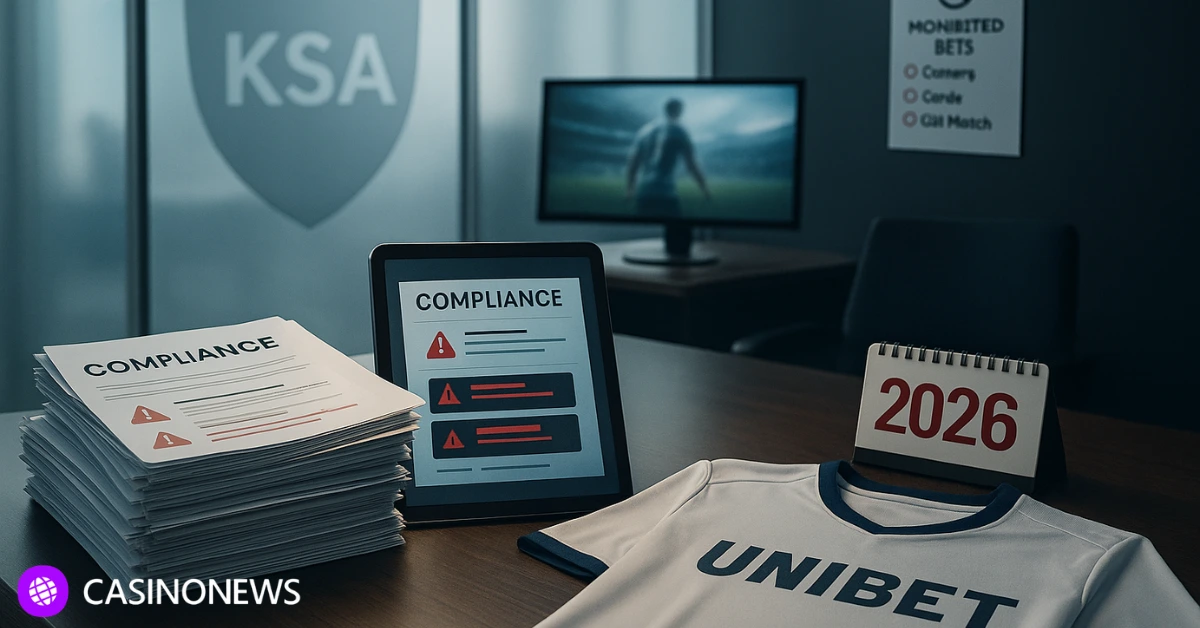
The Dutch gambling market is entering a tougher phase, and Unibet has become a key example of how quickly the regulator is willing to act when rules are breached. Over the past year, the Kansspelautoriteit (KSA) has issued multiple warnings to the operator and has now placed it under a penalty order that could cost up to €450,000 if further violations occur. These developments arrive at a time when the country is preparing to overhaul its licensing system and re-evaluate every operator already active in the market.
What stands out is not only the number of incidents involving Unibet, but the timing. The first wave of Dutch online gambling licenses will expire in 2026, and the KSA is making it clear that renewal will not be automatic. The regulator expects stronger internal controls, faster corrective action and clearer accountability from operators moving forward.
For Unibet, this means each recent enforcement action carries more weight than it might have in previous years. The company now has to demonstrate that these issues are fully resolved and that stronger systems are in place before it enters the renewal process.
Sponsorship misstep exposes heightened regulatory expectations
One of the first warnings issued this year came from an incident involving a cycling team that Unibet sponsors. A team bus displaying the company logo was used on public roads in the Netherlands, which violated the rules on non-targeted advertising. While the situation was corrected quickly, it showed how easily a sponsorship agreement can create compliance problems if every detail is not carefully monitored.
This particular case also arrived ahead of the full ban on sports sponsorships that went into effect in July 2025. Where operators were told to remove logos and branding from team assets, uniforms and vehicles. The KSA has made clear that any visibility in public spaces, even unintentional, will be viewed as a breach of the law.
The warning served as a reminder that the regulator now expects brands to anticipate these issues rather than respond to them after the fact. Simple oversights that may once have been treated as misunderstandings are now treated as preventable compliance failures.
Technical error adds to regulator concerns over operational control
Unibet received another warning after a BonusBuy feature briefly appeared in one of its games. The mechanic functioned like an autoplay tool, which is prohibited in the Netherlands. According to the operator, the feature was activated by mistake by an external supplier and was live for only a short period before being removed.
Although the company compensated affected players and tightened its internal checks, the regulator focused on the larger point. Dutch law places full responsibility on the operator, not the supplier. The KSA expects operators to control their products at all stages, including launch and ongoing monitoring.
This incident may have been corrected quickly, but it contributed to the broader picture the KSA is forming of Unibet’s inadequate operational oversight. Each error reinforces the regulator’s belief that closer supervision is needed.
Prohibited sports bets trigger €450,000 penalty order
The most serious development came when the KSA announced a penalty order against Unibet for offering betting markets that Dutch law explicitly prohibits. These included wagers on corner kicks, yellow cards and matches involving players under 21. Such markets are banned due to the increased risk of manipulation, and the regulator has repeatedly warned operators not to offer them.
Investigations showed that these markets appeared multiple times between 2022 and May 2025. While Unibet cancelled some bets and attempted to improve its monitoring systems, the KSA concluded that the changes were not consistent or effective enough. Because of this, the regulator issued a penalty order that applies a weekly fine of €75,000 for future violations, up to a maximum of €450,000.
The order does not punish past actions. Instead, it creates a financial incentive for the operator to prevent any repeat of the problem. It will remain in effect until August 2028, covering several key years of regulatory change.
New licensing rules raise compliance stakes for all operators
The Netherlands will introduce new licensing requirements from January 2026, which all new applicants and renewal candidates must meet. These include mandatory exit plans, more transparent reporting of policy changes and updated checks on technical systems such as the control database. Operators involved in previous enforcement cases will also need to explain how they corrected those issues and what measures are in place to prevent them happening again.
For operators entering their first renewal cycle, this marks a major shift. The process will be stricter than the original license application, and compliance history will play a central role in the regulator’s decision. Companies that have faced repeated warnings will need to present clear evidence of improvement.
This puts Unibet in a sensitive position. While the operator has taken steps to address each issue raised, the KSA will be looking for a strong, coherent and long-term plan that shows all risks have been fully resolved.
Dutch market shifts into stricter second phase of oversight
The recent enforcement actions signal a shift in how the KSA intends to regulate the online market. In the early years, the focus was on launching the system and guiding operators through a new regulatory landscape. As the market matures, the regulator is less willing to offer reminders and more willing to issue penalties when rules are broken.
Unibet’s recent challenges show how quickly small issues can escalate when they occur in a tighter regulatory environment. Branding errors, technical oversights and sports trading mistakes are no longer viewed separately but as part of a broader pattern the regulator expects operators to correct.
As the country enters its next licensing cycle, operators will need to show that their systems are prepared for a market where expectations are higher and enforcement is faster. The message is simple. The Dutch market is still open for business, but it is no longer forgiving of preventable mistakes.