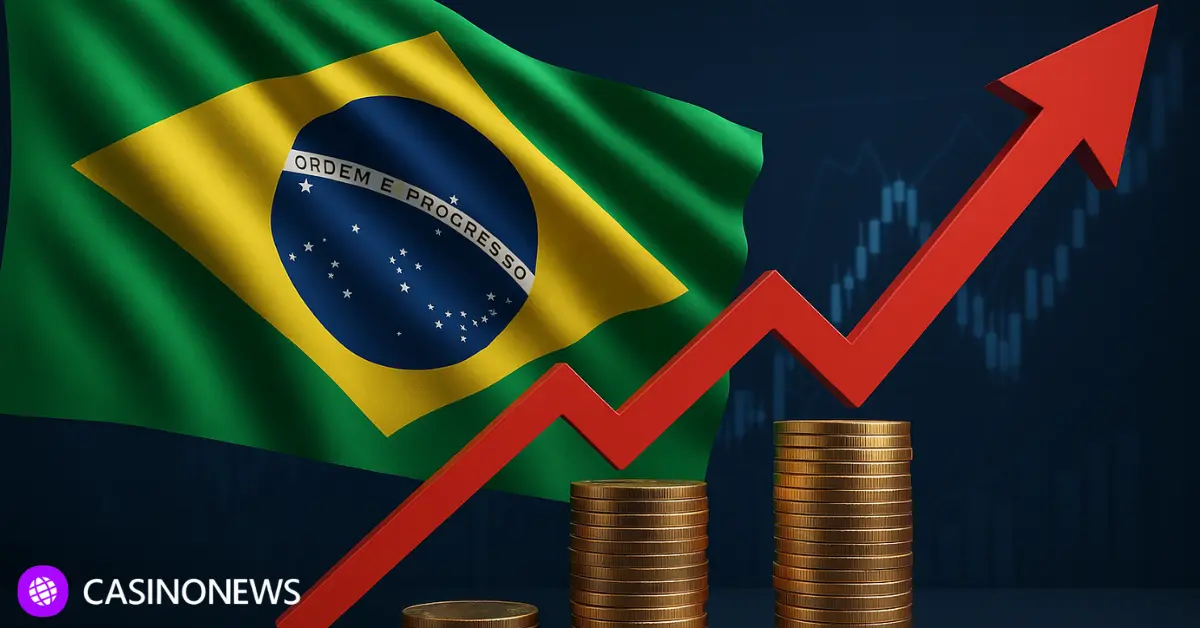
Brazil’s fast-growing regulated betting market is entering a period of uncertainty as lawmakers consider a substantial tax increase that industry groups say could undermine channelization and strengthen the illegal market. The Brazilian Institute of Responsible Gaming (IBJR) has urged legislators to slow down and assess the long-term consequences before altering the country’s financial framework for the market only months after regulation took effect.
A new legal market under pressure
Brazil’s regulated betting sector began in 2025 with confidence. Companies had paid the BR30 million authorization fee, new brands were entering the market and early indicators suggested that consumers were finally shifting from offshore platforms to licensed services. Law 14.790/23 had set the foundation for a long-term system built around careful oversight, consumer protection and a stable taxation rate.
That stability is now being tested. A new proposal, PL 5.473/2025, seeks to raise the main tax rate on gross gaming revenue from 12 percent to 24 percent. According to the IBJR, the combined impact of the tax reform would raise the tax on legal operators by more than 45 percent once national taxes, regulatory fees and social security contributions are included.
The timing concerns operators as much as the size of the increase. The regulated market has been active for less than a year, and companies say they are still setting up operations, technology and compliance systems to match Brazil’s requirements.
Illegal betting still has a strong hold in the country
The debate has shone a light on the scale of the offshore market, which remains the dominant channel for Brazilian bettors despite new regulation. Studies cited by the IBJR indicate that more than 51 percent of online betting activity still flows through unlicensed operators. These companies face no licensing fees, no taxes and no supervision.
Estimates suggest that illegal platforms move between BR38 billion and BR40 billion each year, causing around BR10.8 billion in lost public revenue. The IBJR argues that raising taxes on regulated companies widens the gap between compliant operators and offshore competitors, making it harder for Brazil to shift consumers into the legal ecosystem.
The institute points to internal models showing that reducing the illegal market’s share by only five percentage points would generate roughly BR1.1 billion annually for the government, outweighing the projected benefit of doubling the GGR tax.
Overtaxing could lead to an empty legal market
IBJR president Fernando Vieira told lawmakers this week that policymakers risk misjudging the sector’s financial capacity. He said that expectations that betting companies can stabilize after such a dramatic increase on their own are unrealistic.
Vieira warned that steep tax increases could lead to severe outcomes like: reduced investment, high overhead costs, or a market that shifts away from formal licensing. Each scenario, he said, weakens oversight and leaves players exposed to platforms that offer no safeguards, no audits and no consumer protections.
He added that the most efficient way to increase public revenue is to dismantle the illegal market rather than “suffocate companies that are regulated and paying taxes.”
A pivotal moment for Brazil’s regulatory future
The Senate’s discussions on PL 5.473/2025 will determine whether Brazil prioritizes channelization or an accelerated revenue strategy. The IBJR continues to push for a industry model that supports long-term compliance, protects public funding streams and prevents consumers from drifting back to offshore operators.
For now, the message from industry experts is consistent. Without balanced taxation and clear rules, the progress made since regulation began could be at risk.