California law enforcement has seized slot-style wagering terminals installed at Santa Anita Park, cutting short a new pari-mutuel product that the horse racing industry hoped could provide a fresh revenue stream. The removal came within days of the machines appearing on the grandstand floor, setting up another high-stakes dispute over where California draws the line between racing wagers and casino-style gambling.
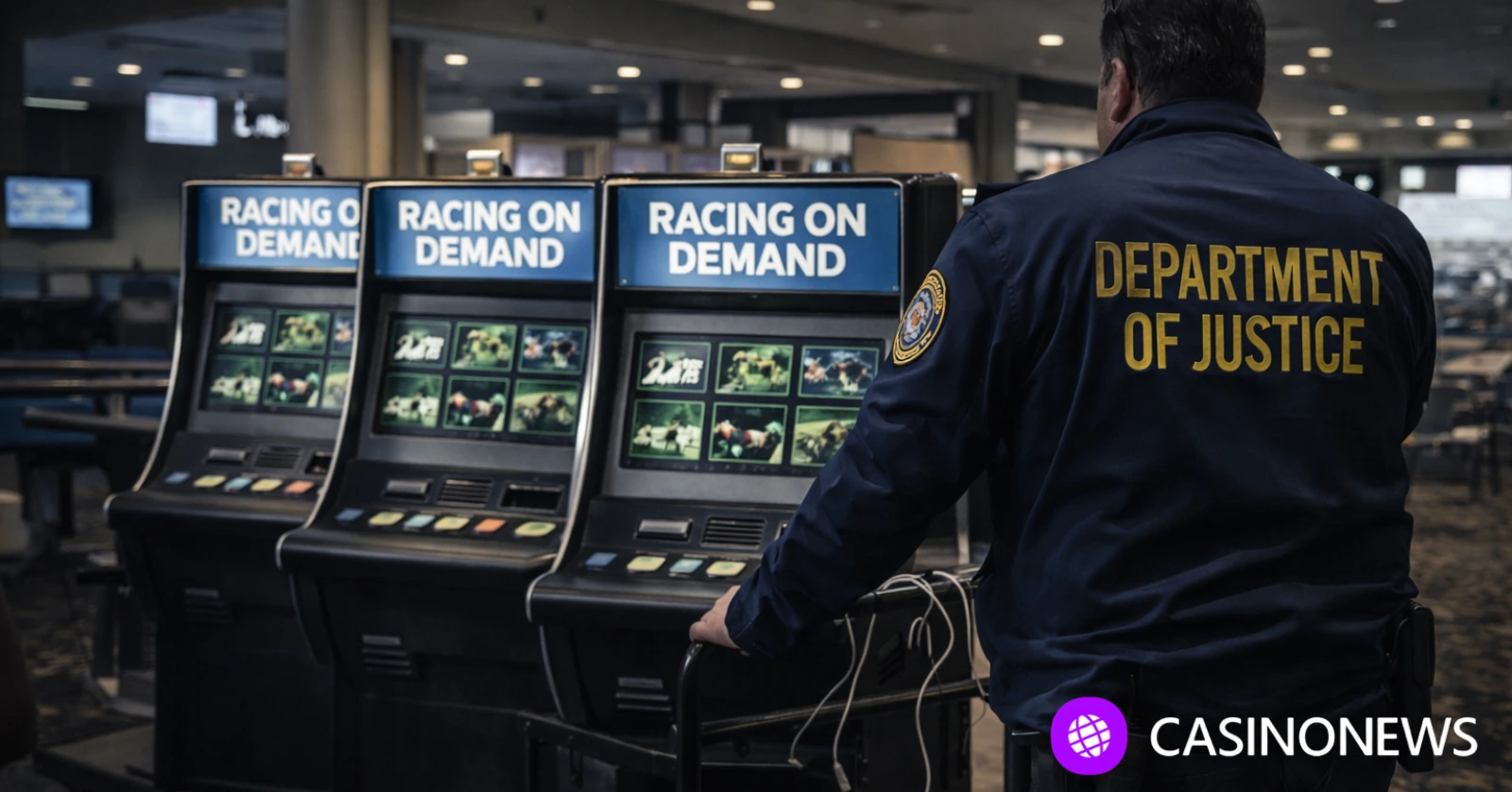
Agents from the California Department of Justice removed 26 “Racing on Demand” terminals from the Arcadia racetrack on Saturday, January 17, after live racing concluded. Santa Anita said the action was taken under the direction of the attorney general’s office, and the machines, along with cash inside them, were confiscated.
The seizure immediately escalated an already tense standoff between racetracks and tribal gaming interests, with both sides signaling the issue is headed toward litigation.
DOJ seizes terminals days after quiet rollout
Santa Anita installed the terminals on Thursday, January 15, in what track officials described as a quiet rollout. The machines allowed customers to place small wagers on previously run horse races using a slot-machine-style interface. Players selected the top three finishers in three separate archived races, presented in a three-by-three format.
State agents arrived on Saturday and removed the terminals from the grandstand area. Witnesses described law enforcement officers unplugging the machines, loading them onto carts, and escorting them out of the facility. Employees in the immediate area were told to leave while the seizure took place.
A DOJ spokesperson cited California law that permits the seizure of devices believed to violate state prohibitions on certain gambling activity. The track also received a notice warning of an intent to destroy the machines and devices within 30 days unless a court action is filed to recover them.
Santa Anita argues product complies with pari-mutuel law
Santa Anita and its ownership group maintain the terminals were designed to operate within California’s long-standing pari-mutuel wagering framework. The track’s position is that wagers were pooled among players rather than banked by the house, which it argues keeps the product inside the legal structure that governs horse racing bets.
Track executives have described Racing on Demand as a lawful pari-mutuel wager using a format they say was built specifically to comply with California restrictions. Santa Anita has also said it provided the attorney general’s office with a legal analysis about the concept well before the machines were installed and proceeded under the belief the product was permissible.
Following the seizure, the track reiterated that it stands behind its legal assessment and is prepared to defend its position if the state pursues enforcement through the courts.
Tribes denounce machines as illegal slot gambling
Tribal gaming leaders objected immediately, arguing the terminals functioned as illegal slot machines regardless of how wagers were pooled behind the scenes. Tribes hold exclusive rights to most casino-style gambling in California through state compacts, and they have consistently moved to block gambling products they view as encroaching on that exclusivity.
Tribal representatives warned the installation would draw a hard response, and prominent tribal voices said the result was predictable given the state’s recent posture toward contested wagering products. The core question is whether the terminals are a permitted pari-mutuel offering or a prohibited gambling device dressed in a racing wrapper.
That distinction matters because racetracks are authorized to offer pari-mutuel wagering, while slot machines and similar casino-style devices sit at the center of tribal exclusivity. The conflict at Santa Anita is now shaping up as another test of where California regulators, courts, and political leaders will land on that boundary.
Early handle data shows limited player uptake
Santa Anita’s rollout was intentionally low-profile. The track did not advertise the machines, did not announce them in its fan newsletter, and did not provide advance notice to the California Horse Racing Board, according to accounts from inside the industry.
Early handle figures suggest the machines generated modest activity during their brief window. Across three days, the 26 terminals handled about $26,600 in wagers. Handle was roughly $11,281 on the first day, $11,465 the next day, and $3,854 on Saturday before the seizure.
The track has not publicly detailed how much of the handle would have been directed to purses. Using an allocation model similar to those used in other jurisdictions, estimates based on the reported totals would have translated into only a small amount for purses over the three-day period. Supporters of the concept argue the goal was to scale over time, with the product designed to create an additional pool of racing revenue if it remained in place.
Legal fight looms over racing on demand terminals
The seizure is expected to trigger legal action over the status of Racing on Demand and whether racetracks can deploy slot-style interfaces for wagers on archived races without crossing into prohibited gambling. The 30-day destruction notice adds urgency, since any legal challenge would need to move quickly if Santa Anita intends to recover the machines.
The dispute also puts pressure on racing regulators to clarify how they view this type of product, particularly after the machines appeared without advance notice and were removed before a public regulatory process could play out.
For now, the terminals are off the floor and the experiment is paused. The larger fight is not. The clash between racetracks seeking new revenue tools and tribes defending exclusivity is intensifying, and Santa Anita’s brief rollout may become the case that forces a definitive legal line.