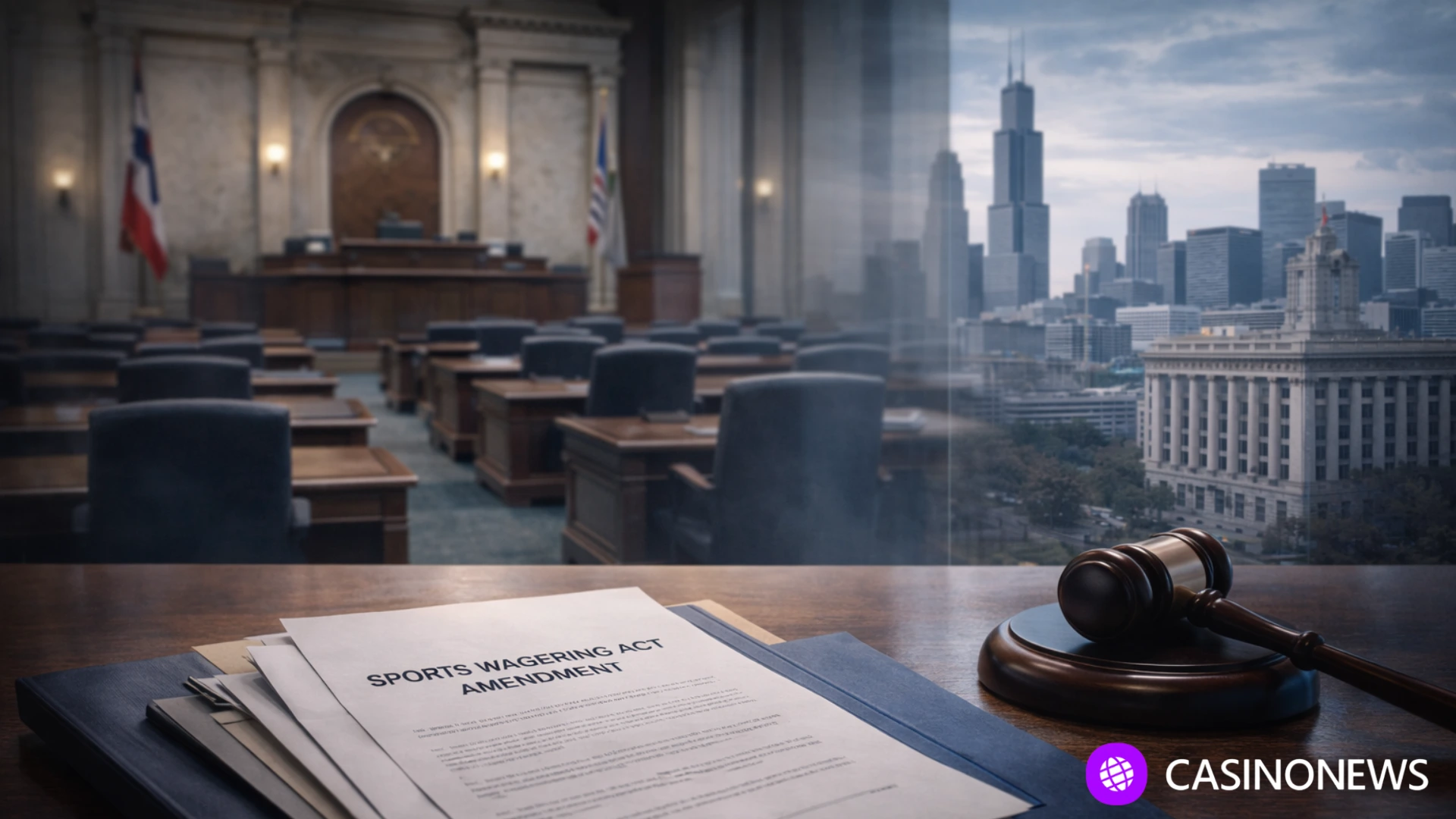
Illinois lawmakers have introduced a slate of bills aimed at blocking Chicago’s plan to impose a local tax on sports betting, setting up a direct clash between City Hall and Springfield over who controls wagering revenue. The proposals would preempt municipal authority and keep licensing and taxation of sports betting exclusively at the state level.
The move follows Chicago’s attempt to add a 10.25 percent tax on sportsbook revenue generated within city limits. The city framed the measure as a way to close budget gaps, but state legislators and industry groups argue it oversteps local authority and risks destabilizing the state’s regulated market.
Senate bills target home-rule authority
On January 13, Senator Patrick Joyce filed two bills designed to shut down local sports betting taxes. Senate Bill 2800 would amend the Sports Wagering Act to give the state sole authority over sports betting, stripping cities and counties of the power to impose fees, surcharges, or taxes on wagering activity.
The bill relies on constitutional limits on home-rule powers when local action conflicts with statewide regulatory schemes. If enacted, it would take effect immediately and nullify Chicago’s proposed levy.
Joyce also introduced Senate Bill 2760, which would amend the state’s Revenue Sharing Act to penalize municipalities that impose sports betting charges. Any revenue collected through such a tax would be deducted from the city’s Local Government Distributive Fund allocation, creating a direct financial consequence for local action. Both measures have been referred to the Senate Assignment Committee.
House measure adds bipartisan pressure
The House has filed its own proposal, House Bill 4171, which would bar municipalities from taxing, regulating, or licensing sports wagering. The bill amends the Sports Wagering Act to deny home-rule units any authority over sports betting, reinforcing state control across the board.
HB 4171 has drawn bipartisan support and secured dozens of co-sponsors, signaling that opposition to Chicago’s plan extends beyond party lines. Like the Senate proposals, it would take effect immediately upon passage.
Chicago tax plan draws legal challenge
Chicago’s proposal would layer a 10.25 percent local tax on top of the state’s existing per-wager levy, which took effect in July. Under that structure, operators pay $0.25 on each of the first 20 million bets annually, rising to $0.50 thereafter.
Industry groups argue the combined burden is already hitting the market. The Sports Betting Alliance, which represents major online operators, has sued the city, challenging the constitutionality of the tax and arguing that Chicago lacks authority to impose it. The group initially targeted both the tax and a proposed municipal licensing requirement, withdrawing the licensing claim after the city dropped that provision. The tax challenge remains active.
State gaming data shows betting volumes have fallen in recent months, with year-over-year declines in both September and October. Operators have responded by adjusting pricing and minimum bets, adding to concerns that higher costs are pushing customers away.
State seeks to preserve uniform framework
Supporters of the bills say the state’s 2019 Sports Wagering Act was designed to create a uniform, centralized system for licensing and taxation. Allowing individual cities to impose their own levies, they argue, risks fragmenting regulation and creating a patchwork of local rules that complicate compliance and deter investment.
The tension is sharper for online wagering, where bets cross municipal boundaries and are not easily tied to a single location. Lawmakers pushing for preemption say statewide control is essential to maintain clarity and stability.
Budget pressure fuels broader gaming debate
The sports betting dispute comes as Chicago wrestles with other gambling-related revenue options. City officials are revisiting plans to legalize video gaming terminals as part of the 2026 budget after concerns that the original proposal was rushed and left key issues unresolved.
The city is also facing reduced revenue expectations from its casino project, adding urgency to efforts to identify new funding sources. Critics say turning to gambling taxes reflects deeper fiscal strain, while supporters argue the city is missing out on revenue already being generated within its borders.
Legislative path remains uncertain
The Senate and House bills must still move through committee and floor votes before becoming law. Lawmakers are expected to weigh constitutional questions, the impact on Chicago’s budget, and the broader implications for the state’s gaming framework.
If the measures advance, they would block Chicago’s sports betting tax and affirm state control over wagering policy. The outcome will determine whether Illinois cities can tap local betting revenue or whether sports betting remains firmly under statewide authority.