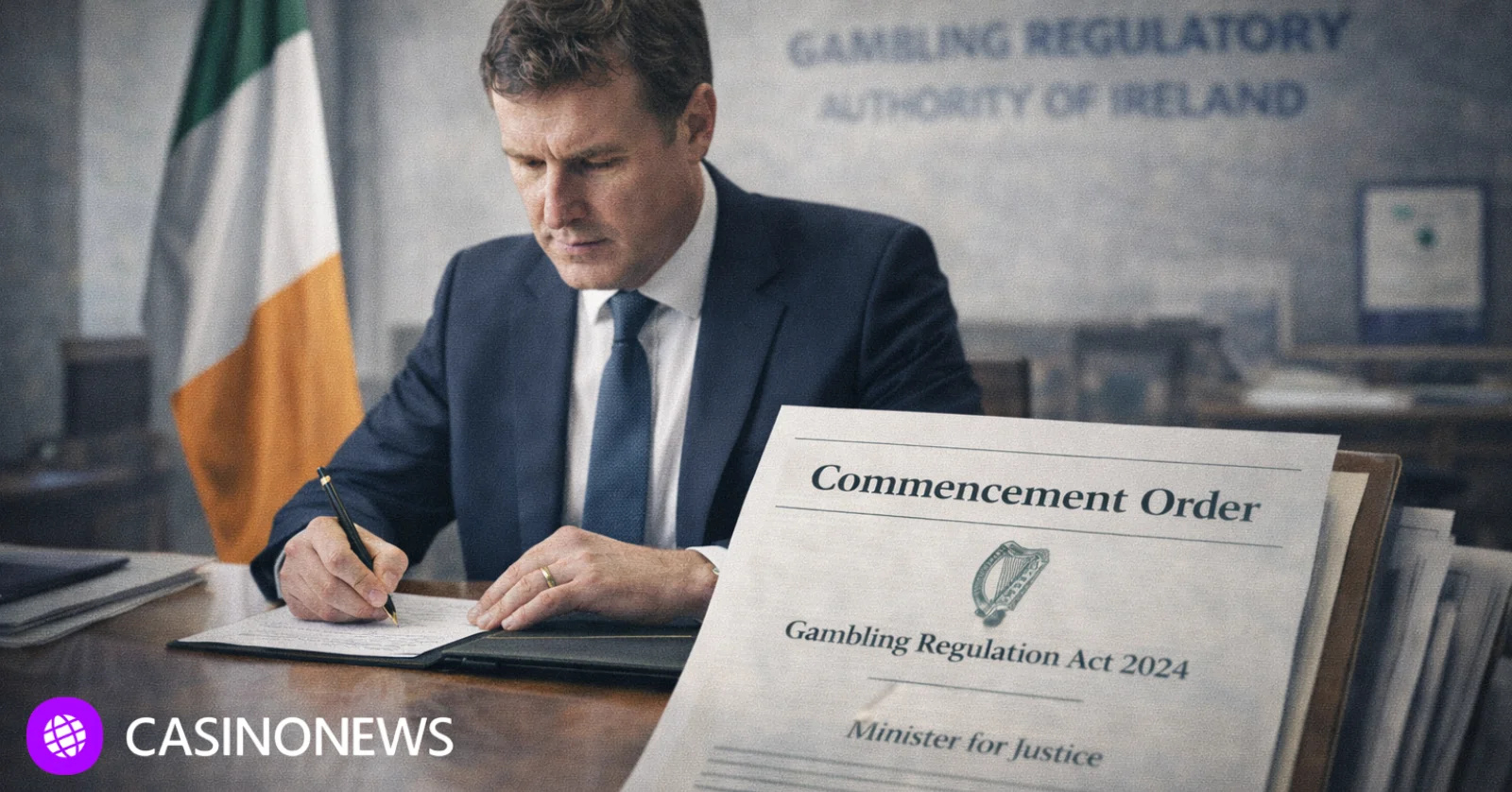
Ireland’s gambling overhaul has shifted from legislation to execution after Justice Minister Jim O’Callaghan signed a commencement order activating key parts of the Gambling Regulation Act 2024. The Gambling Regulatory Authority of Ireland can now start licensing and begin using its new enforcement toolkit.
The order also starts the unwind of the old patchwork by commencing provisions that amend and repeal legacy laws, including the Totalisator Act 1929 and the Betting Act 1931.
Licensing begins with betting as old permits run out
GRAI opens the first application window on February 9 for in-person betting, remote betting, and remote betting intermediary licences. Betting is the first lane moving onto the new framework, ahead of later phases for other gambling activities.
The transition timetable is already locked in. Remote betting operators are due to move onto the new system from July 1, 2026, with in-person businesses following from December 1, 2026, when existing Revenue-issued licences expire.
Fines, credit cards, and ad limits raise the compliance bar
The Act gives GRAI a penalty regime that can reach €20 million or 10% of turnover, whichever is higher, alongside suspension or revocation of a licence. That makes non-compliance a material financial risk, not a rounding error.
Player protection measures also tighten. Credit cards and credit facilities are banned for gambling, and advertising rules include a broadcast watershed that restricts gambling ads between 5:30 a.m. and 9 p.m.
The first test is speed and consistency
Early coverage has centered on two issues: the processing pace and the size of the sanction regime. The market will get answers as the first applications move from intake to approval.
If licensing slows or requirements drift late, the July and December deadlines could create friction that benefits offshore alternatives. If approvals and early enforcement land cleanly, Ireland will have a single gambling regulator with real leverage and clear consequences.