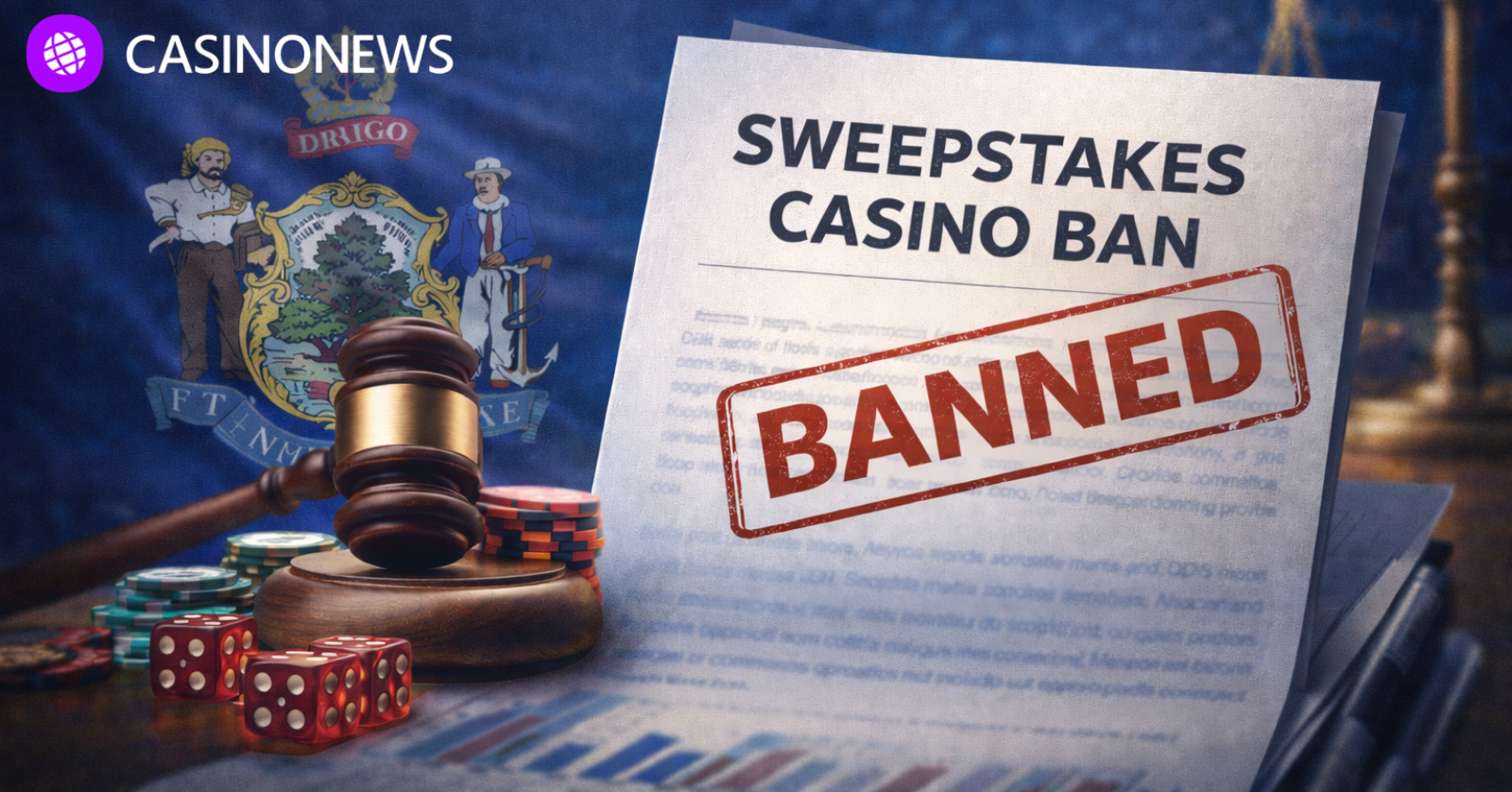
Maine lawmakers have moved a sweepstakes casino bill forward after regulators warned that unlicensed, dual-currency platforms are operating in the state with no oversight. The Legislature’s Joint Committee on Veterans and Legal Affairs voted Feb. 18 to advance LD 2007, a measure that would explicitly prohibit “online sweepstakes games” and treat operating or promoting them as unlawful gambling.
The bill lands as more states move from informal enforcement to statutory bans, putting pressure on platforms that have leaned on promotional sweepstakes mechanics to offer casino-style products nationwide.
LD 2007 targets dual-currency casino outcomes
LD 2007 creates a new section of Maine’s gaming statutes dedicated to online sweepstakes games. It defines a sweepstakes game as an internet-based game or promotion that uses a dual-currency system and offers casino-style outcomes.
Under the bill, running or promoting a sweepstakes game would constitute unlawful gambling, with civil penalties ranging from $10,000 to $100,000 per violation.
Regulator says Maine has limited enforcement tools
Milton Champion, director of the Maine Gambling Control Unit, told lawmakers he estimates roughly 60 sweepstakes casinos operate in Maine. He said the state has not issued cease-and-desist letters, opting instead for a consumer warning.
Last June, Maine issued a public letter warning residents that sweepstakes platforms are not authorized in the state. Champion told the committee that licensed products clearly display state authorization, creating a bright line that consumers do not get with unregulated platforms.
VGW pushes for regulation instead of prohibition
VGW, operator of Chumba Casino and LuckyLand Slots, argued that its model is distinct from traditional gambling because prize redemptions are tied to a marketing promotion rather than core gameplay. The company suggested Maine could regulate and tax the model rather than ban it outright.
Some lawmakers signaled discomfort with a blanket prohibition after hearing that framing, with questions focused on how the sweepstakes structure works and whether consumers are actually paying for a cash-out pathway.
The bill joins a widening sweepstakes crackdown
Committee approval positions LD 2007 for broader legislative consideration as more states tighten language around dual-currency platforms. Maine’s debate now mirrors fights elsewhere, with regulators seeking clearer authority and operators arguing the model can be brought inside a controlled framework.