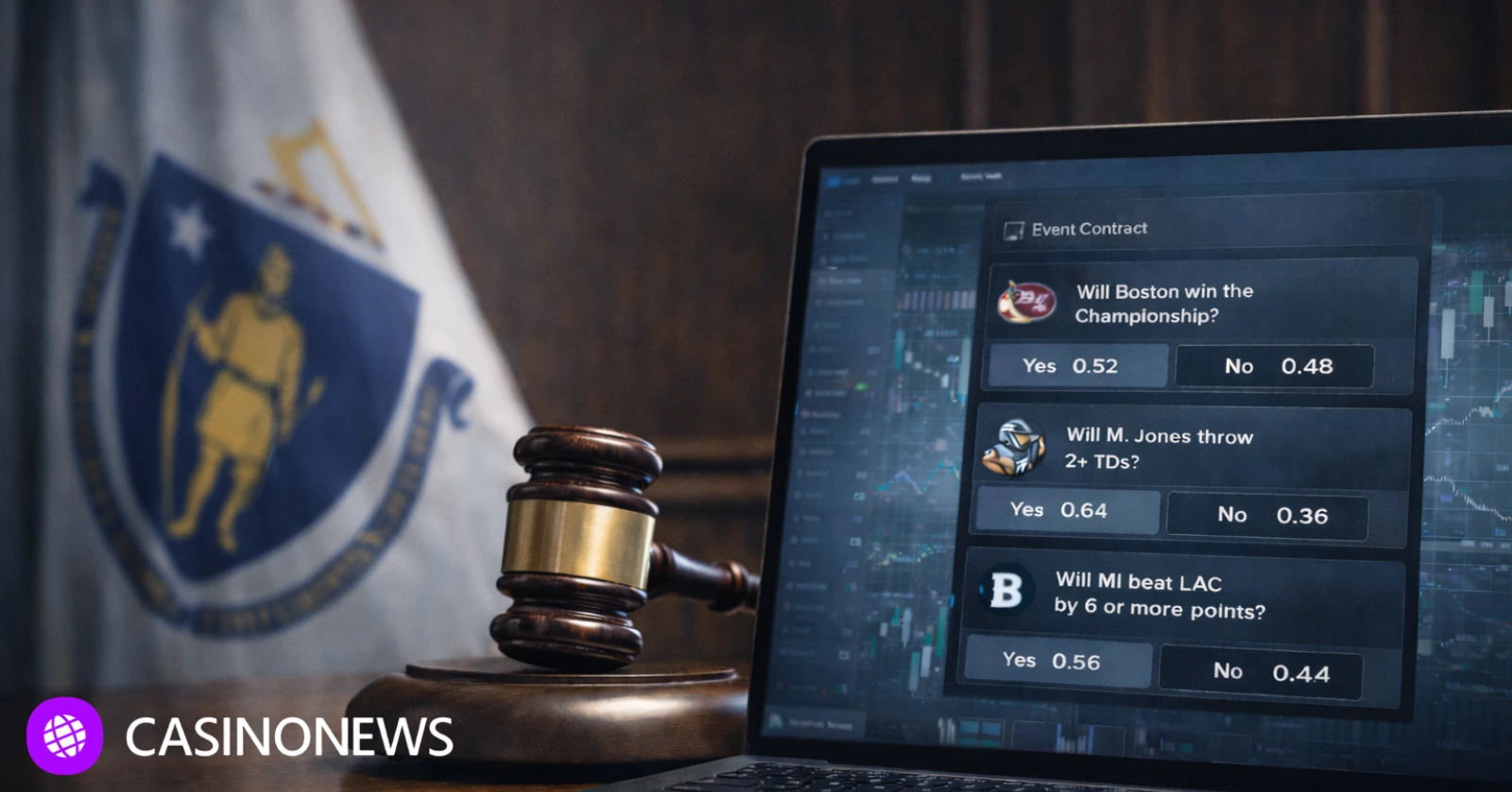
Massachusetts has won a key court victory in its effort to shut down sports prediction markets, after a judge granted a preliminary injunction barring Kalshi from offering sports-related contracts in the state.
The ruling makes Massachusetts the first state to secure a court order blocking the platform’s sports markets, escalating a growing legal clash between state gambling regulators and federally regulated prediction exchanges.
The decision puts immediate limits on Kalshi’s operations in the Bay State and adds momentum to similar enforcement actions underway across the country.
Judge blocks Kalshi from offering sports contracts in Massachusetts
Superior Court Justice Christopher Barry-Smith ruled that Massachusetts is likely to succeed on the merits of its case and is entitled to a preliminary injunction prohibiting Kalshi from offering sports event contracts without a state license.
The injunction applies to new contracts going forward and does not require the cancellation of contracts already purchased by Massachusetts users. The court said the state has shown a strong likelihood that Kalshi’s sports markets fall within the scope of Massachusetts sports wagering law.
In his ruling, Barry-Smith rejected Kalshi’s argument that federal oversight by the Commodity Futures Trading Commission preempts state gambling regulation. He said Congress did not intend to displace state authority over sports wagering and that licensure and oversight serve clear public health and financial interests. The judge also denied Kalshi’s motion to dismiss the case, allowing the state’s lawsuit to proceed toward a full trial.
State says sports contracts trigger full licensing rules
Massachusetts filed suit against Kalshi in September, arguing that the company is operating an unlicensed sports betting business under the label of event contracts.
State officials said Kalshi’s offerings mirror traditional sportsbook products, including markets tied to point spreads, totals, and parlays. They argued that allowing those contracts without state oversight undermines consumer protections built into the sports wagering framework.
The court agreed that the state’s licensing regime applies to sports-related contracts and that Kalshi knowingly proceeded in states that require sports wagering entities to be licensed. Barry-Smith wrote that any hardship Kalshi faces in withdrawing its Massachusetts offerings is of its own making, given prior warnings from regulators and ongoing enforcement actions in other jurisdictions.
Court rejects claim of federal preemption
A central issue in the case was Kalshi’s claim that it is regulated exclusively by the CFTC as a federally approved exchange, giving it authority to offer sports contracts nationwide.
The court rejected that position, finding that federal derivatives regulation does not override state gambling laws when contracts function as wagers on sporting events.
Barry-Smith said Kalshi took an overly broad view of federal law and that state regulation of gambling can exist in harmony with federal oversight of financial markets. The ruling aligns with a similar decision issued in Nevada in November, where a federal judge found Kalshi subject to state gaming rules.
Regulators call ruling a major enforcement win
Massachusetts officials called the ruling a major step toward enforcing state gambling law and protecting consumers.
Attorney General Andrea Joy Campbell said the decision confirms that companies seeking to offer sports wagering in Massachusetts must follow the same licensing and compliance standards as regulated sportsbooks.
The Massachusetts Gaming Commission said it hopes the case moves quickly toward a final resolution and reiterated that licensed operators remain the safest option for consumers who choose to wager. Massachusetts currently licenses several online sportsbooks, along with three retail sportsbook locations.
Decision raises the stakes for prediction markets across the U.S.
The decision adds pressure on the fast growing prediction market sector, which has expanded rapidly into sports over the past year.
Several major betting and fantasy sports companies have launched their own event contract platforms, though most have limited their sports markets to select states or non sports events in regulated jurisdictions.
Kalshi remains one of the few platforms offering sports contracts nationwide, including in states that have not legalized online sports betting.
Legal challenges are pending in multiple states, including New York, Nevada, Ohio, and New Jersey. Regulators in those jurisdictions are closely watching the Massachusetts case as a potential roadmap for enforcement. The New York Gaming Commission has already cited the ruling in its own filings against Kalshi.
Case moves toward trial as appeal looms
Massachusetts has been ordered to submit the final form of the injunction, with a follow up hearing scheduled to finalize the order and consider any request to pause enforcement during an appeal.
Kalshi has said it plans to appeal any injunction and continues to maintain that its contracts fall outside state gambling law.
For now, the ruling prevents the platform from offering new sports markets in Massachusetts and signals a shift toward tighter state control over prediction markets tied to sports.