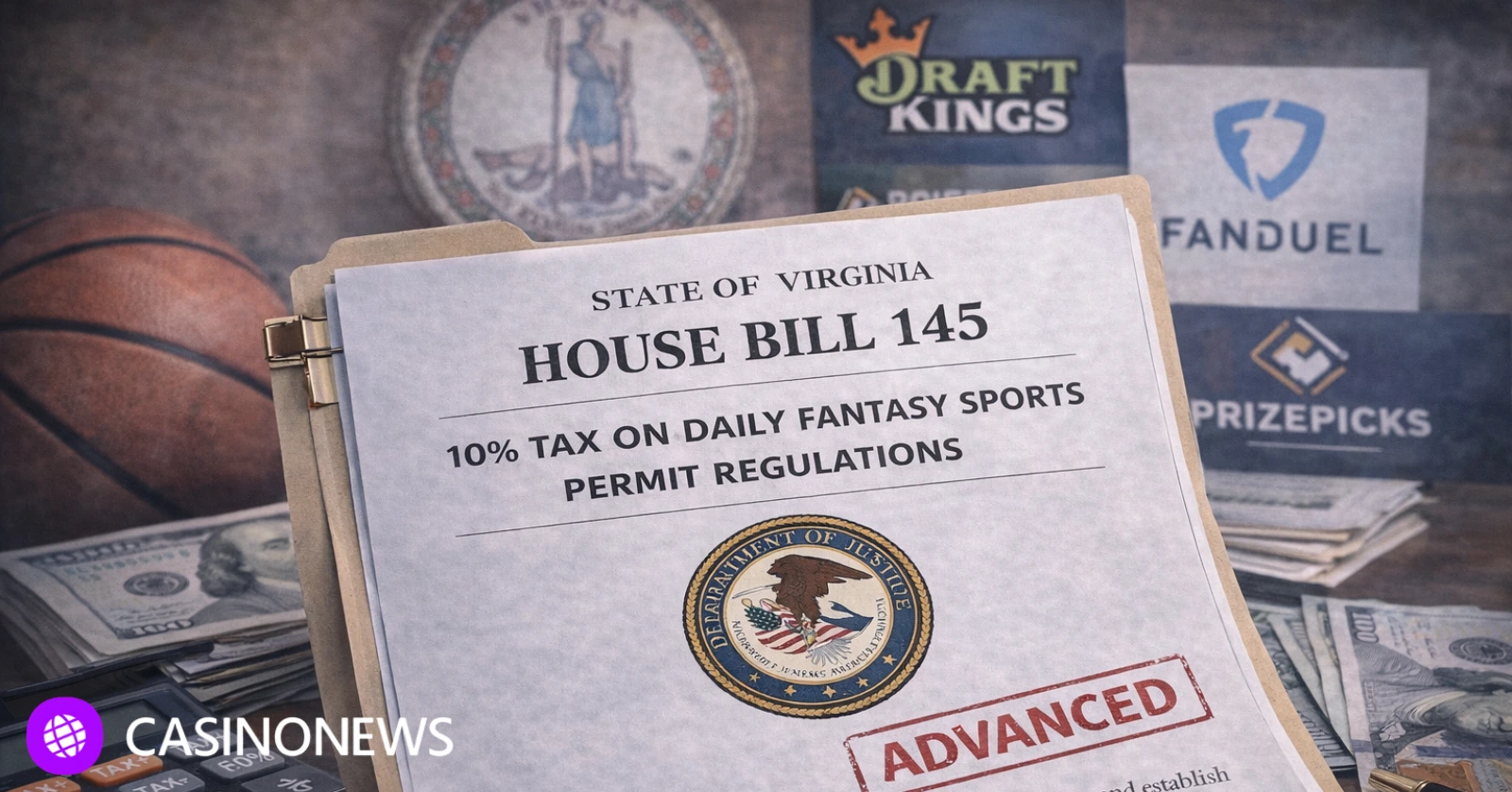
Virginia lawmakers are moving to tighten daily fantasy sports regulation, advancing a bill that would add a 10% tax on operator revenue and replace the state’s current registration model with a permit system. The House measure, HB145, cleared an initial subcommittee on January 27 by a 9-0 vote and was recommended for referral to House Appropriations.
The proposal reflects a broader shift in how states are treating modern DFS products, especially as “pick ’em” formats blur the line between peer-to-peer fantasy contests and operator-versus-player mechanics.
HB145 would add taxes, fees, and a three-year permit cycle
HB145 would require operators to hold a state permit to offer fantasy contests in Virginia, with permits valid for three years. The bill also sets a $50,000 nonrefundable application fee and a separate $50,000 fee due before a permit is issued, with the issuance fee directed to the Problem Gambling Treatment and Support Fund.
On taxation, HB145 imposes a 10% monthly tax on “fantasy contest revenue,” defined as entry fees minus player payouts, adjusted by a Virginia “location percentage.” The Department would allocate tax receipts with 5% going to the Problem Gambling Treatment and Support Fund and 95% to the general fund.
Consumer protections target insider risk and “pick ’em” gray areas
HB145 hardens consumer protection rules. Operators would have to verify players are 21 or older, offer self-exclusion, segregate player funds from operating funds, and maintain reserves sufficient to cover prizes. It also requires annual independent audits by a CPA and annual compliance testing by a recognized lab, with reports submitted to the state.
The bill’s definitions keep contests framed as peer-to-peer. It states that no player competes against the operator, a key point as regulators in multiple states scrutinize house-style “pick ’em” products. Enforcement leverage would expand, including permit suspension or revocation and monetary penalties of up to $1,000 per day per violation, capped at $50,000.