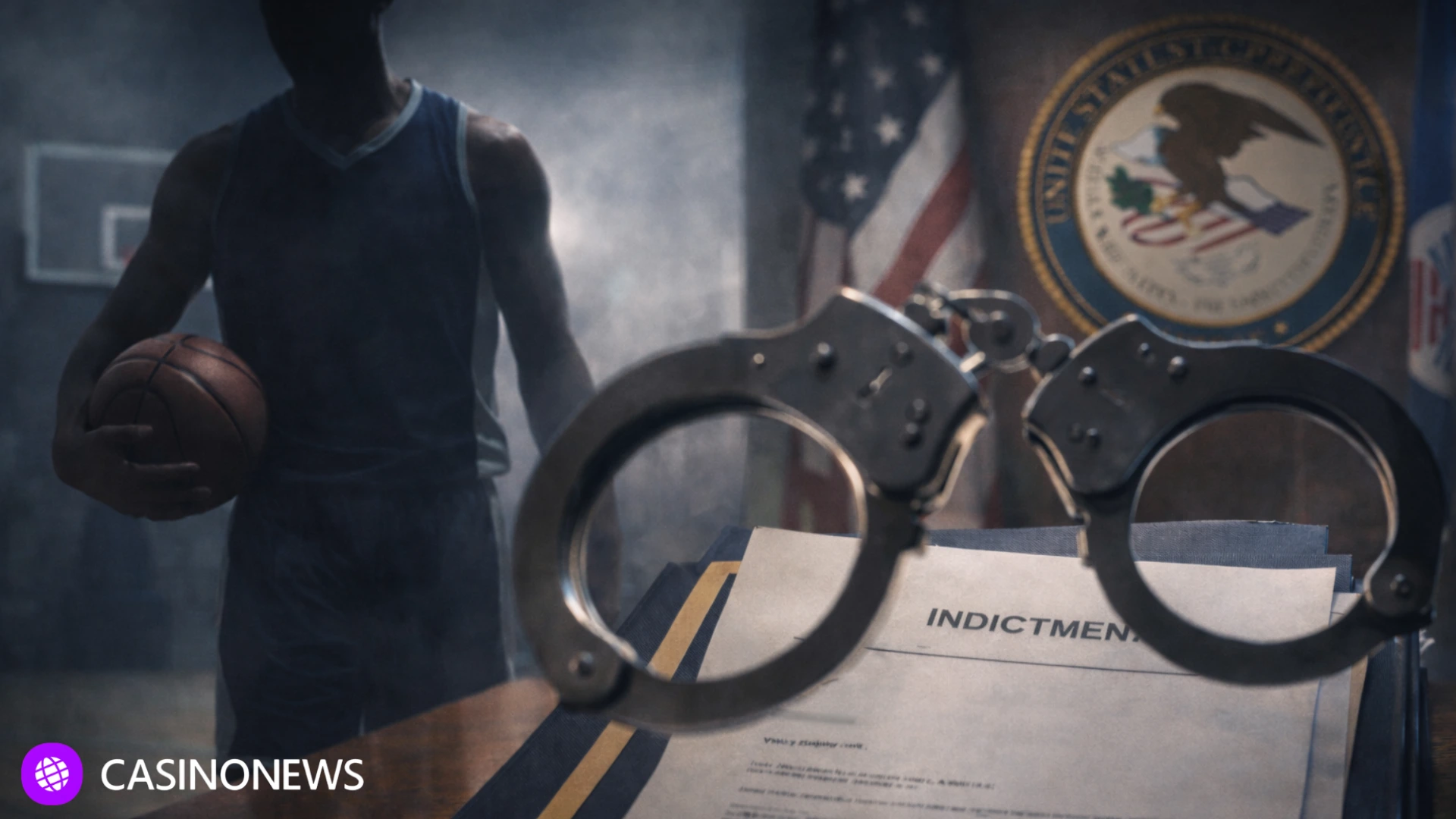
Federal prosecutors have unsealed a sweeping indictment charging more than two dozen people, including current and former college basketball players, in one of the largest point-shaving scandals in recent history. The case alleges a coordinated effort to manipulate game outcomes for betting advantages, spanning NCAA Division I and international contests.
Charges target widespread bribery and game manipulation
A 70-page federal indictment filed in the Eastern District of Pennsylvania names 26 individuals, including more than a dozen NCAA men’s basketball players, as defendants in a long-running bribery and point-shaving scheme. Prosecutors say the conspiracy began in 2022 with rigged games in the Chinese Basketball Association and expanded into U.S. college basketball through the 2023-24 and 2024-25 seasons.
The charges include bribery in sporting contests, conspiracy to commit wire fraud, and wire fraud. Authorities allege fixers recruited players by offering payments between $10,000 and $30,000 to influence point spreads and underperform in specific games, then placed bets on the predetermined outcomes.
Dozens of players across division I schools implicated
The indictment lists players from at least 17 Division I programs, including smaller mid-major schools and some more prominent programs. Federal prosecutors identified 39 athletes allegedly involved in fixing outcomes across at least 29 games. Payments were funneled through intermediaries, and bets were placed both through licensed sportsbooks and illegal betting channels.
Among those named are Simeon Cottle of Kennesaw State, Carlos Hart of Eastern Michigan, Oumar Koureissi of Nicholls State, and Camian Shell of North Carolina A&T. Several defendants were active players as recently as the current season, though the alleged conduct relates to past campaigns.
Prosecutors describe fraudulent betting network
Federal authorities describe the scheme as a broad corruption of college athletics. According to the indictment, central organizers, including known sports gambling influencers, coordinated payments and placed wagers designed to exploit manipulated point spreads. Prosecutors allege the scheme generated millions of dollars in illegal betting profits while inflicting financial losses on honest bettors and sportsbooks.
U.S. Attorney David Metcalf said the charges represent a “significant breach of public trust” and a direct threat to the integrity of college sports. The government said it will pursue the case vigorously to hold all parties accountable.
NCAA and market context
The scandal highlights persistent challenges at the intersection of legalized sports betting and college athletics. Since the Supreme Court’s 2018 decision to lift federal bans on sports wagering, the number of licensed betting markets has proliferated, increasing the scale of wagering on collegiate contests.
The NCAA has confirmed ongoing investigations into sports-betting related conduct by student athletes and has imposed permanent ineligibility on some cases where gambling violations were established. NCAA President Charlie Baker has pushed for tighter restrictions on betting markets tied to college events in response to integrity concerns.
Legal and sporting impact
Defendants in the indictment have largely pleaded not guilty. If convicted, those found responsible face significant prison terms and fines under federal law. The case is expected to unfold over months as pretrial proceedings begin.
The case is also expected to prompt closer coordination between federal authorities, regulators, and sportsbooks around integrity monitoring. Betting operators already share data on unusual wagering patterns, but prosecutors say point shaving schemes tied to individual player performance remain difficult to detect. The scale of the alleged conspiracy is likely to renew calls for tighter controls on college betting markets, including limits on certain wagers and expanded education programs for athletes around gambling-related risks.
Beyond criminal penalties, the scandal is likely to intensify debate among regulators, sports leagues, and betting operators over wagering rules for collegiate athletics. With legalized betting expanding in the U.S., authorities are under pressure to implement safeguards to protect sporting integrity and deter similar schemes in the future.