
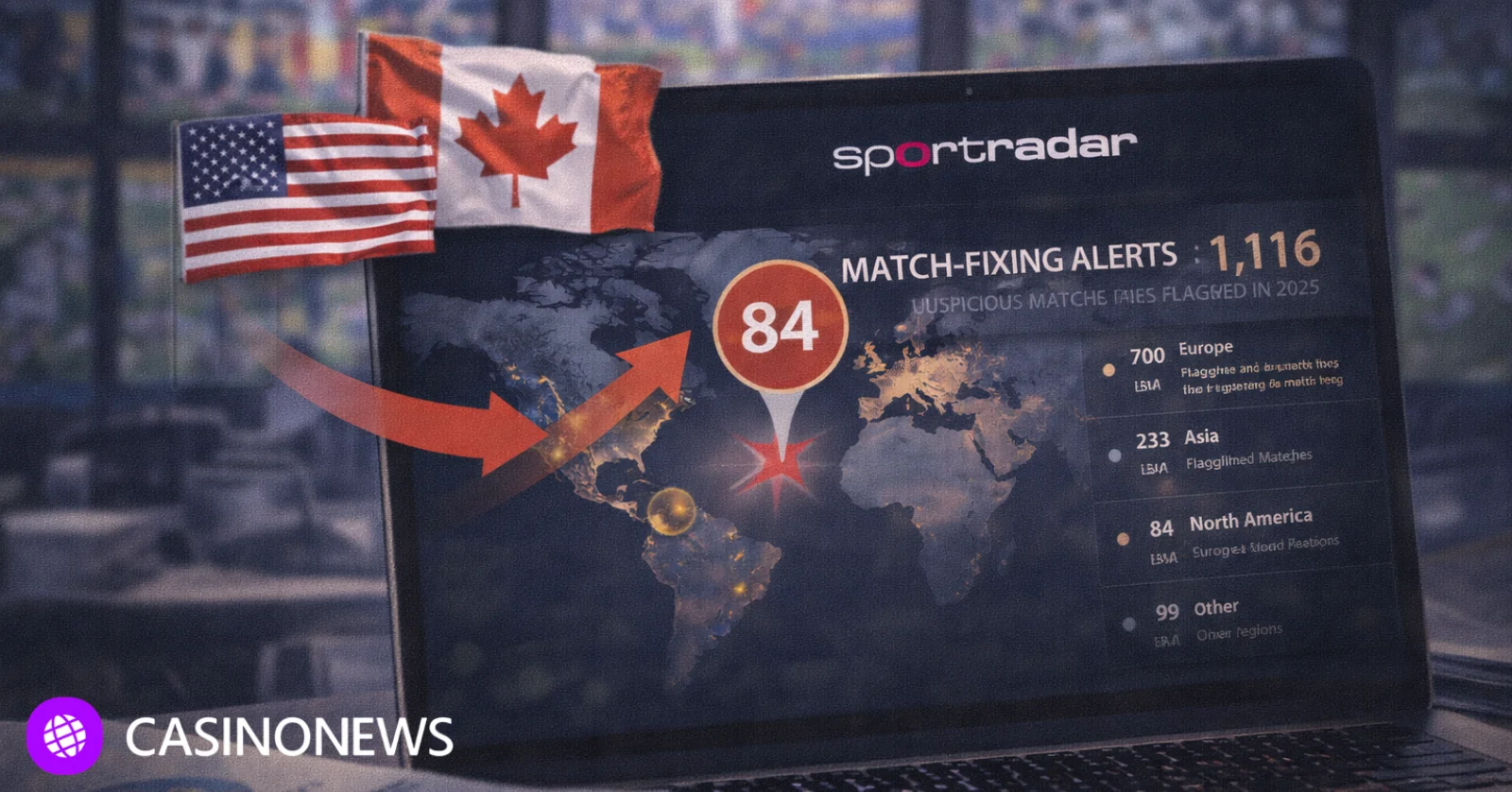
Sportradar says it monitored more than 1,000,000 events across 70 sports worldwide in 2025 and flagged 1,116 matches as suspicious, a 1% drop from 2024. That means the overwhelming majority of events it tracks still show no signs of manipulation.
North and Central America moved against the wider trend, rising to 84 flagged matches. It is a small share of the global total, but it stands out in a region where legal betting keeps spreading and live menus keep getting deeper.
A small rise in North America stands out
A “suspicious match” is not a verdict. Sportradar treats it as a warning signal that should trigger review, escalation, and information-sharing with sports bodies and law enforcement.
Still, the direction matters. In North America, integrity stories have been dominated by smaller, higher-sensitivity markets, where a single piece of inside information can move prices fast. Even a modest increase adds pressure on leagues and books to tighten reporting and response times.
Better detection is only half the job
Football remained the biggest source of alerts in 2025 (618 suspicious matches), followed by basketball (233). Sportradar also highlighted increases in tennis (78), table tennis (65), and cricket (59), underlining how the risk can spread into multiple sports rather than sitting in one place.
The company also reported a sharp jump in AI-led detection, with its UFDS AI analysis flagging 56% more suspicious matches than the year before. Other integrity trackers are seeing pressure too. IBIA, which compiles suspicious betting activity reports from regulated operators, said its 2025 alert total rose 29% to 300 cases. Different datasets, same point: spotting problems is getting easier, but stopping them depends on what happens after the alert lands.