
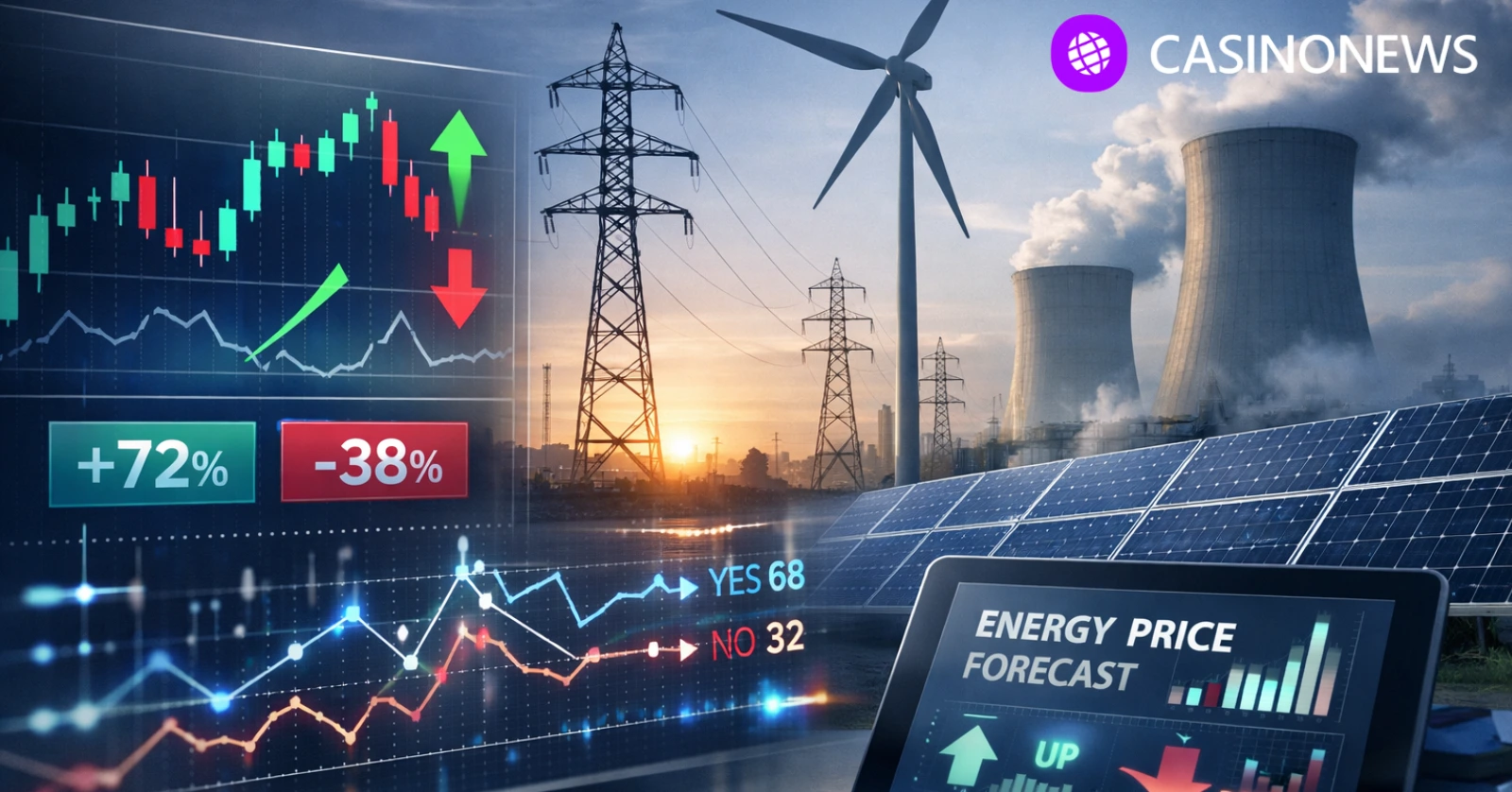
An energy prediction firm, Lubit, is creating a platform for predictive markets, the company revealed at E-world, Europe’s largest energy trade fair.
The company described it as the world’s first dedicated marketplace for energy price prediction markets, which would allow users to trade contracts tied to the future direction of global energy prices.
Crowd based discovery approach to market, says Lubit CEO
Lubit will apply prediction-market mechanics, typically used for one-off events like elections, to ongoing, high-volume power markets.
Kris Ewald, CEO of Lubit and an economist with a background in prediction modelling, believes the platform echoes the sentiment of the prediction market eco-system.
He said: “We are not launching a trading platform in the traditional sense; we are building a foundational architecture, allowing a crowd based discovery for price information that didn’t exist until now,
“Drawing on the Hayekian insight that markets are the ultimate aggregators of asymmetric information, Lubit facilitates the skills based on ‘wisdom of the crowd’. We are democratizing participation in a globally relevant non-cyclical asset-class, offering a pure-play prediction infrastructure where alpha is generated by skill.”
Innovative market structure a key selling point
Lubit will begin by offering contracts tied to one-hour, day-ahead energy markets, meaning traders predict whether prices will rise or fall in the next trading window. By requiring frequent, short-term forecasts, the platform aims to quickly build a consensus view of price direction, which it says could be more accurate than traditional analyst estimates
Beyond potential trading gains, Lubit says the platform’s liquidity, the pool of money backing trades, will also generate returns by being made available to certified independent energy traders. Secondary trading of the contracts will not be allowed at launch, and access to provide liquidity will initially be limited to professionals, with plans to open it to non-professionals later.
Lubit also said its liquidity model is a key differentiator. Capital committed to back trades will be pooled and made available to certified independent energy traders, with returns from that activity flowing back to liquidity providers.
The structure means participants could potentially earn both from accurate predictions and from professional trading activity. At launch, contracts cannot be resold before settlement, and only professional participants will be permitted to provide liquidity, with plans to broaden access over time.
Questions remain over ethics of prediction markets in energy sector
As prediction markets expand into areas such as energy pricing, some policymakers and financial leaders are warning about the broader implications of embedding speculative contracts into critical infrastructure sectors.
Sen. Chris Murphy has previously cautioned that the rapid growth of prediction markets risks creating what he described as a “dystopian world,” particularly if financial incentives begin shaping behavior in areas tied to public welfare. Critics argue that applying event-style contracts to electricity prices, a cornerstone of modern economies, could blur the line between hedging risk and encouraging speculative activity.
Skepticism has also come from Wall Street. Rick Wurster, chief executive of Charles Schwab, has warned that the rise of prediction markets risks confusing investing with gambling, especially for retail participants. Analysts say similar concerns could surface in energy markets, where price volatility directly affects households and industry.
Supporters argue that well-designed markets can improve price discovery and transparency. But as platforms seek to move beyond politics and sports into commodities and infrastructure, regulators may face growing pressure to define where innovation ends and systemic risk begins.
What next for Lubit
Lubit’s public launch follows a completed global angel investment round, and the company has now opened a €5 million pre-seed funding raise to support its next phase of growth. The fresh capital is intended to accelerate the platform’s rollout across international energy markets.
According to the company, much of the funding will be directed toward strengthening its technology infrastructure, expanding compliance capabilities and building strategic partnerships. As Lubit seeks to position itself at the intersection of energy trading and prediction markets, its ability to secure regulatory approvals and industry buy-in is likely to shape how quickly it can scale beyond its initial launch phase.
The move also signals a broader evolution for the prediction market industry, which has largely centered on politics and sports. By targeting energy, a high-volume, systemically important sector, Lubit is testing whether prediction-based trading models can extend into core economic infrastructure.