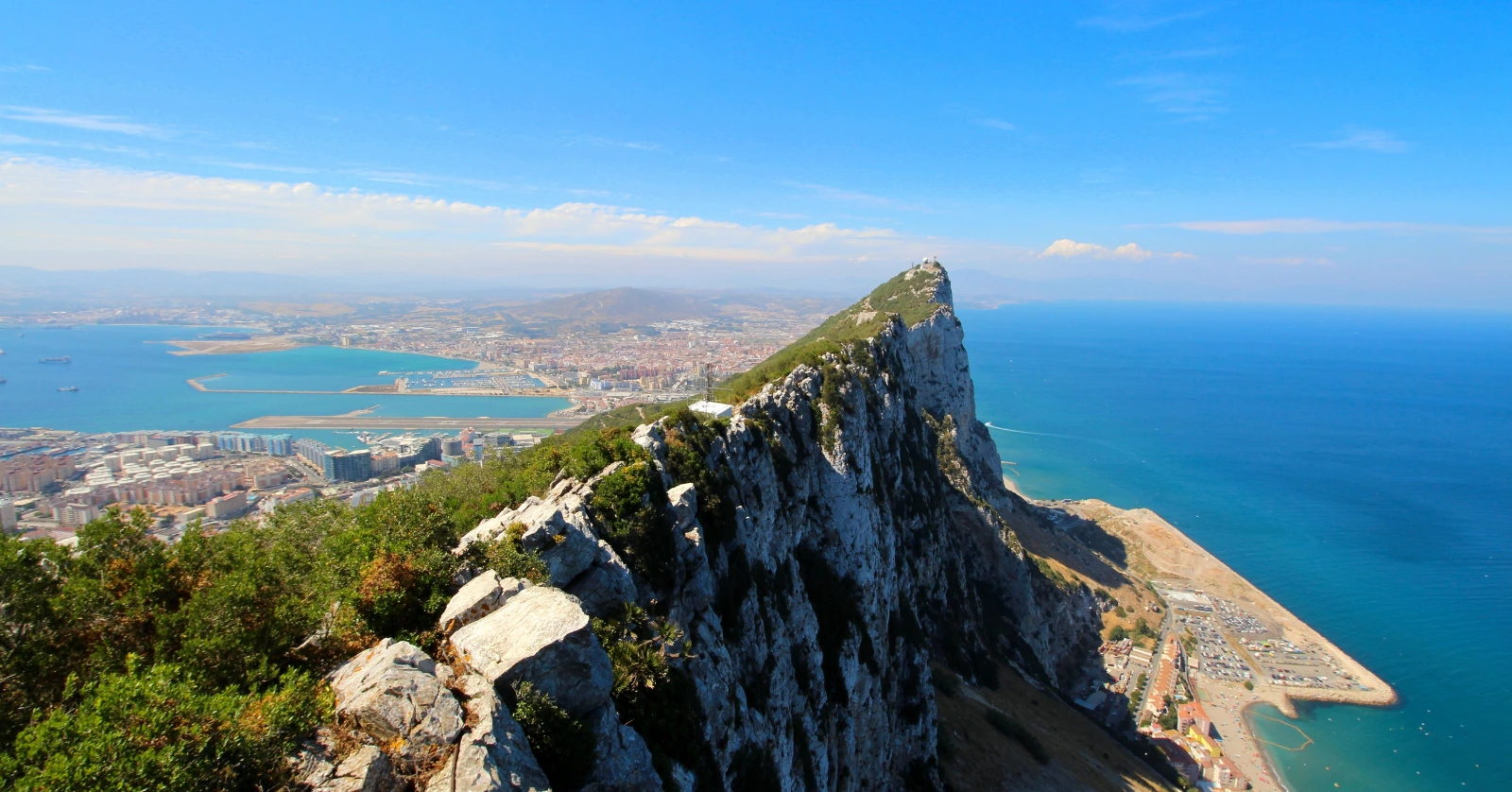
The British Overseas Territory of Gibraltar has granted its first prediction market licence to become one of the only areas in Europe to offer the practice.
The business Predict Street Ltd, which claims to be the official betting partner of the upcoming World Cup, has been discovered on the official list of approved licensed operators. It is down as a betting intermediary.
Gibraltar Minister for Justice confirms addition of prediction markets to business scape
Nigel Feetham, Gibraltar Minister for Justice, confirmed the news in a post on X. He wrote: “We have licensed a new company operating in the “prediction markets” sector, processing the application in record time following my attendance at Consensus Hong Kong last month.”
In the Gibraltar Chronicle, he outlined his reasoning, stating: “We expect this to be a substantial area of potential growth for Gibraltar. This reflects the undertaking I personally gave, as Licensing Authority under the old Act, to the applicant.
“It also demonstrates the pace at which we must sometimes act to safeguard Gibraltar’s vital national interest. There is no room for complacency and no room for unnecessary delay in enabling responsible economic activity in these important sectors.
“We must continue to adapt decisively to a changing global economic environment. And adapt, we must.”
Kalshi secured more than $1 billion in fresh funding last month, lifting its valuation to about $22 billion and underscoring growing investor appetite for event-based trading platforms. Rival platform Polymarket has also seen rapid growth, reaching an estimated valuation of around $9 billion as of early 2026.
The surge in valuations highlights the expanding financial significance of the prediction markets sector, which is increasingly attracting institutional capital and broader public interest. Analysts say the combined scale of leading platforms points to a market that could evolve into a multi-tens-of-billions industry, as demand rises for tools that allow users to trade on real-world outcomes ranging from economics to politics
Prediction markets primed to feed into traditional sportsbooks
Traditional betting sites are increasingly exploring ways to integrate prediction-market-style products into their platforms, particularly in the U.S, as interest grows in trading on real-world outcomes beyond sports.
Companies such as DraftKings and FanDuel have begun testing adjacent offerings, including free-to-play prediction contests tied to political events, economic indicators and entertainment outcomes. While these products stop short of real-money event contracts, they could be a stepping stone toward deeper integration, particularly as regulated platforms like Kalshi gain traction under federal oversight.
Some operators are also pursuing partnerships and technology investments to position themselves for a potential regulatory shift. Industry executives have pointed to the model used by Kalshi, which operates under the oversight of the Commodity Futures Trading Commission (CFTC), as a blueprint for how prediction markets could coexist with traditional betting.
In parallel, media and sportsbook hybrid platforms have experimented with “event trading” interfaces that resemble financial exchanges, allowing users to buy and sell positions on outcomes in a way that mirrors prediction markets rather than fixed-odds betting.
They are facing a hefty amount of pushback, however. One piece of recent legal analysis suggests there are more than 30 separate legal cases being brought against the sector in states across the U.S. It remains to be seen whether European countries or territories take the same approach.
Gibraltar iGaming sector hit by recent UK tax rises
The need for Gibraltar to diversify and expand its economy is, in-part, being driven by recent changes to the law by the UK government in its most recent budget.
In late November, the UK chancellor announced plans to raise Remote Gaming Dutyfrom 21% to 40% by April 2026, alongside an increase in online betting taxes from 15% to 25% by 2027. The sector accounts for roughly 30% of Gibraltar’s gross domestic product and employs more than 3,400 people in a population of about 34,000. It also contributes around one-third of the UK’s total gambling tax revenues, according to Feetham, who responded with alarm at the announcement. .
In a statement issued December 1, Feetham said: “Gibraltar has been an international centre of excellence for online betting and gaming for decades, ever since the development of our gold standard regulatory framework for the sector in the 1990s.
“Our sector is well-regulated and world-leading. Our businesses are dual-regulated in Gibraltar and the UK and they pay taxes in both Gibraltar and the UK. This sector is a Gibraltarian success story of which we should be proud.
“Raising tax in the UK imposes higher costs on Gibraltar gaming businesses and reduces the amount ultimately paid in corporate tax in Gibraltar. If part of that mitigation involves reducing jobs, this would, in turn, have a direct impact on PAYE receipts.”
The scale and speed of the proposed changes prompted Gibraltar’s chief minister, Fabian Picardo, to raise concerns directly with the UK Treasury. According to the Gibraltar Chronicle, Picardo urged officials to consider the potential impact on the territory’s regulatory framework, which he described as a global benchmark.
Gibraltar’s government, regulators and industry leaders are now facing mounting pressure to respond. The central challenge is no longer whether change is necessary, but how the territory can adapt to a significantly altered fiscal landscape.