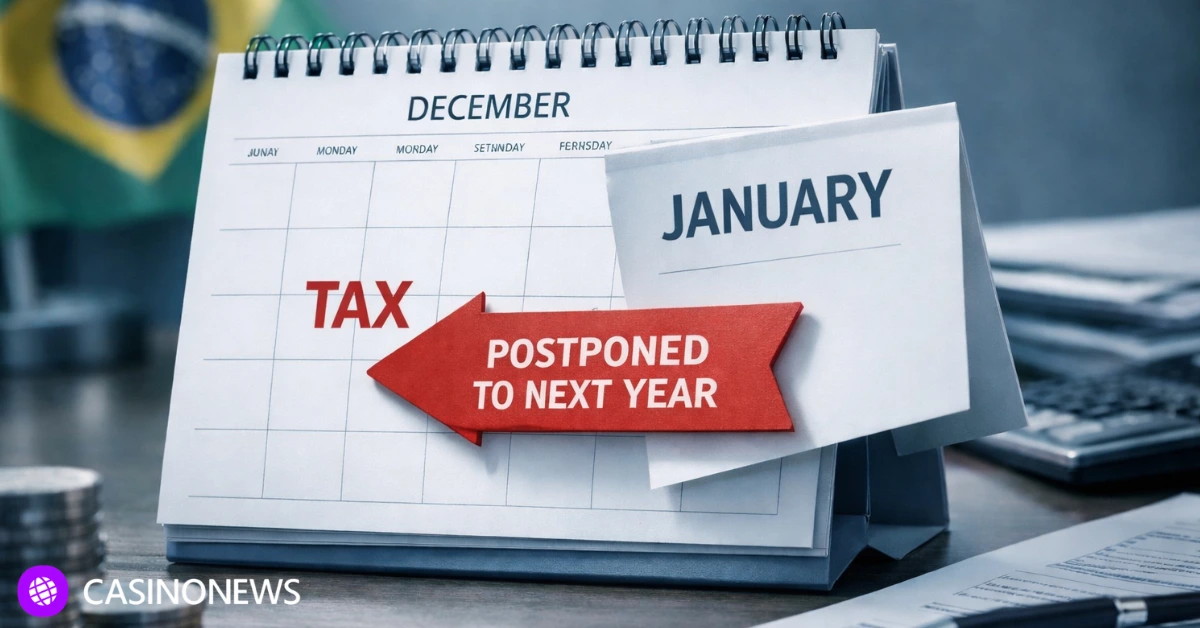
A tax measure voted into law by senators that triggered sharp backlash from Brazil’s betting industry has been postponed rather than repealed, pushing implementation into 2026 after critics warned it would weaken regulators and accelerate migration to illegal operators.
The decision to delay the introduction of PL 5,582/2025 was agreed upon by both the government and opposition in a meeting on Monday. Workers’ Party leader Lindbergh Farias acknowledged it needed more discussion, calling it a “controversial debate” when questioned on it by reporters.
The bill is also demanding a retrospective 15% tax on operations between 2018 and 2024, the period before regulation. The government had hoped to raise in excess of BRL30 billion ($5.5 billion) to help bridge the national budget.
Industry executives have warned that imposing retrospective taxation on pre-regulation activity would undermine legal certainty in Brazil’s market, potentially deterring foreign investment and threatening the long-term sustainability of newly licensed operators that committed capital based on the original regulatory framework.
It marks another respite for the betting industry in Brazil, which had been facing a number of other harsh operating conditions, despite recently gaining long fought-for regulation.
A proposal to gradually increase the tax rate from 12 per cent in 2026, 15 per cent in 2027, and up to 18 per cent in 2028 has also been delayed. Senate bill PL 5,582/2025 had been voted through by the Senate’s Economic Affairs Committee at the beginning of the month and was set to move to the Chamber of Deputies for final approval. However, a threshold of eight signatures required to force further debate was met.
It means 2026 is set to be a huge year for Brazil’s betting industry.
Fierce reaction by industry
The decision to vote in favor of the bill was met with derision by experts in the country, with the National Association of Games and Lotteries (ANJL) calling it a serious contradiction. In a statement, they said: “By overtaxing the regulated market, it creates direct incentives for the migration of users to illegal platforms, many of them operated by criminal organizations with transnational operations. In practice, the effect tends to be the opposite of the stated objective of the proposal.”
The Brazilian Institute of Responsible Gaming (IBJR) said in a statement: “By taxing the bettor’s deposit at 15 per cent, the State decrees that R$100 (US18) is worth only R$85 (US$15) in companies that follow the law. In the clandestine market, the same R$100 is worth its full value. It is a direct incentive to migrate underground.”
Furthermore, the IBJR poured scorn on the economic viability of governmental revenue projections as a result of the tax: “It is based on a non-existent financial premise. It claims to collect BRL30 billion (US$5.5 billion) annually from a formal market that currently generates around BRL36 billion (US$6.5 billion). Therefore, it projects collecting taxes almost equivalent to the entire revenue of the regulated sector.”
Mixed picture in Brazil after one year of regulation
The chaotic nature surrounding the regulated gambling space in Brazil is further amplified by the number of illegal operators still functioning. New research and analysis from Yield Sec back in October 2025 revealed 51% of all Brazilian online gross gambling revenue (GGR) went to illegal, unlicensed, unregulated and criminal online gambling brands.
Part of the study focused on why bettors are still continuing with illegal operators. It found: “Unless clear changes are made towards policy, process and practice towards the illegal sector, criminal control of Brazil’s online gambling marketplace will grow over coming months and years.
“Constant speculation about new regulations and restrictions, be it age limits, advertising bans, higher taxes, deposit caps and affordability checks, and the exclusion of welfare recipients, has created instability and fear in the legal sector.”
However, the same research also shows some reasons to be cheerful for industry insiders. The taxation value to Brazil from legal and licensed online gambling brands was R$4.5 billion (US$775 million) over the first six months of 2025. Earlier in the year, a report suggested Brazil was to become the fifth biggest betting market in the world.
Lawmakers are being urged to get to grips quickly with the raft of issues that have become apparent after its first year of regulation.
Ismail Vali, Founder and CEO of Yield Sec, said: “Brazil’s online gambling marketplace success during the first half of 2025 shows what effective regulation can achieve, but also how quickly it can be undone when crime is not effectively reduced and removed. Legal stakeholders must act now to ensure that online gambling in Brazil is fair, safe and delivers the benefits it can and should bring to Brazil across local commerce, community and consumers.”