The debt-laden Evoke, owner of brands like William Hill and 888, is considering a sale of the entirety of the group or at least some of its assets as part of a strategic review ordered by the board. The Gibraltar-based company has net debt cascading over the £1.80 billion mark and has appointed Morgan Stanley and Rothschild & Co as joint financial advisers to guide it on the next steps.
A short message sent via the London Stock Exchange on Tuesday 12 December read: “This [the review] will include the consideration of a range of potential alternatives to maximize shareholder value, including, but not limited to a potential sale of the group, or some of the company’s assets and/or business units. Further announcements will be made when and if appropriate.”
The company added: “there is no certainty that any transaction will materialize, nor as to the terms of any transaction.” At the time of writing, more than 7,600 people have employment with Evoke in the UK. Nearly 6,500 of those employees work in the retail business.
Since taking on 1,400 stores as part of a £2.2billion purchase of William Hill International in 2021, the value of the company has plummeted by more than 90%. Those same William Hill retail stores are now at real risk of being sold as shareholders aim to claw back some money.
The company operates internationally with offices in several countries. Last month, Evoke had been linked to the sale of its Italian arm, which would raise millions in extra funds for the embattled company.
It also has offices in Spain, Denmark and Romania. According to its half-year financial results, the international businesses under the Evoke umbrella are now responsible for just under a third of total revenue and almost half of group earnings before interest, tax, depreciation and amortization (EBITDA).
Compliance problems contributing to Evoke’s dire financial issues
The company has been embroiled in several costly compliance breaches across both the 888 and William Hill businesses in recent years. Regulators in the UK and abroad have issued several sanctions for failings in safer-gambling systems, anti-money-laundering controls (AML), and customer-due-diligence protocols.
In early 2022, 888 suspended its VIP operations in the Middle East after discovering “best-practice failures” in know-your-customer and anti-money-laundering checks. That same year, the UK Gambling Commission (UKGC) levied a record £19.2 million penalty against William Hill’s retail and online businesses for “widespread and alarming” social-responsibility and AML breaches.
The Commission detailed instances where customers were allowed to gamble thousands of pounds within minutes of opening an account and said the operator repeatedly failed to intervene when harm indicators appeared.
In 2023, 888 faced another UKGC investigation relating to inadequate AML and safer-gambling procedures inherited from the William Hill acquisition. The regulator accepted a £9.4 million settlement and issued a formal warning, saying the group had “fallen markedly short of expected standards” across multiple online brands.
Tax hike bites first big betting business
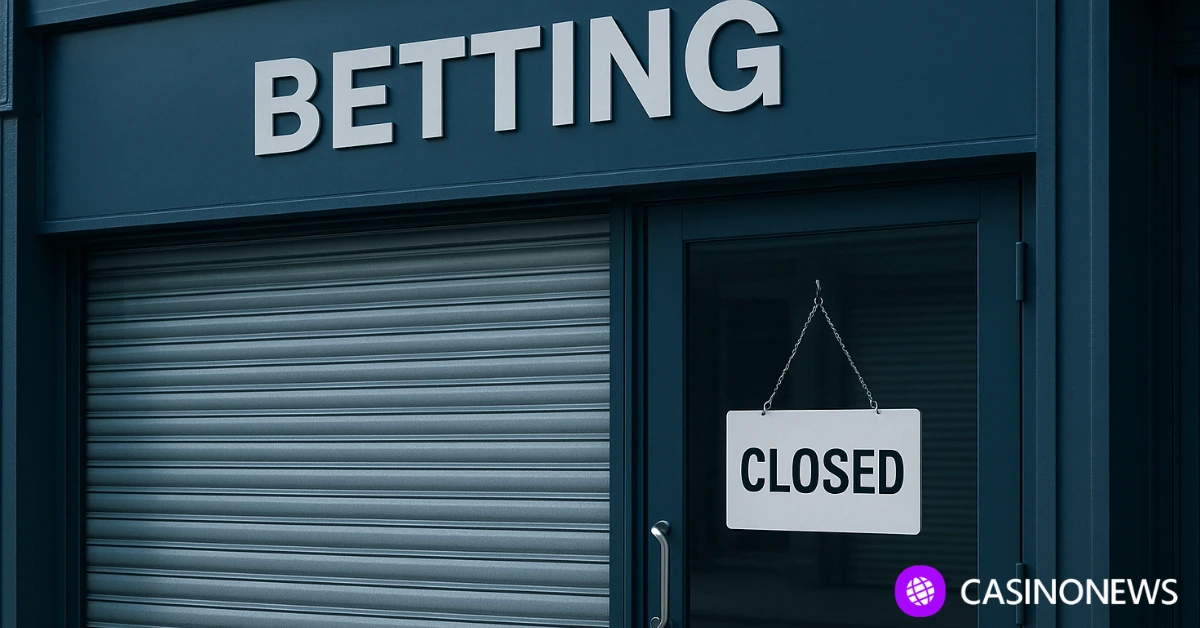
In the lead up to the budget at the end of November, Evoke was leading the calls for chancellor Rachel Reeves to scale back the tax hike. In the days and weeks leading up to the announcement, Evoke said it would have to close up to 200 shop locations if the rules would go into full effect.
Last month, it said: “We are mindful of potential tax increases in the forthcoming budget which would impact investment in the UK and drive more customers to the black market. As part of our ongoing planning, we are assessing the potential impact of different overall tax scenarios on our UK operations. This includes the difficult but necessary consideration for shop closures.”
When 888 Holdings Ltd, now rebranded as Evoke PLC, completed the takeover in 2021 from Caesars Entertainment, betting shops were considered an important part of the business make-up. At the time, Itai Pazner, the 888 chief executive, said: “We did see interest in the retail [estate] from the outside but we feel that the retail is an integral part of the William Hill asset.” Mr. Pazner has since left his position.
British bookmaker giant Betfred had also levelled its concerns about its presence on the high street ahead of the levy increase. He had warned all 1,287 of the company’s betting shops would close if Mrs. Reeves persisted with the proposals, with 7,500 jobs at risk. Since the budget announcement, the company has yet to commit to any betting shop closures or company restructuring.
Other big industry players, like Entain PLC, are also yet to make a move as the shockwaves from the budget continue to permeate around the sector.