
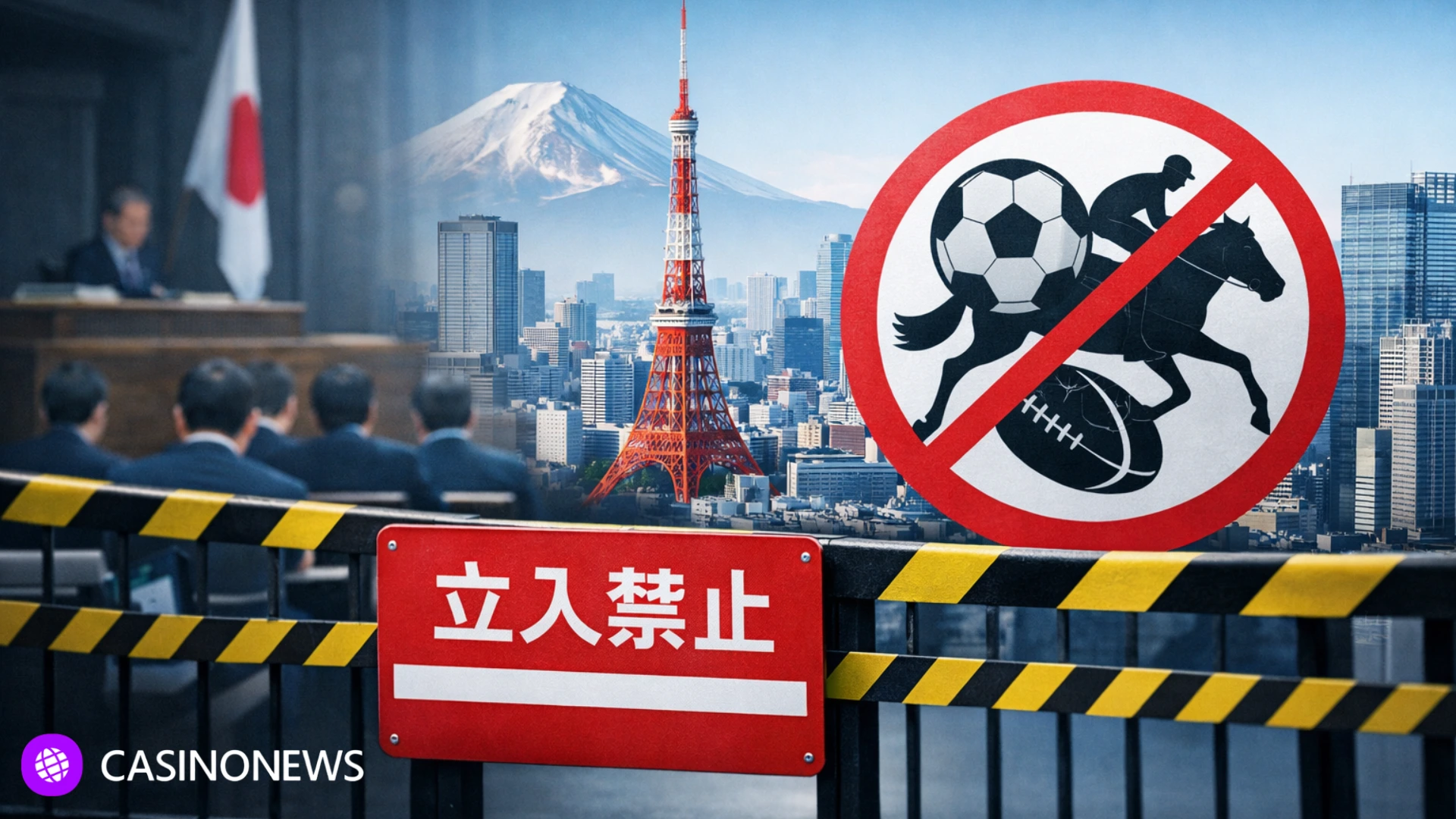
Despite being one of the world’s largest sports and media markets, Japan has again moved to shut the door on legalized sports betting, with lawmakers voting this week to block any pathway toward regulated online wagering. A cross-party group in the National Diet, led by former prime minister Taro Aso, agreed unanimously that expanding betting access would pose an unacceptable risk to sporting integrity. Japan’s stance leaves it increasingly isolated among major sports economies, choosing prohibition over regulation even as illegal online betting reaches trillion-yen levels and other jurisdictions move to licensed, integrity-led models.
The group was primarily established to curb the occurrence of match-fixing and other fraudulent acts taking place, protecting athletes and judges in the process. Not only have they blocked any legal pathway to legalizing sports betting for the foreseeable future, they have created a taskforce to deal with the scourge of match manipulation. Former Justice Minister Takashi Yamashita will chair this group, with future debates laying out possible legislative actions to take place over the coming weeks and months.
Gambling is prohibited by the penal code in Japan, with exception to publicly run races like some horse, bicycle, boat and motorcycle races. Betting on these events is managed by local and central governments. Publicly run races exist for a very specific fiscal and social purpose in that they allow limited, tightly regulated gambling to generate revenue for the state without expanding private casinos or broad betting markets.
They were established as a deliberate policy response to three postwar realities in illegal gambling, fiscal shortfalls, and the need for social control. Critics of the government’s decision to block the path to legalized betting would point to the worrying numbers relating to illegal gambling activity taking place in the country at the time of writing.
Japan’s illegal betting numbers cause concern
Some disturbing figures were released in March 2025, with a study estimating in excess of ¥1 trillion was wagered by individuals in the illegal online sphere. The research, conducted by Japan’s National Police Agency, found that 3.45% of the general population had used an online casino operated outside Japan, while 2.02% of the population remained active on those sites.
The survey asked 27,145 people across Japan, aged 15 to 79, with 60% of that figure in their 20s. The most alarming statistic was the amount of people taking out loans to finance the habit, with a total of 46.2% borrowing money.
At the time, Shinichi Ishizuka, founder of the Tokyo-based Criminal Justice Future think tank, said: “Historically, gambling has been very tightly controlled by the government as it was a very important source of income and they wanted to monopolise betting. But things changed during the pandemic and the emergence of online gambling meant that the government lost control.”
He added that the government closure of publicly run races during the Covid-19 epidemic meant they missed out on an opportunity to financially benefit from the sector: “For the gamblers it was good as they could continue with their habit, but it was very bad for the government because they were not getting any of the profit.”
What next for Japan’s gambling sector
Betting lobbyists are unlikely to give up the fight. While the move is a setback for the sector, some proponents remain steadfast in their belief that there is a safer and fairer future for betting in the country.
In the summer of 2025, Rakuten Group Chairman and CEO Hiroshi Mikitan was filmed advocating for its legalization, telling viewers of the business video media PIVOT: “The introduction of sports betting is important.” The owner of J.League’s Vissel Kobe and the professional baseball team Tohoku Rakuten Golden Eagles added he would be in favor of a nationwide responsible gambling tool to help combat addiction, while at the same time modernizing the sports business ecosystem in the country.
It’s been a debate in the background of national politics for years now. The Japanese government established the Study Group on Collaboration of Regional Areas and Sports Club Industry in 2020, with university academics, corporate managers from the sports industry, officials from competitive sporting leagues, and former athletes working to find a solution for the issue.
The recent vote in the Diet is a huge setback for the movement to provide legalized betting in Japan and it will likely be some time before a renewed drive to modern-day, sensible legislation on the topic could return.