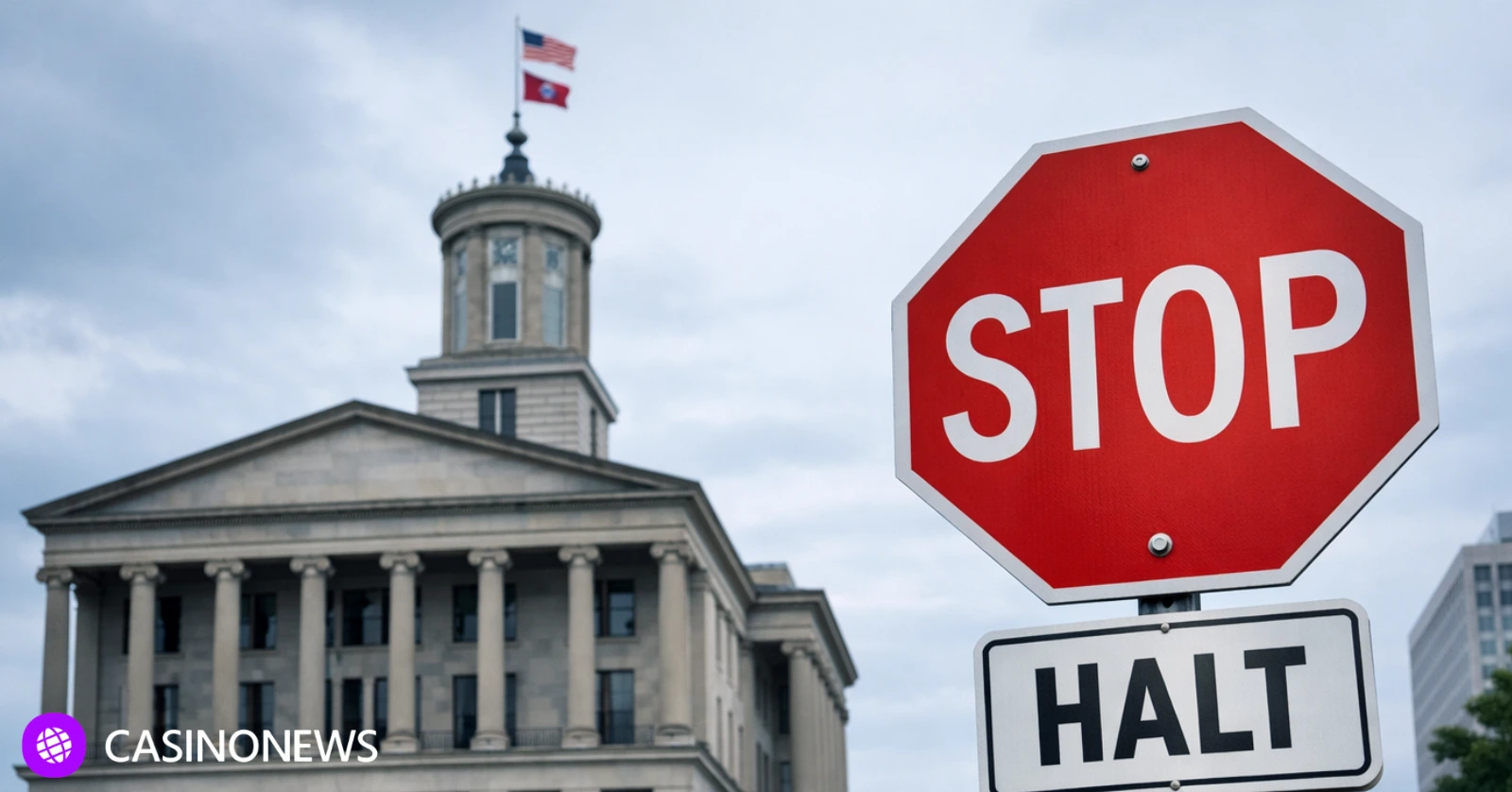
The legal squeeze on prediction markets in states around the U.S. continues after the state of Tennessee sent formal demands to Polymarket, Kalshi, and Crypto.com compelling them to stop offering sport event contracts. Each company has until January 31, 2026, to shut down sports-focused operations, return money to accounts, and close all open positions.
In the letters, dated January 9 the three companies are accused of providing unregulated and unlicensed sports betting services to people in the state by the Tennessee Sports Wagering Council (SWC). Executive Director Mary Beth Thomas, who penned the letters, argued the companies posed “an immediate and significant threat to the public interest of Tennessee”.
Failure to adhere to the demands could result in a fine of $10,000 for the first violation and a subsequent $25,000 for repeat offences. Criminal referrals are also in the offing, according to the council, should any gambling promotion occur in the future.
U.S. prediction markets are facing an expanding wave of state-level enforcement, with at least nine other states issuing cease-and-desist orders or formal regulatory actions over sports-related event contracts. Gaming and consumer-protection regulators in Arizona, Connecticut, Illinois, Maryland, Montana, Nevada, New Jersey, New York and Ohio also have similar orders in place.
How prediction markets are regulated
Proponents of the practice would argue they are completely legal, and with some justification. At the federal level, platforms offering event-based contracts are overseen by the Commodity Futures Trading Commission (CFTC), which treats them as derivatives markets under the Commodity Exchange Act, requiring registration, risk controls and market surveillance.
The recently-established Coalition for Prediction Markets (CPM) president, Matt David, said upon the launch of the group last month: “Prediction markets are a new layer of civic infrastructure, public-good technology that gives people clearer insight and helps institutions make better decisions. They democratise financial participation by rewarding what people know, not who they know.”
However, the opposition comes from lawmakers who see the practice as a danger to its citizens and a drain on state tax receipts. They argue sports betting event contracts are actually just sports betting, which is legally regulated, or banned, by states.
In September last year, the state of Massachusetts announced it was suing Kalshi for illegal and unsafe sports wagering operations. The state’s Attorney General, Andrea Joy Campbell, said at the time: “Sports wagering comes with significant risk of addiction and financial loss and must be strictly regulated to mitigate public health consequences. This lawsuit will ensure that if Kalshi wants to be in the sports gaming business in Massachusetts, they must obtain a license and follow our laws.”
Kalshi and Polymarket locking up deals with institutions
Despite the legal turmoil, prediction markets continue to make huge strides in imprinting themselves on popular American culture. In December, Kalshi announced it would become the official prediction market for news site CNN. The news channel will use its data for major news events, including state and national elections.
Meanwhile, Polymarket revealed it has agreed a partnership with Dow Jones to bring real-time prediction market data to its outlets including The Wall Street Journal, Barron’s and MarketWatch. Dow Jones CEO Almar Latour said: “We’re making prediction markets data accessible to our users, because it’s a rapidly growing source of real-time insight into collective beliefs about future events.”
The Tennessee action adds to mounting pressure on the sector as regulators and courts grapple with where prediction markets end and sports betting begins. While the CTFC will continue to oversee federally registered event-contract platforms, state regulators argue those approvals do not pre-empt state gambling laws when contracts mirror traditional wagers on sporting outcomes.
For now, Tennessee’s cease-and-desist orders signal that prediction markets tied to sports face an increasingly hostile regulatory climate at the state level, even as platforms continue to secure high-profile media partnerships and defend their legality in court.