Prediction market professionals are cautioning patrons to exercise responsible trading practices after recent analysis revealed that the majority of users have realized losses.
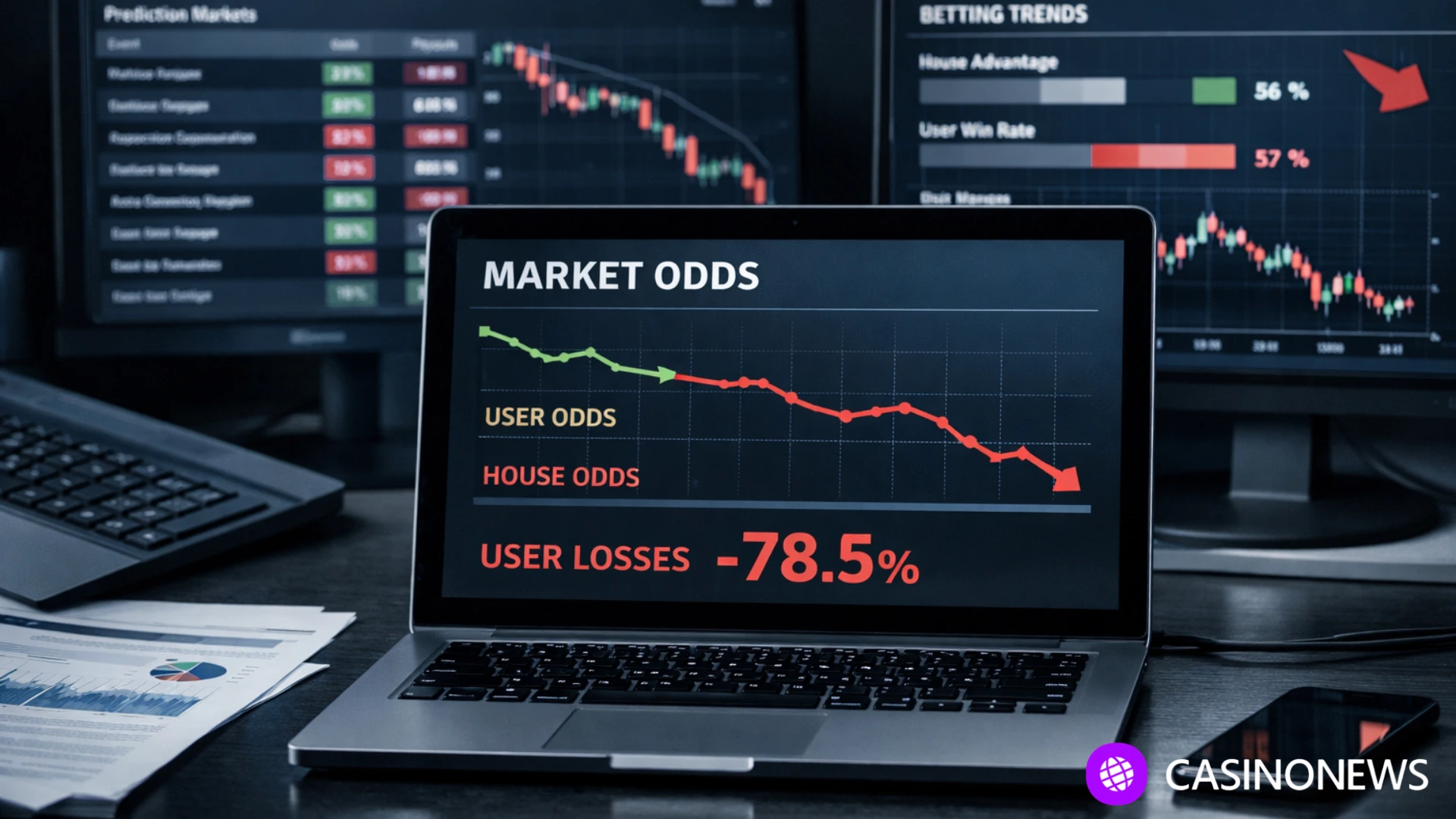
A comprehensive review by blockchain research firm defioasis.eth found that roughly 70% of trading addresses analyzed on Polymarket were running losses on their long-term positions, while just 30% had managed to lock in profits. The study examined approximately 1.7 million blockchain-linked addresses associated with activity on the platform, rather than the prediction-market sector as a whole.
According to the analysis, just 0.04% of Polymarket-linked addresses captured more than 70% of all realized gains recorded in the dataset. That level of concentration mirrors patterns seen on traditional Contract for Difference (CFD) platforms and closely parallels what regulators observe in leveraged retail trading, where European brokers report that between 62% and 82% of accounts lose money.
Most profitable users made relatively small amounts, while breaking $1,000 in profit required ranking among the top 5% of traders. On the other hand, more than 1.1 million accounts, roughly two-thirds of all users, lost less than $1,000 each. But the data also shows extreme cases: 149 accounts lost more than $1 million, suggesting that while most losses are modest, the platform can expose users to large financial harm.
Defioasis.eth noted that the findings reflect on-chain trading behavior on a single prediction-market platform and should not be interpreted as a definitive snapshot of all prediction markets. They also acknowledged the analysis has limits, explaining that blockchain data cannot always distinguish between individual users and automated trading systems.
The report is one of two studies released in recent weeks that challenge the public narrative surrounding the prediction-market industry.
Analyst DANNY warns of prediction market information asymmetry
Another investigation completed by an independent analyst, DANNY, suggests prediction markets such as Polymarket increasingly favor professional traders and insiders, leaving most everyday users at a disadvantage.
This is because, they say, these platforms no longer work like simple crowd-sourced forecasting tools. In a long post on the social media platform X, they said: “Gambling is about uncertain outcomes. But here, the outcome is often known in advance. And it’s this access that creates the asymmetry, not “luck”. Casinonews.io recently reported on prominent affiliate accounts linked to Kalshi and Polymarket platforms that were accused of amplifying misleading or false information.
They go on to write: “The key is public information. Contracts are often settled based on news, announcements, or website updates. Those with early access to these sources will exploit the advantage and take your money before you even realize it.”
They point to examples where traders used real-time data, such as internet search trends, to anticipate outcomes ahead of the broader market. In one widely cited case, a trader, called “Alpha Racoon” reportedly earned more than $1 million using early trend data. The report argues that consistently achieving those results without advanced tools or privileged access is highly unlikely.
In advising participants, DANNY advises to look for tell-tale signs of market manipulation. That includes paying close attention to how and when outcomes are decided, being skeptical of sudden spikes in trading activity, and recognizing the risk of following crowd behavior without independent verification.
Kalshi and Polymarket valuations continue to surge
The overall outlook for both prediction markets looks very positive. Earlier this month. Kashi’s market value steamrolled to more than $11billion after huge investments from the likes of Paradigm, Sequoia and Andreessen Horowitz. Meanwhile, Polymarket benefitted from $2billion in raised funds from the Intercontinental Stock Exchange.
A first-of-its-kind partnership between Kalshi and CNN was agreed upon at the beginning of the month, allowing the news network to broadcast real-time Kalshi data to its audiences during major events, such as the US general election. Sam Felix, CNN’s senior vice president of strategic partnerships and business development, told Axios that the network is “renowned for accurate, fact-based journalism and analysis that helps audiences understand what’s happening. Kalshi is a fresh, data-based angle from which to explore and better understand the world around us.”
In an interview with 60 Minutes at the start of the month, Polymarket CEO Shayne Copian said: “It’s the most accurate thing we have as mankind right now, until someone else creates some sort of super crystal ball.” Kalshi co-founders Tarek Mansour and Luana Lopes Lara argue their platform is more like the stock exchange than a gambling platform. Lara told CBS News last month: “People can make money on what they know. Everyone is an expert on something.”
Despite the strong PR push, analysts say the contradiction at the heart of prediction markets is unlikely to ease. Platforms such as Kalshi and Polymarket continue to attract capital, media partnerships and record volumes, to solidify their status as influential forecasting tools rather than casual betting venues.
As prediction markets expand, regulators, traders, and users face a central question: not whether these platforms will continue to grow, but whether everyday participants fully understand the odds in markets where most profits flow to a small, well-equipped minority.