An amendment to a provision in the Big Beautiful Bill, which would see allowable deduction rates slip to 90% of losses for gamblers, is facing a roadblock in Congress. The Fair Accounting for Income Realized From Betting Earnings Taxation Act, otherwise known as the FAIR BET Act, was aiming to restore previous federal gambling tax policy, which allowed for 100% of gambling losses to be deducted from winnings in a person’s tax return.
However Congresswoman Dina Titus, who represents the First District of Nevada, revealed the Republican-led Rules Committee rejected the proposal in the House Of Representatives. She posted a statement on X, which read: “Unfortunately, the GOP-controlled Rules Committee did not accept the FAIR BET Act as an amendment to the National Defense Authorization Act (NDAA). This was an easy fix that should have been adopted. Nonetheless, I will continue to build support to restore the 100% gambling loss deduction.”
It is a major blow to gambling professionals in Las Vegas and beyond. Under the previous tax regime, gamblers could deduct 100% of their losses, meaning they were taxed only on their true net winnings. For example, a bettor who won $50,000 over a year but lost $45,000 would report $50,000 in gross winnings, deduct the full $45,000 in losses, and pay tax on just $5,000 of real profit.
Under the new rule, which caps loss deductions at 90%, that same bettor could deduct only $40,500 of their losses, leaving $9,500 in taxable gambling income despite still making only $5,000 overall. The change effectively taxes gamblers on “phantom income,” hitting high-volume recreational players and professionals with tight margins hardest.
Why the FAIR BET act hit the brakes
Rep. Dina Titus tried to advance the FAIR BET Act by attaching it to a must-pass defense spending bill, a common tactic on Capitol Hill to push bipartisan measures through Congress. But the Republican-led House Rules Committee refused to allow the amendment, preventing it from reaching the floor for a vote.
House leaders said restoring the full gambling-loss deduction could reduce federal tax revenue and argued the issue should be considered as part of a broader debate over tax policy rather than through a last-minute amendment.
While there is no method to find official numbers for total federal tax revenue collected only from individuals’ gambling winnings, research published on the National Library of Medicine back in 2019 suggests it’s a significant revenue raiser. According to the paper, approximately “two million federal income tax forms per year have declared gambling winnings. The total amount of reported winnings in 2019 was $35.8 billion.”
Pro gamblers may be forced into early semi-retirement
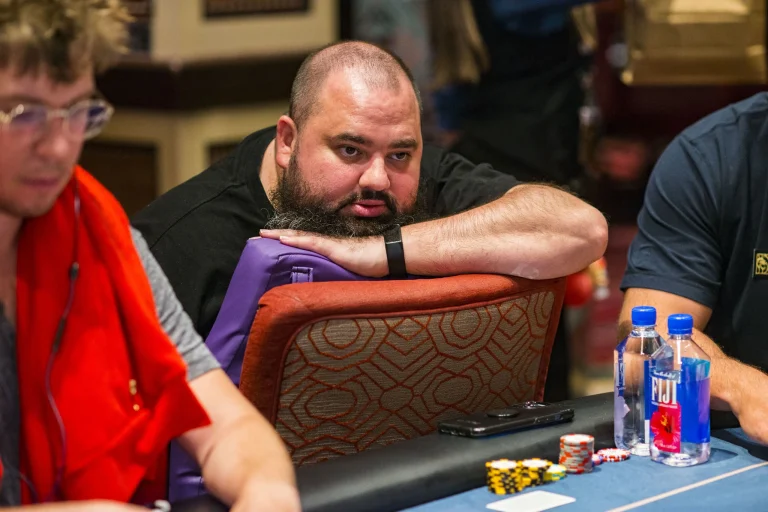
Poker legend Eric Seidel recently explained how the policy is going to drastically reduce his playing time. Late last year, he told the Nevada Independent: “Next year I am kind of forced into retirement. Everyone who I’ve spoken to plans on either cutting back or stopping”.
Tony Dunst, a three-time World Series of Poker bracelet winner, had supported the bill last month, posting on X: “Nobody I’ve spoken to takes this more seriously than the high rollers, and with good reason. Edges were already thin in high rollers, and the public nature of these events makes…creative accounting difficult. It would be easy for a high roller with a small edge to end up accumulating so much in buy-ins that they wind up owing considerable taxes on a break even-ish year.
“A few high rollers I’ve spoken to said they won’t play much at all in 2026, and American players in high rollers could become scarce.”
Hope remains for FULL HOUSE act
The push to restore the full federal deduction for gambling losses is now moving through both chambers of Congress under separate but coordinated bills. The Facilitating Useful Loss Limitations to Help Our Unique Service Economy (FULL HOUSE Act) was first introduced in the Senate by Senator Catherine Cortez Masto of Nevada but stalled in committee. Lawmakers have now launched a House companion version, led by Rep. Max Miller of Ohio and Rep. Steven Horsford of Nevada, keeping the effort alive.
The American Gaming Association, the country’s premium gambling industry body, released a statement in support of both. It read: “Restoring the 100% gambling loss tax deduction is a top priority. The introduction of the House companion FULL HOUSE Act, led by @RepMaxMiller and Rep. @StevenHorsford, marks important progress on this bipartisan, bicameral effort.”
Any progress is likely to be slow, however. The proposal sits at a key junction of tax policy and budget politics, where changes face heightened scrutiny. Restoring the full deduction would reduce projected federal revenue, making it harder to advance as the government fights to reduce the deficit.