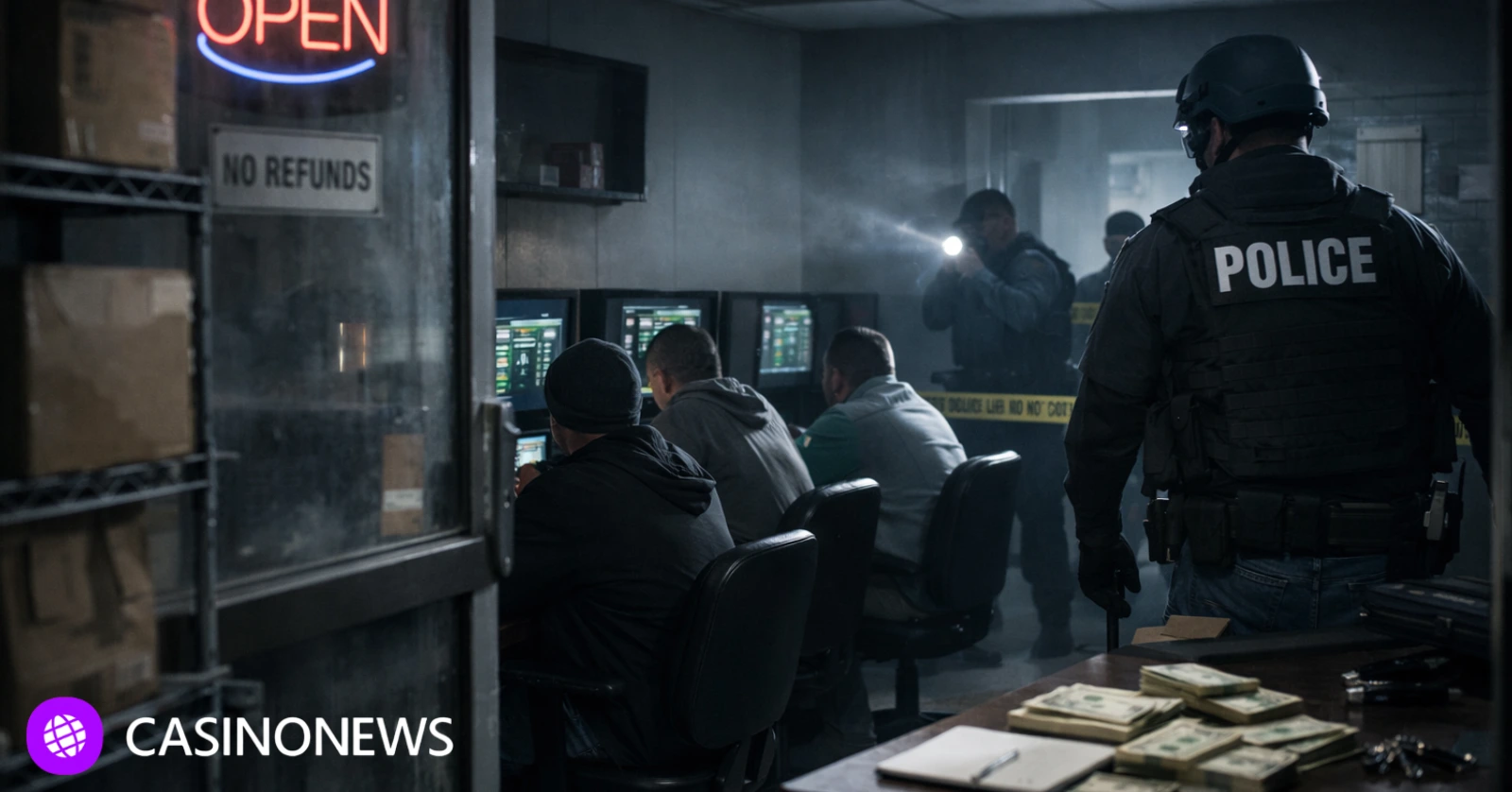
An alleged illegal gambling ring operating out of Modesto in California has been targeted by police, leading to the arrest of four individuals, the local police force has confirmed.
Modesto police, working with the Code Enforcement Unit, targeted the illicit practice at four city convenience stores. Undercover officers acted after community complaints flagged the operations, authorities said.
Stores a front for comprehensive gambling network
According to the Modesto Police Department, the level of illicit wagering within this network was extensive. A statement on the force’s social media site read: “Undercover officers opened gambling accounts at the businesses, placed wagers and were able to both gamble and collect winnings directly from store employees.
“The Modesto Police Department remains committed to addressing illegal gambling, enforcing tobacco regulations and responding to quality-of-life concerns raised by community members.”
Officers reported significantly expired food products on the shelves, authorities said, which was part of an attempted cover-up. A total of $27,000 in cash was seized in the raid, while one employee was taken in on methamphetamine possession charges.
The operation was part of a wider effort to hold businesses accountable to local and state laws, the department confirmed.
Illegal gambling in California on the rise
Despite a wide-ranging ban on sports betting and online sweepstakes casinos in the Golden State, illegal betting continues to trend upwards, according to a report from the American Gaming Association (AGA) released in October of last year.
The AGA’s 2025 Sizing the Illegal and Unregulated Gaming Markets report alleges that the overall illegal and unregulated gambling market in the U.S. has expanded 22% since 2022, now generating roughly $53.9 billion in annual revenue and accounting for nearly 32% of the total U.S. gaming market.
However, in California, the illegal sports betting market has grown approximately 290% since 2022, far outpacing the national increase, with operators pulling in an estimated $818 million in 2024. By comparison, Pennsylvania’s regulated sports betting market generated $778 million in revenue in 2024.
Efforts to legalize the practice were rebuffed on the ballots in 2022. It was rejected by voters with roughly 3.5 million “yes” votes to about 7.1 million “no” votes, a defeat by more than two-thirds of the vote.
Bill banning Sweepstakes Casinos on Governor Gavin Newsom’s desk
The Assembly Bill 831 (AB 831) banning sweepstakes casinos from operating in the state of California is with Governor Gavin Newsom for consideration, landing on his desk this week. The frontrunner for the Democratic party’s presidential candidacy now has 12 days to either sign AB 831 into law, veto it, or allow it to take effect without his signature.
Failure to adhere to the law could result in fines worth up to $25,000 potential jail time for those involved with facilitating sweepstakes casino operations.
A sweepstakes casino is an online gaming platform that mimics real-money casino play but uses virtual currencies instead of direct cash wagers. Players typically buy one currency for entertainment and receive another for free, which can sometimes be redeemed for prizes or cash, which is a structure designed to skirt traditional gambling laws.
While supporters of the bill argue it protects tribal gaming rights, opponents believe it will further drive bettors into the arms of illegal operators.
Prediction markets thrive in California
It’s not all bad news for fans of sports betting in California. A judgment handed down in November last year denied tribal efforts to block prediction market platform Kalshi under the Indian Gaming Regulatory Act (IGRA).
The ruling leaves the door open for Kalshi and others to maintain operations in California. Prediction markets resemble sports betting in that users wager on the outcome of real-world events, but they trade what are known as “sports event contracts” on “yes or no” outcomes rather than placing odds-based bets.
Prices move with supply and demand, meaning the market itself reflects the perceived probability of a team, player, or event outcome. In truth, the decision may make life easier for police authorities in the state.
The Modesto sting shines a light on the growing tension between California’s strict gambling laws and persistent consumer demand, as authorities juggle enforcement, legislation, and emerging alternatives. With illegal operators adapting quickly, the state faces an increasingly complex challenge.