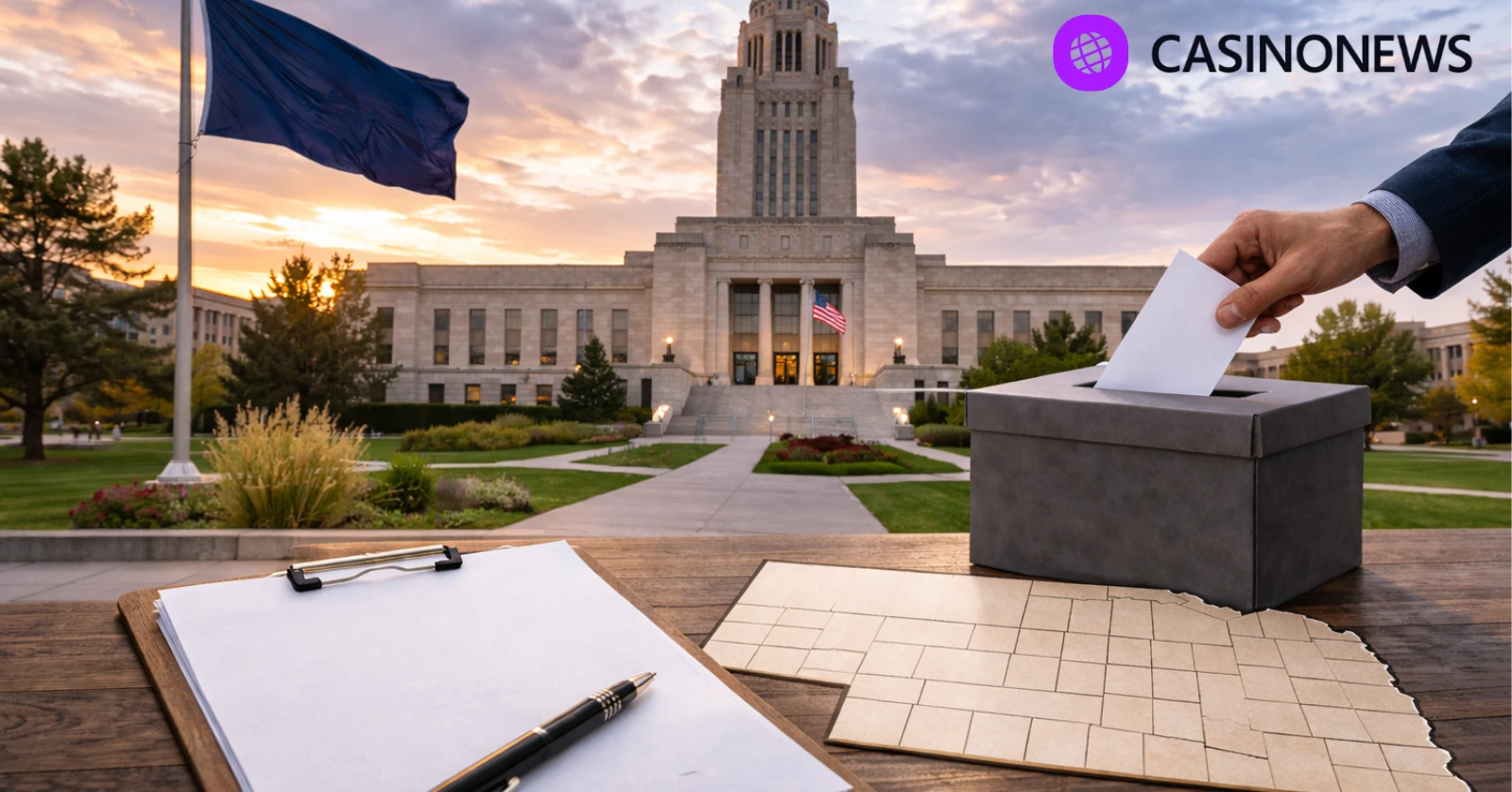
Voters in Nebraska could have their say on the legalization of sports betting after the Secretary of State’s office approved two petitions, one of which will give residents the opportunity to vote on the issue.
If supporters gather the required number of signatures, the Nebraska sports wagering amendment will appear on the November ballot in this year’s general election.
10% of registered voters must sign petition to validate
Petition organizers are required to gather signatures from 10% of registered voters to qualify the constitutional amendment and 7% to advance the statutory proposal. In addition, both measures must satisfy geographic distribution thresholds by securing support across at least 38 Nebraska counties.
The ballot effort features two components. They include a constitutional amendment and a related statutory proposal. The amendment would empower the Nebraska Legislature to authorize and oversee online sports betting, while the accompanying statute would set out the regulatory structure, detailing supervisory authority and operational rules should voters endorse the measure.
Nebraska’s approach mirrors ballot drives seen in other states where lawmakers have deferred to voters on gambling expansion. In 2020, voters in Maryland approved sports betting through a referendum before lawmakers finalized the regulatory framework the following year. Similarly, residents of Colorado narrowly backed legal sports wagering at the ballot in 2019, with legislation outlining licensing and tax rules taking effect soon after.
Other states have seen more contentious outcomes. In California, rival sports betting initiatives backed by tribal operators and commercial sportsbooks both failed in 2022 after an expensive campaign battle. Meanwhile, voters in Ohio legalized sports betting through legislation rather than referendum, underscoring the varied paths states have taken as gambling policy increasingly moves from statehouses to the ballot box.
Proposals demand platforms “submit controls for approval”
The petitions insist that both licensed casinos and their partnered online betting platforms maintain servers physically located within Nebraska, reinforcing in-state regulatory control and compliance oversight. In addition, each licensed casino would be limited to offering no more than two online sports wagering platforms, a provision designed to balance market competition.
Under the proposal, operators such as DraftKings, FanDuel, BetMGM, Caesars Sportsbook and other approved brands would be required to submit their internal controls and operational systems to the Nebraska Racing and Gaming Commission for review and approval. This includes compliance protocols, data security standards, geolocation safeguards and responsible gaming measures.
Currently, sports betting is legal in Nebraska only at in-person sportsbooks located within licensed casinos, following voter approval of expanded gambling in 2020. Mobile or online wagering, however, is not permitted under existing law.
The initiative also sets a clear regulatory timeline. It directs the Nebraska Racing and Gaming Commission to adopt and promulgate rules governing online sports wagering no later than June 1, 2027. By establishing a formal deadline, the measure aims to provide certainty for operators, regulators and potential market participants, while ensuring that a comprehensive regulatory structure is in place before online betting goes live.
Movement to legalize betting in Nebraska gathering pace
The petitions come off the back of an uptick in intensity to legalize betting in the state. Nebraska lawmakers are aiming to legalize online sports betting as the 2026 legislative session begins, amid tightening budget forecasts and a projected revenue shortfall.
Another carryover measure, LB 421, would expand wagering beyond licensed racetracks and impose a 20% tax, with 90% of revenue directed to the state’s Property Tax Credit Cash Fund.
The proposal previously faced stiff resistance in the Senate, where it required at least 30 votes to advance and 33 to overcome a filibuster. Supporters, including Senator Jason Prokop, argue a regulated market would both generate revenue and address concerns around gambling addiction.
Backers estimate legalized online betting could bring in roughly $32 million annually, funds the state is currently missing as residents place wagers elsewhere. The push comes after revenue forecasts were cut by hundreds of millions of dollars across the next two fiscal years.
Opposition remains stiff among lawmakers
The ballot measures will face a stiff public examination from voters in Nebraska and there remains a healthy suspicion of legalizing the practice.
Last year, Nate Grasz of the Nebraska Family Alliance argued that expanding access to gambling would harm children and families, pushing back on claims that legalization would simply keep betting revenue within the state.
“It’s been said that all we’re doing by not legalizing online sports betting is sending revenue across the river. A clear and growing body of evidence suggests otherwise,
“States with online sports betting have seen massive spikes in addiction, bankruptcy, suicide and domestic violence, while decreasing household spending and savings. Legalization dramatically increases access, acceptance and advertising, which drives increased participation, loss and human suffering.”
Senator Brad von Gillern also warned lawmakers last year about the costs of legalizing wagering, saying opponents feared “the risk of increasing gambling addiction among young men in Nebraska is not worth the money the state would see in return.”