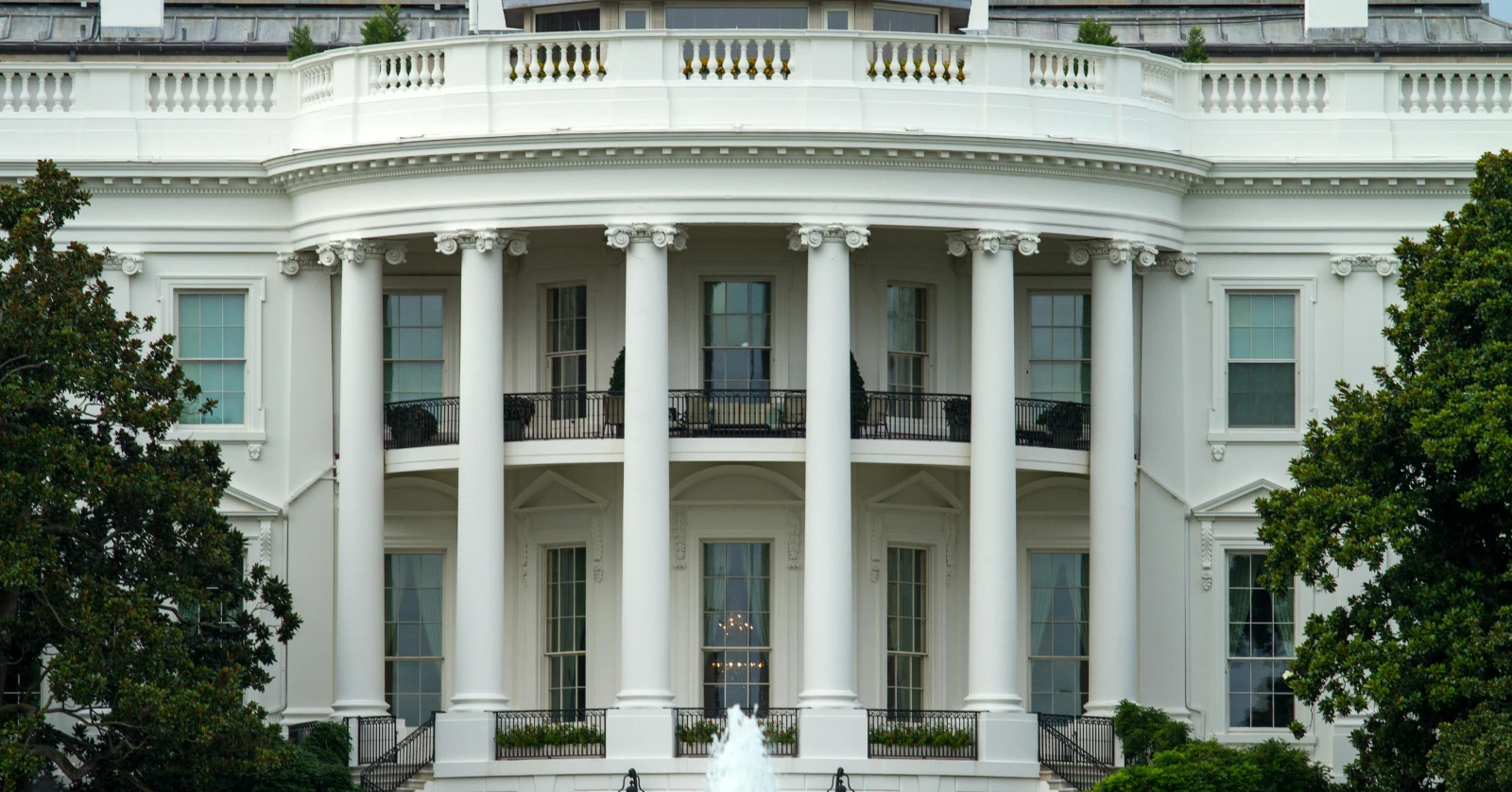
The White House has sent an email to staff warning them to stay clear of prediction markets after a spate of suspiciously-timed trades on platforms such as Polymarket and Kalshi over the course of the Iran war and other geopolitical events.
CBS reported the email, sent on March 24th according to two officials from within the White House, states: “Recent press reports have raised concerns about government officials using nonpublic government information to place wagers on online prediction markets, such as Kalshi or Polymarket.
“All White House employees are reminded that the misuse of nonpublic information by government employees for financial benefit is a very serious offense and will not be tolerated.”
Trump spokesman criticizes “baseless” reporting
There had been suggestions in some quarters that some members of the administration had been directly profiteering off of insider information. However, Trump’s spokesman David Ingle was quick to dismiss those suggestions.
In a statement, he said: “President Trump has been crystal clear: while he seeks a strong and profitable stock market for everyone, members of Congress and other government officials should be prohibited from using nonpublic information for financial benefit. The only special interest that will ever guide President Trump is the best interest of the American people.
“All federal employees are subject to government ethics guidelines that prohibit the use of nonpublic information for financial benefit. However, any implication that Administration officials are engaged in such activity without evidence is baseless and irresponsible reporting.”
President Donald Trump said March 23 he would postpone planned U.S. strikes on Iranian power plants, citing progress in talks with Tehran, in a move that briefly eased tensions in the region and sent oil prices lower.
But unusual activity in financial markets shortly before the announcement has raised questions among analysts and lawmakers.
According to data reported by Bloomberg News and the Financial Times, trading in crude oil futures surged minutes before Trump’s social media post. Roughly $580 million in contracts changed hands in a short period, far above typical volumes for that time of day.
However, it’s the trading on prediction market sector that is garnering the most attention right now, and it’s making officials nervous.
New accounts on Polymarket raises suspicions
Dozens of freshly created profiles on Polymarket placed large wagers on a U.S.-Iran ceasefire shortly before President Donald Trump publicly announced the agreement, recent reports outline.
The Associated Press has previously said at least 50 accounts made the trades in the hours, and in some cases minutes, leading up to the announcement. Most appeared to have no prior activity on the platform, suggesting the bets were their only transactions.
The timing is the latest in a series of unusually accurate wagers tied to major geopolitical developments. Earlier this year, one anonymous user earned about $400,000 by correctly predicting the removal of Venezuelan leader Nicolás Maduro just before his capture. In a separate instance, another account made roughly $550,000 betting on a U.S. strike against Iran and the ouster of Supreme Leader Ali Khamenei ahead of the conflict.
Academic research has added to those concerns. A recent study by Harvard University researchers estimated that traders on Polymarket may have generated about $143 million in profits using potentially privileged information tied to events ranging from geopolitical developments to high-profile cultural moments.
Lawmakers continue crackdown on prediction markets
Representatives across the political spectrum are moving to tighten oversight of prediction markets, in part thanks to recent
Sen. Chris Murphy and Rep. Greg Casar have introduced the BETS Off Act, which would ban wagers tied to government actions. Rep. Seth Moulton has also imposed an internal office ban preventing staff from betting on political or geopolitical outcomes.
Separately, Sens. Adam Schiff and John Curtis are backing the Prediction Markets Are Gambling Act, a bipartisan proposal that would bar federally regulated platforms from offering contracts resembling sports betting or casino games. The measure could affect major platforms such as Kalshi and Polymarket, both of which have recently tightened internal rules.
Rep. Blake Moore is also supporting bipartisan efforts to expand federal oversight, citing concerns about gambling restrictions in states like Utah.
At the state level, officials in Arizona, Connecticut and Illinois have taken steps to regulate or block certain platforms, including cease-and-desist orders and, in Arizona’s case, criminal charges against Kalshi.
The Commodity Futures Trading Commission (CFTC) has pushed back against a state-by-state approach, warning it could create inconsistent rules and increase risks for consumers, while signaling plans to develop clearer federal standards for emerging financial products.