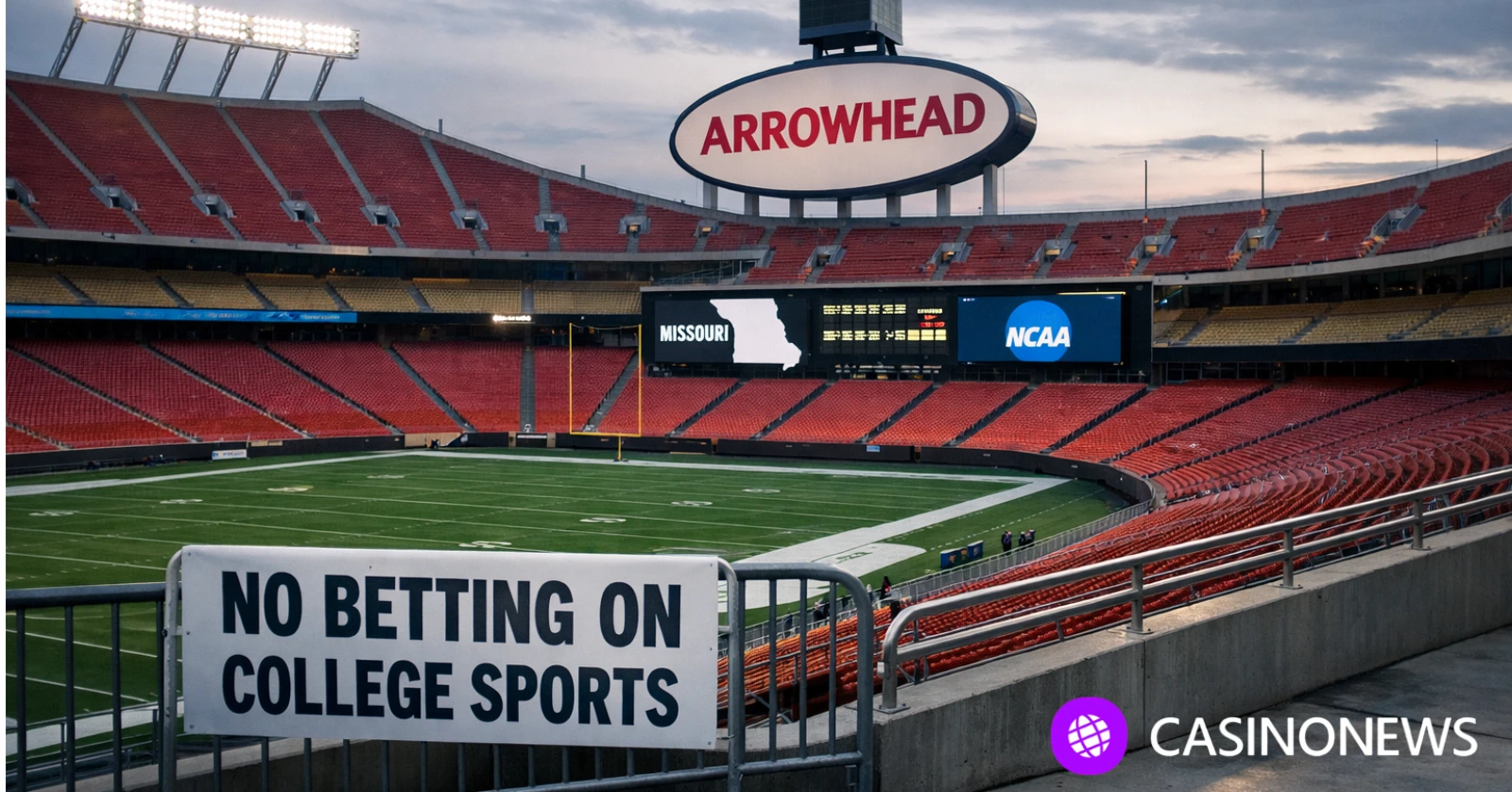
The National Collegiate Athletic Association (NCAA) request to restrict prop bet markets on college sports events has been rejected by the Missouri Gaming Commission (MGC), for the time-being.
The NCAA’s request does not seek to allow or prohibit college athletes from betting, which is already banned under NCAA rules. Instead, the governing body has urged states to limit or eliminate certain bet types on college sports, particularly player-specific proposition bets, which it argues pose heightened integrity risks.
Future restrictions could happen, but “just too soon”, says commissioner
The door has been left open by the chair of the MGC, Jan Zimmerman, who said he’d need to find out more about the request before agreeing to the proposal set by the NCAA President Charlie Baker.
Zimmerman said: “I just don’t feel that I have enough information to grant a request by the NCAA to prohibit this type of sports wagering, because I don’t know enough yet.” Earlier in the month, Baker had urged gambling commissions across the country to pay heed to his plea as he struggles to keep problem gambling from seeping into college sports.
He said: “The Association has and will continue to aggressively pursue sports betting violations in college athletics using a layered integrity monitoring program that covers over 22,000 contests, but we still need the remaining states and regulators to eliminate threats to integrity to better protect athletes and leagues from integrity risks and predatory bettors.”
If Missouri were to act on the NCAA’s request, regulators could move to ban or limit those bet types at licensed sportsbooks, while leaving the broader legal sports betting market intact.
Missouri gets backing of Sports Betting Alliance (SBA)
The SBA, a coalition of major legal sports betting operators including BetMGM, DraftKings, FanDuel, Fanatics, and bet365, were behind the MGC’s decision.
It was reported the SBA said past instances of college athlete betting scandals “should not trigger a radical change” to the sports betting market in Missouri, arguing any restriction would just drive athletes to illegal operators.
Last year, a high-profile NCAA enforcement case saw three Division I men’s basketball players in Mykell Robinson (Fresno State), Steven Vasquez (San Jose State) and Jalen Weaver (Fresno State), violate NCAA sports betting rules.
According to the NCAA, the athletes wagered on games in ways that involved betting on themselves and sharing insider information with others to influence prop bets, and in some instances manipulated their performance to help winning wagers.The NCAA revoked their eligibility and they were released from their teams. It was an embarrassing episode for the governing body, which is charged with safeguarding competition integrity.
Missouri legalized gambling approaching two month birthday
Since opening up to residents as a legal practice on December 1, 2025, legal sports betting has exploded in Missouri. The state, which is home to the Kansas City Chiefs among other sporting dynasties, saw over 250,000 active sportsbook accounts recorded across licensed operators in just the first day of business alone.
Within the first full week of legal wagering, active accounts reportedly more than doubled to about 520,000 as bettors continued to engage with legal apps.
Some analysts project Missouri’s total wagered handle could reach about $3.88 billion over the first year of legal sports betting operations. BetMissouri, a group designed to guide users through the newly legalized, regulated online sports betting market in Missouri, believes the first year could smash all expectations.
BetMissouri analyst Christopher Boan said in November last year: “If Missouri reaches our four-month projection of $1.05bn, it would rank third among the five benchmark states we analyzed, trailing only Massachusetts and Maryland but surpassing Colorado, Tennessee and Indiana. That’s a promising signal for how quickly Missourians could embrace regulated wagering. .
Regulators and operators battle for balance
While Missouri’s legal sports betting market continues to expand at pace, a tightrope is being trod by regulators as they seek the right balance between protecting the integrity of college sports and avoiding unintended consequences that could strengthen the illegal gambling market.
While the NCAA has warned that recent betting scandals highlight growing risks to athletes and competition, Missouri officials and industry groups argue that a regulated framework, backed by monitoring, enforcement and transparency, remains the most effective safeguard.
For now, the MGC has opted for caution over immediate restrictions, leaving the door open to future action as more data emerges. With billions of dollars in wagers projected in the market’s first year and integrity concerns under increasing scrutiny nationwide, the debate over how best to shield college sports from betting-related threats is unlikely to fade anytime soon.