
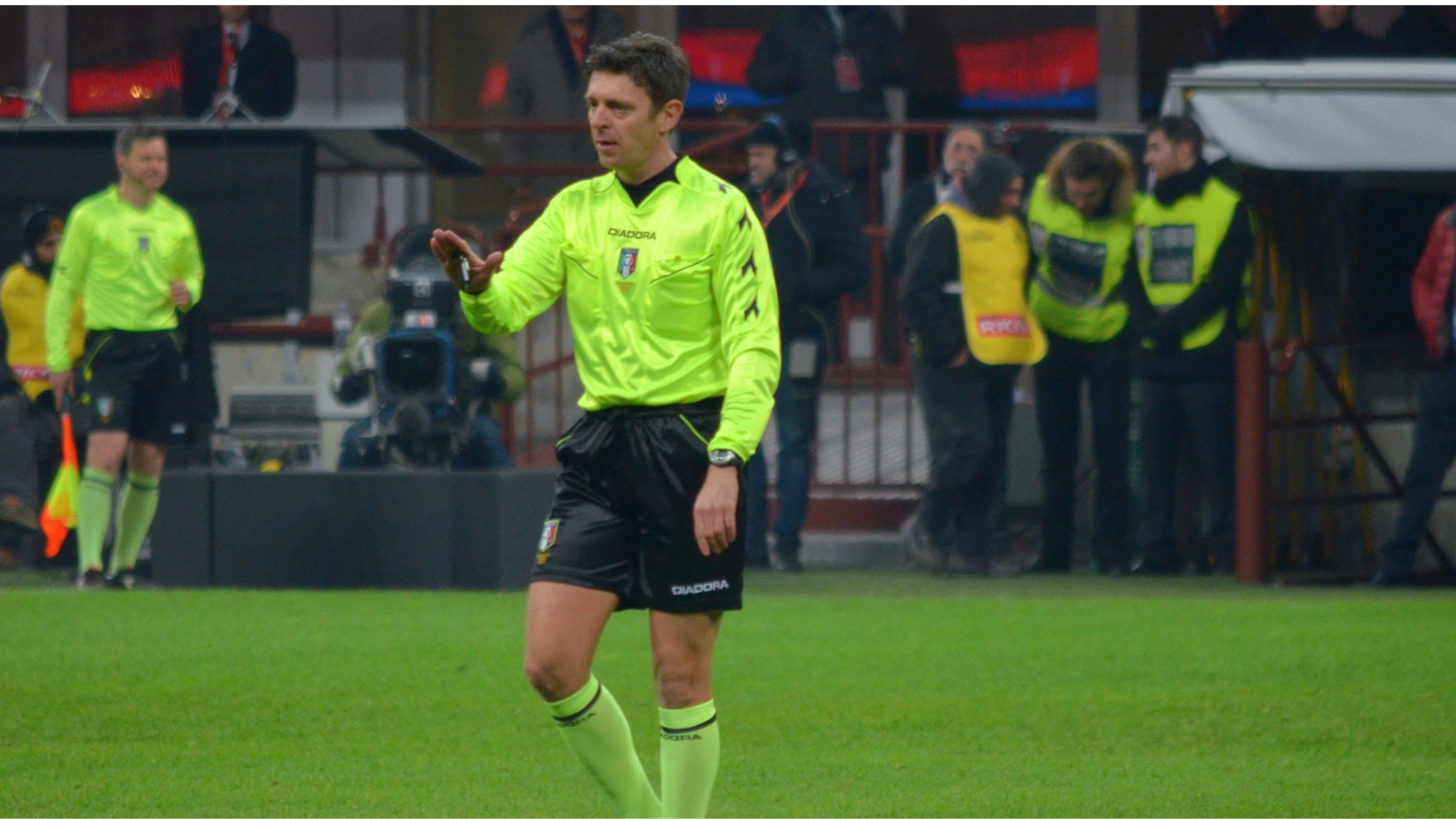
The head of professional referees in Italy, Gianluca Rocchi, has suspended himself amidst an investigation for sports fraud by Milan’s Public Prosecutor’s Office, while VAR supervisor Andrea Gervasoni has also stepped down.
Both have been implicated in several incidents that occurred last year. Reports suggest heavy scrutiny is being applied to Rocchi’s interference with certain VAR protocols while also handpicking referees deemed to be preferential to current Serie A league leaders Inter Milan.
Decision to step down “painful”, says Rocchi
Rocchi, a member of Italian football’s Hall Of Fame, was the fourth official at the 2013 Champions League final, at the helm for the 2017 European Super Cup and oversaw the 2019 Europa League final.
In a statement, he said: “This choice, painful, difficult but shared with my family, is intended to allow the legal proceedings to run their course properly, from which I am sure I will come out unscathed and stronger than before.”
According to reports from The Athletic, the investigation began because of a disputed VAR call during Udinese’s 1-0 win over Parma last March. Officials initially ruled no handball on a penalty check, but after a knock on the VAR booth window, allegedly from Rocchi, play was halted. Referee Fabio Maresca reviewed the incident and awarded a penalty, which Udinese converted.
The knock raised concerns about outside influence on VAR decisions, which are meant to remain autonomous. Audio of the exchange later surfaced in Italian media, fueling controversy, while VAR official Daniele Paterna has not commented publicly. A complaint from referee Domenico Rocca prompted a probe by the Italian Football Federation (FIGC), which found no disciplinary breaches.
Prosecutors also allege Rocchi colluded on April 2, 2025, at San Siro to influence referee appointments in Inter Milan’s favor. Investigators claim it was agreed that referee Daniele Doveri, viewed unfavorably by Inter, would handle a Coppa Italia semi-final second leg to avoid officiating the final or Inter’s remaining matches, while Andrea Colombo, reportedly preferred, was assigned a league game against Bologna FC.
Inter lost that match 1-0, but under Italian law, even an attempt to manipulate referee selection can constitute sporting fraud.
Inter president denies knowledge of conspiracy
Ahead of his side’s game against Torino last weekend, Inter Milan’s president, Giuseppe Marotta, was quick to distance the club from the investigation. He told reporters from Sky Sports: “We are learning everything from the media, so we are stunned by the declarations.
“We know we have acted with the utmost integrity, and that is the most important thing, which should put everyone’s mind at ease. I’m not worried; we have no part (in this matter) and won’t have part in it in the future.”
The league leaders are not under investigation. They will wrap up a 21st Scudetto this weekend with a win this weekend against Parma.
What next for Italian football?
These are concerning times for fans of the beautiful game in Italy. The Italian Referees Association is continuing to grapple with the fallout. The body is without a president and Serie A and Serie B lack a referee designator, following bans and resignations linked to internal disputes and past scandals.
The emerging crisis raises concerns about governance within the FIGC, with criticism over how complaints and investigations have been handled. Some commentators argue the system is failing to police itself, increasing pressure for outside intervention to restore credibility.
One option being touted is an intervention by the Italian National Olympic Committee (CONI), which can appoint a commissioner in cases of serious dysfunction. While the threshold is high, political backing for such a move appears to be growing, though CONI leadership has so far held off taking action.
The uncertainty comes ahead of FIGC presidential elections scheduled for June 22, now central to shaping the sport’s future in Italy. Potential candidates are seeking support, but any CONI intervention could override the vote, leaving Italian football at a crossroads as investigations and power struggles unfold.
Case a haunting reminder of the Calciopoli scandal for Italian football
Due to the nature of the investigation, inevitable comparisons are being drawn between this investigation and the match-fixing scandal that rocked Italy earlier in the century.
Back in 2006, prosecutors uncovered a network of club executives and refereeing officials accused of influencing referee appointments to favor certain teams in Serie A. At the center was Juventus FC, whose general manager Luciano Moggi was accused of selecting favorable referees, which is what Rocchi is being charged with by Milan investigators.
Intercepted phone calls suggested attempts to sway officiating by Moggi, while other clubs, including AC Milan, Fiorentina and Lazio, were also implicated to varying degrees.
The fallout was severe. Juventus was stripped of its 2005 and 2006 league titles and relegated to Serie B, while several clubs received points deductions. Moggi and other officials were banned from football, and refereeing structures were overhauled in an attempt to restore integrity.
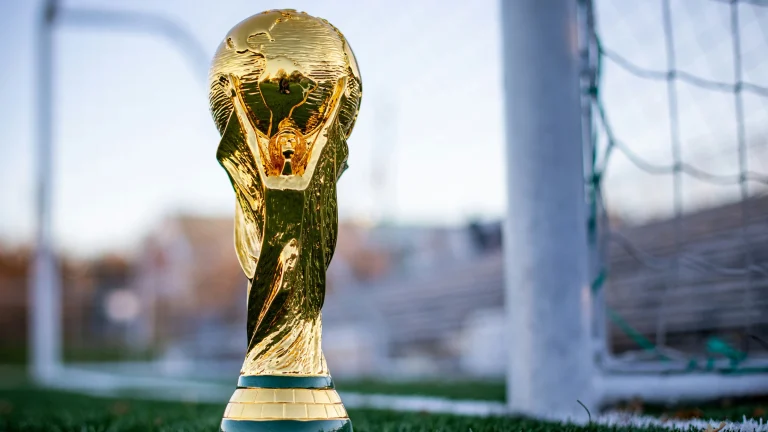
The scandal damaged the global reputation of Italian football, and there are fears the recent developments will drag it back to those dark days. The mood surrounding the sport is already dark in Italy, with Gli Azzurri missing out on a third consecutive World Cup spot after a painful playoff defeat to Bosnia and Herzegovina. It represents quite a fall from grace for a side that won the World Cup as recently as 2006.