
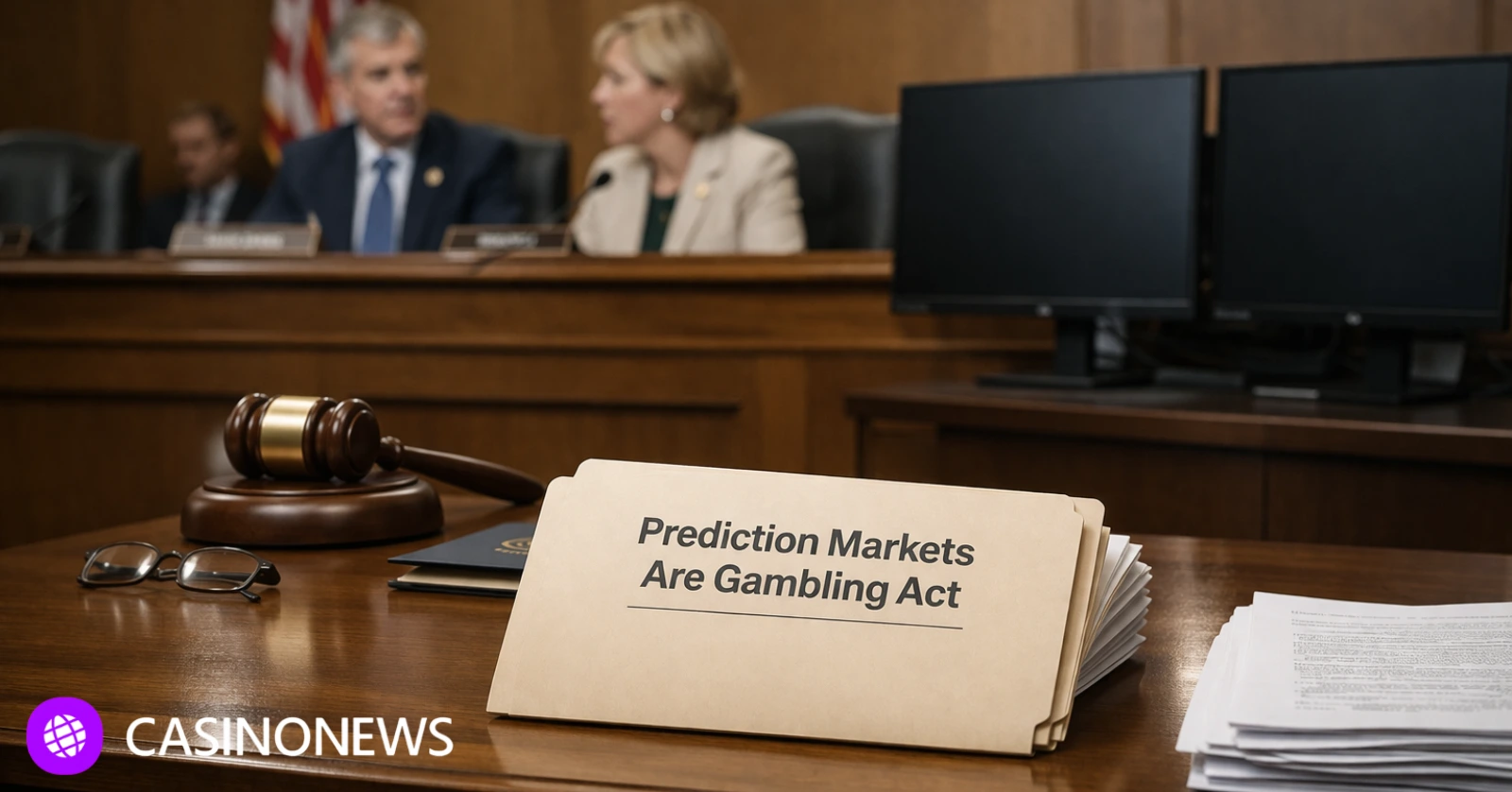
Senators Adam Schiff (D., Calif.) and John Curtis (R., Utah) have worked across the aisle to introduce legislation banning sports event contracts on prediction markets like Kalshi and Polymarket.
The Prediction Markets Are Gambling Act would amend federal law so that “sports and casino-style event contracts” may not be offered on platforms regulated by the Commodity Futures Trading Commission (CFTC). This means that markets related to any sports event will not be available to prospective traders, who will instead be restricted to non-sporting, real world events.
Consumer protections are being violated, says Schiff
Prediction markets have been in the crosshairs of lawmakers for several months now, with concerns the practice does not offer the same protections as traditional regulated online sportsbooks.
States argue it bypasses established gambling laws and regulatory oversight, while officials say the platforms erode tax revenue, weaken consumer protections and conflict with tribal gaming agreements.
Schiff agrees, which is why he and a Republican colleague are stepping in. He says: “The CFTC is greenlighting these markets and even promoting their growth. It’s time for Congress to step in and eliminate this backdoor, which violates state consumer protections, intrudes upon tribal sovereignty and offers no public revenue.”
Curtis added: “Too many young people in Utah are getting exposed to addictive sports betting and casino-style gaming contracts that belong under state control, not under federal regulators.”
The industry handles tens of billions of dollars in annual trading volume, with global activity estimated around $60 billion in 2025. Much of that activity is concentrated on Kalshi and Polymarket. Sports-event contracts account for the vast majority of trading, often more than 80%.
Proponents say prediction markets improve price discovery by aggregating public sentiment into real-time forecasts. They argue the platforms function as financial tools, not gambling, and can enhance hedging and information efficiency.
Banning sports event contracts push traders offshore, Kalshi argues
The industry is pushing back on the move, with many figureheads pointing to the uptick in illegal, offshore betting when online gambling platforms are closed down within a state or country.
A Kalshi spokesperson said: “Banning sports on regulated prediction markets would just push this behavior offshore, where no regulation exists. It’s clear this bill is motivated by casino interests that are threatened by competition.” Kalshi’s co-founder Tarek Mansour added on social media platform X: “This bill isn’t about protecting consumers; it’s about protecting monopolies.”
Prediction market operators are also facing a growing patchwork of legal challenges from states, with mixed outcomes in recent cases in Nevada, New York and Tennessee. In Nevada, regulators sued to block platforms from offering sports-related event contracts, winning a temporary court order halting much of Kalshi’s activity while litigation proceeds.
In New York, lawmakers and regulators have moved toward restrictions and potential bans rather than a definitive court ruling, reflecting broader state concerns that the platforms amount to unlicensed sports betting and should be regulated at the state level. While Arizona became the first state to level criminal charges against Kalshi, where regulators have challenged its sports-event contracts as unlicensed gambling under state law.
In Tennessee, however, a federal judge sided with Kalshi, issuing a preliminary injunction and finding its sports contracts likely fall under federal derivatives law, limiting the state’s authority.
CFTC issues prediction market advisory
The CFTC signaled support for prediction markets in a March 12 advisory, encouraging innovation in event-based contracts, including those tied to sports. The agency also launched a public consultation on whether additional rules are needed, indicating a willingness to shape, rather than restrict, the emerging market.
The guidance states that event contracts, typically structured as binary bets on outcomes, fall within the legal definition of swaps under federal law. This supports arguments by platforms such as Kalshi that these products fall under exclusive federal jurisdiction, even as the company faces legal challenges from states seeking to regulate them as sports betting.
Rather than introducing new regulations, the CFTC reiterated existing requirements around market integrity, surveillance and customer protection. Exchanges must monitor trading in real time and enforce rules to prevent fraud, manipulation and abusive practices, while maintaining fair and transparent markets.
The advisory also highlights risks tied to certain types of contracts, particularly those involving single players or easily influenced outcomes. It encourages exchanges to avoid proposition-style bets and instead focus on broader event outcomes that are less susceptible to manipulation, while coordinating with sports leagues and integrity bodies.
Chairman of the CFTC, Michael S. Selig, said: “Today’s action is an important step in the Commission’s continued effort to promote responsible innovation in our derivatives markets. This begins the process of new rulemaking grounded in a rational and coherent interpretation of the Commodity Exchange Act, while reassuring the American people that the CFTC will exercise its exclusive jurisdiction over prediction markets.”
The Commodity Exchange Act is the primary U.S. law governing derivatives markets, including futures, options and swaps. It gives federal regulators authority to oversee trading, prevent manipulation and protect market participants.
As lawmakers weigh new restrictions and regulators signal openness to oversight, the future of prediction markets in the country remains uncertain. The showdown between federal authority, state control and industry innovation is likely to shape how, and whether, these platforms can continue to offer sports-related contracts in the years ahead.