

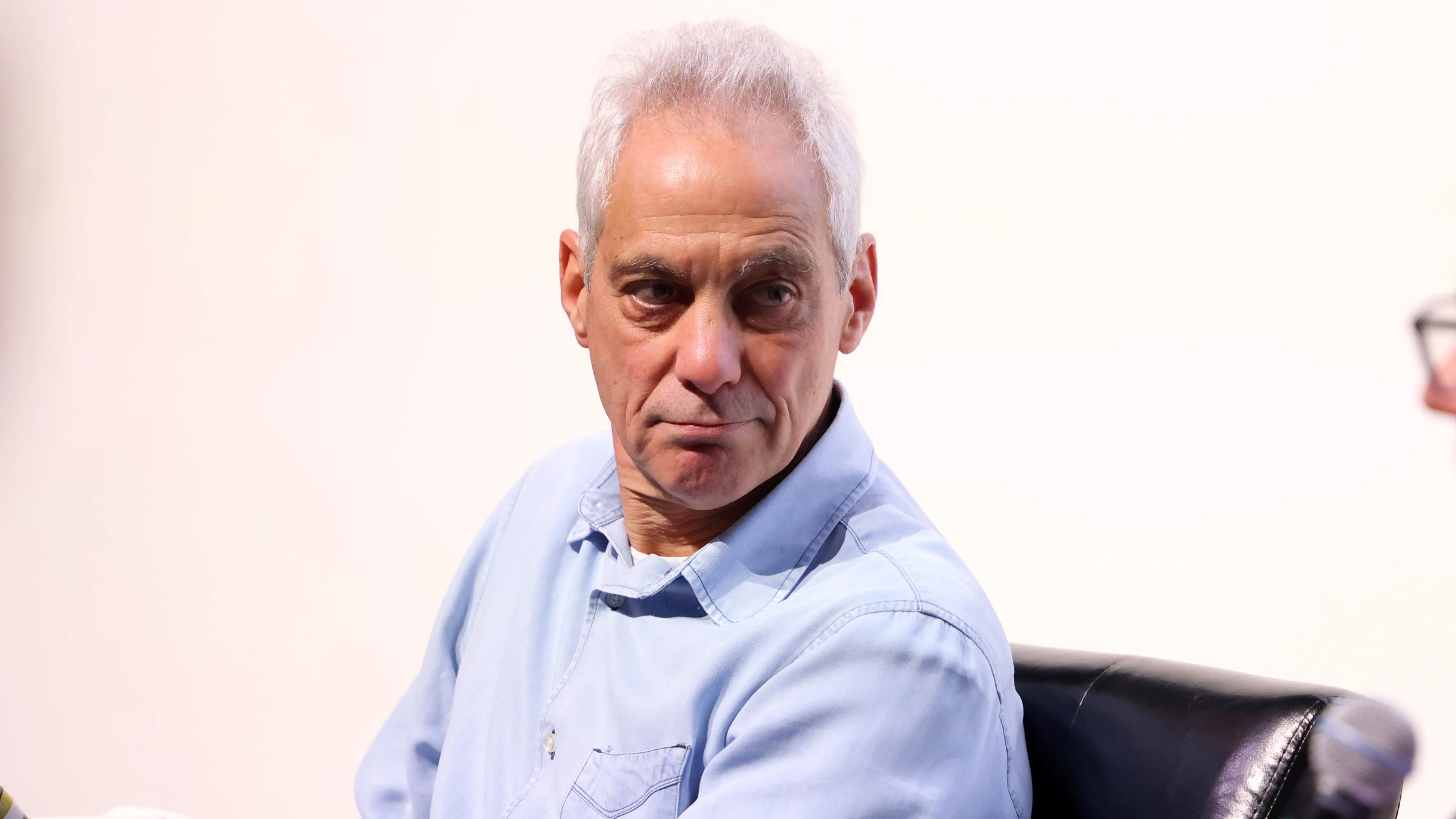
Former Chicago mayor and chief of staff to Barack Obama, Rahm Emanuel, says he would consider implementing a 10% federal tax plan on sports betting and prediction market companies as a way of raising money for scientific and technological research programs.
Speaking at a Wall Street Journal event in Washington, Emanuel’s proposed transaction tax would apply to the total value of bets or trades placed through licensed online sportsbooks, digital casino services, and prediction market platforms and exchanges, which would be responsible for the cost. He has also voiced support for prohibiting federal employees from participating in prediction markets.
Reward the entrepreneur, not the gambler, Emanuel argues
Sports betting in the USA was legalized in 2018, when the United States Supreme Court declared a federal ban on the practice to be unconstitutional. Since then, the sector has exploded, generating a record $16.96 billion in revenue in 2025, according to the American Gaming Association. Americans wagered $166.94 billion on sports during the year, an 11% increase from 2024, the group added.
Meanwhile, a broker yesterday said the prediction market sector is on course to be a trillion dollar industry by 2030. However, companies such as Kalshi and Polymarket have been consistently dealing with accusations of insider trading on their platforms.
Earlier this year, they were criticized for offering markets on geopolitical events of an immensely sensitive nature, such as the removal of Venezuelan dictator Nicolás Maduro and the removal of Iran’s Ayatollah.
Emanuel believes a 10% federal tax on the sports betting and prediction market sectors could help reframe priorities for the American people.
He said: “To me, raise a 10% fee. It goes into this Innovation Fund. I’m tired of people betting against America. I want to bet on America. I want to not reward gambling.” He reiterated how new funding would flow into artificial intelligence, quantum computing, fusion energy, life sciences and national security technologies.
Any federal tax could give the United States an edge over China in those sectors, Rahm argues, with projections calling for roughly $30 billion to $50 billion in annual revenue to support the initiative.
Prediction markets hit back at lawmakers with DC ad campaign
Meanwhile, Kalshi is responding to the heavy criticism it has faced from members of congress and the senate. They have launched a campaign throughout Washington DC, placing mint-green billboards, bus shelter ads and inserts in The Washington Post..
The campaign leans heavily on blunt messaging, with slogans including “We ban insider trading,” “We don’t do death markets,” “We aren’t the house,” and “We operate under U.S. law.”
The effort reflects a bigger push by Kalshi and its competitors to reshape perceptions in Washington as lawmakers and regulators scrutinize the industry. Officials have raised concerns about insider trading and wagers tied to sensitive events such as war-related deaths, prompting companies to adopt a familiar strategy of building influence and goodwill in the nation’s capital.
At least one major bill, the Public Integrity in Financial Prediction Markets Act, has already been introduced in the House with dozens of co-sponsors, while additional proposals are being drafted or debated in both chambers. Taken together, the legislation reflects a fast-moving policy response, but one that remains fragmented rather than consolidated into a single comprehensive framework.
Pennsylvania county bars poll workers from election prediction markets
Elsewhere, a county in southeastern Pennsylvania has barred poll workers from using prediction markets to wager on elections, adding a new restriction to its election procedures. The Delaware County Board of Elections approved a resolution updating the oath poll workers must take, explicitly prohibiting participation in such platforms.
“I think they’re a pernicious, horrible factor and I don’t think elections should be bet on in one shape or form,” said elections director Jim Allen. “The last thing we need is the referee in elections being accused of having a financial stake in these so-called prediction markets.” The move goes beyond existing Pennsylvania law, which already bans election workers from directly or indirectly betting on election outcomes.
While Delaware County’s action does not carry the force of state law, it reflects growing concern among election officials and policymakers. “The most fundamental worry that comes to mind for me is that prediction markets could create financial incentives to influence outcomes rather than just predict outcomes,” said Jennifer Morrell, CEO of The Elections Group, who added that turning votes into financial instruments “really degrades the character” of elections.